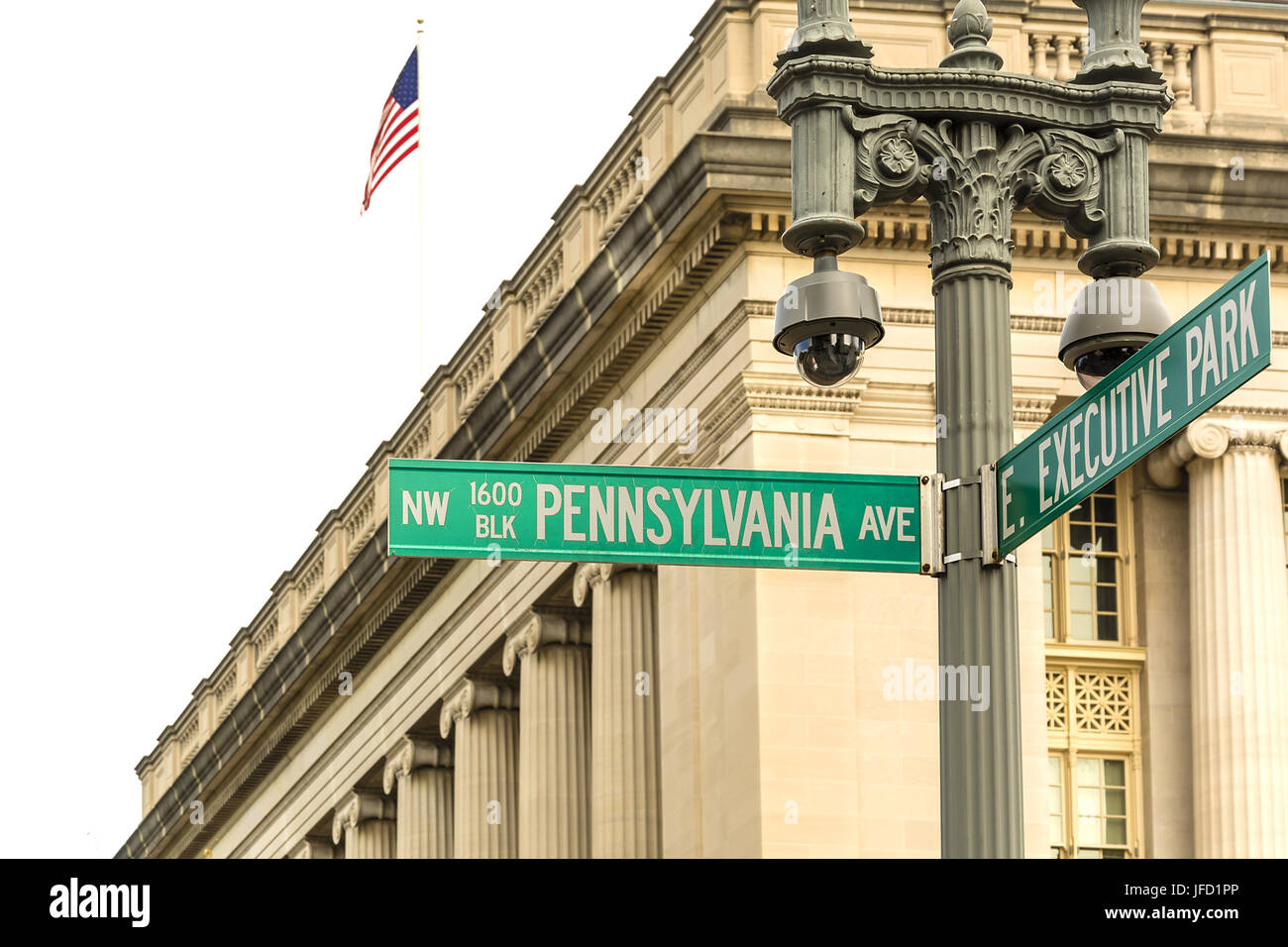
It’s basically the most famous fence in the world. People stand there, phone in hand, squinting through the black iron bars of the North Lawn, trying to catch a glimpse of... something. Usually, they just see a white building that looks smaller than it does on TV. But 1600 Pennsylvania Ave Washington DC isn't just a house, and it isn't just an office. It is a weird, high-stakes ecosystem where 18th-century architecture meets 21st-century nuclear codes.
Most people think they know the White House. You’ve seen the West Wing walk-and-talks. You’ve seen the press briefings. Honestly, though? The reality of the place is way more claustrophobic and strange than the movies let on. It’s a 55,000-square-foot maze that has to function as a family home, a museum, and a command center all at the same time.
Why 1600 Pennsylvania Ave Washington DC is Smaller Than You Think
If you walk up to the gates expecting a sprawling palace like Versailles, you’re going to be disappointed. It’s compact. James Hoban, the Irish-born architect who won the design competition in 1792, modeled it after Leinster House in Dublin.
It has 132 rooms. That sounds like a lot until you realize how many of those rooms are tiny closets, basement storage units, or narrow corridors for the Secret Service. The residence itself—where the First Family actually sleeps—is mostly confined to the second and third floors.
The "living" part of the house is surprisingly intimate.
The state rooms on the First Floor, like the East Room and the Blue Room, are mostly for show. They’re gorgeous, sure. They have the Gilbert Stuart portrait of George Washington that Dolley Madison famously saved from the British in 1814. But nobody is sitting in the Blue Room watching Netflix.
When you’re standing at 1600 Pennsylvania Ave Washington DC, you’re looking at a shell that has been gutted and rebuilt multiple times. The most drastic change happened under Harry Truman. By 1948, the building was literally falling apart. The chandelier in the Blue Room was vibrating. Margaret Truman’s piano leg fell through the floor. They had to move the entire First Family across the street to Blair House for years while bulldozers literally drove inside the White House to excavate a new basement and install a steel frame.
The West Wing is a Total Maze
If you’re lucky enough to get a West Wing tour, the first thing you notice is how narrow the hallways are. It’s cramped. It’s loud. People are always rushing.
The West Wing wasn't even part of the original plan. Thomas Jefferson wanted something like it, but it wasn't built until Teddy Roosevelt’s time. He had six kids and needed to get the "work" out of the "house" so he could actually hear himself think.
- The Oval Office: It’s the heart of the wing. Every President changes the rug, the curtains, and the art. The Resolute Desk, carved from the timbers of the HMS Resolute, is the centerpiece.
- The Situation Room: Located in the basement, this isn't just one room. It’s a 5,000-square-foot complex of secure conference rooms managed by the National Security Council.
- The Press Briefing Room: This is built right on top of what used to be the indoor swimming pool built for FDR. If you look closely at the floor, you can still feel the history of the pool underneath the cables and the cameras.
Think about that. The most powerful decisions in the world are made in a room that sits over a defunct swimming pool.
The Logistics of Living in a Museum
Living at 1600 Pennsylvania Ave Washington DC is kind of like living in a high-end hotel where you can never leave, and you’re also the manager. The First Family doesn't live there for free, which is a detail that always shocks people.
The government pays for the building and the staff, but the President gets a bill at the end of every month for their groceries, dry cleaning, and even the toilet paper used in the private residence.
If they want a private dinner party, they pay for the extra waiters.
Moving day is also a total nightmare. On January 20th, the staff has exactly six hours to move the old family out and the new family in. It is a precision military operation. While the outgoing President is at the Capitol for the inauguration, hundreds of staff members are hauling boxes, changing the clothes in the closets, and swapping out the art. By the time the new President walks through the door that afternoon, their favorite snacks are already in the pantry.
How to Actually Get Inside
You can’t just walk up and knock. But you also don't need to be a donor or a diplomat to see it.
If you want to tour 1600 Pennsylvania Ave Washington DC, you have to plan months in advance. You need to contact your Member of Congress. For international visitors, it’s even trickier—you have to go through your embassy in DC, and quite honestly, those spots are incredibly rare.
The tours are self-guided and usually take about 45 minutes. You won't see the Oval Office. You won't see the Situaton Room. You’ll see the public spaces: the China Room, the Vermeil Room, and the State Dining Room.
- Submit your request early: We are talking three to six months out.
- Bring nothing: No bags, no water bottles, no sharp objects. The security screening is more intense than the airport.
- Check the status: Tours can be canceled at the very last second if there’s a sudden security issue or a head of state visiting.
The White House Visitor Center, located at 1450 Pennsylvania Ave NW, is actually a great backup. It’s run by the National Park Service and has some pretty incredible artifacts, including the touchscreens that let you "walk" through the rooms you can't see in person.
The Pennsylvania Avenue Pedestrian Mall
The stretch of the street directly in front of the White House hasn't had cars on it since 1995. After the Oklahoma City bombing, the Secret Service closed it off to traffic for security.
Today, it feels like a weird public plaza. You’ll see protestors who have been there for decades, tourists with selfie sticks, and the occasional motorcade screaming out of the complex.
It’s one of the few places where the extreme power of the executive branch meets the extreme chaos of American free speech. It’s noisy. It’s messy. It’s exactly what a capital should be.
Making the Most of Your Visit
If you’re heading to 1600 Pennsylvania Ave Washington DC, don't just stare at the house and leave. Walk around to the South Lawn (the side with the curved balcony). This is where the Marine One helicopter lands. It’s also where the White House Garden is located—Michelle Obama’s famous vegetable garden is still there, and it’s a massive part of the kitchen’s operations.
Actionable Steps for Your Trip:
- Download the "White House Experience" App: It’s actually good. It gives you a narrated tour of the neighborhood so you know what you’re looking at from the sidewalk.
- Go at Night: The White House is lit up beautifully after dark, and the crowds are about 90% thinner.
- Visit the Eisenhower Executive Office Building next door: It’s that massive, ornate French-style building to the west. Many people think that's the White House because it’s so much more grand, but it actually houses the VP’s office and most of the Presidential staff.
- Book the Treasury Building Tour: If you like architecture, the Treasury Department (right next door) offers tours on Saturdays that give you a great view of the East Wing.
Standing at the gates of 1600 Pennsylvania Ave is a rite of passage. Whether you love who's inside or hate them, the building itself is a survivor. It has been burned by the British, gutted by Truman, and scrutinized by every camera lens on earth. It’s still standing. It’s still the most important office in the world. And honestly, it’s still one of the coolest things you can see for free in Washington DC.