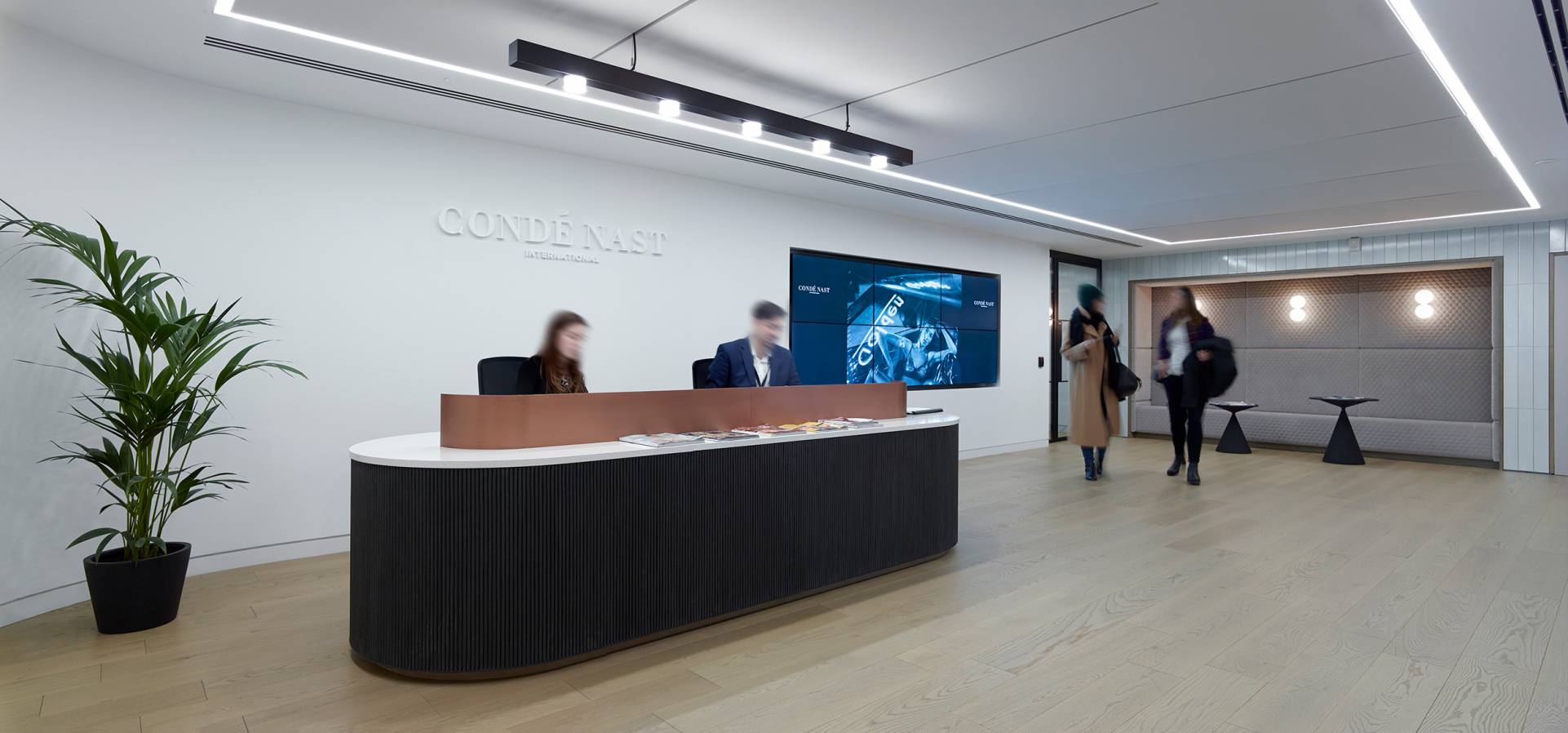
Walk through Times Square today and it’s a sensory overload of LED screens and Elmos. But if you look up at the northwest corner of 42nd Street and Broadway, you’ll see a spire that basically signaled the birth of the modern Midtown we know now. People still call it the Condé Nast Building NYC, even though the magazine giant packed up and moved to One World Trade Center years ago. It’s officially 4 Times Square now, but buildings in New York have a way of keeping their old souls.
It’s iconic. It’s green. It’s also kind of weird.
Back in the late 90s, Times Square wasn’t a place where high-fashion editors wanted to hang out. It was still shaking off its "gritty" reputation. When the Durst Organization finished this thing in 1999, it wasn't just another skyscraper. It was a massive gamble. Fox & Fowle (now FXCollaborative) designed it, and they did something pretty radical for the time—they made it environmentally conscious before "ESG" was a corporate buzzword everyone hated.
The Ghost of Anna Wintour and the Cafeteria That Ruled the World
Honestly, you can't talk about the Condé Nast Building NYC without talking about the Frank Gehry cafeteria. It was legendary. For years, this was the undisputed center of the media universe. If you were a stylist at Vogue, an editor at The New Yorker, or a writer for Vanity Fair, this was your church.
The building became a character in The Devil Wears Prada. Remember that scene where Andy is frantically running around with belts? That vibe was ripped straight from the elevators of 4 Times Square.
The Frank Gehry-designed cafeteria on the 4th floor was a masterpiece of titanium and glass, but it was also a social minefield. There was a strict, unspoken hierarchy. The "cool kids" from Vogue sat in specific areas. The "intellectuals" from The New Yorker were elsewhere. It was high school, but with much better shoes and way more anxiety. When Condé Nast left in 2014, the soul of the building shifted. It went from being a temple of "the look" to a space for tech and legal firms like Skadden Arps (who also eventually moved on).
Why the Architecture Still Matters (Even if the Magazines Left)
The design is a bit of a Frankenstein’s monster, but in a cool way. The side facing Times Square is covered in electronic signage, blending into the chaos of the Crossroads of the World. The other sides are more traditional masonry and glass. It’s like the building has a split personality—business in the back, party in the front.
But the real story is the "green" stuff. This was the first major skyscraper in the U.S. to implement serious sustainable tech. We’re talking:
- Gas-fired absorption chillers.
- A high-performance "curtain wall" that kept the heat out and the cool in.
- Photovoltaic cells (solar panels) integrated into the skin of the building on the upper floors.
It’s easy to forget how big of a deal this was in 1999. Most developers thought green building was for hippies, not Manhattan moguls. The Durst family proved you could build a massive, 48-story tower that didn't just bleed energy. They used recycled materials and strictly controlled the air quality during construction. They even had a specialized waste management system that was lightyears ahead of other office blocks.
The Spire and the Skyline
Have you noticed the massive antenna on top? It’s not just for show. That 132-foot mast was designed to support television and radio broadcasts. After the tragedy of 9/11, that spire became even more critical for New York’s communications infrastructure. It’s one of the highest points in the city, reaching about 1,143 feet into the air.
If you look at the building from a distance, the spire gives it this jagged, techy crown. It’s a sharp contrast to the Art Deco elegance of the Empire State Building or the sleekness of the new Hudson Yards towers.
The Shifting Identity of 4 Times Square
So, who lives there now? Since the Condé Nast Building NYC era ended, Nasdaq has become a primary face of the building. They moved their global headquarters here, and that massive cylindrical LED screen on the corner? That’s theirs. It’s one of the most expensive pieces of advertising real estate on the planet.
Losing Condé Nast was a blow to the neighborhood's "glamour" factor, but it forced the building to evolve. Durst spent something like $170 million on renovations to attract the new crowd. They added a massive amenity floor called "Well&," which is basically a fancy food hall and lounge area meant to mimic that old Gehry cafeteria energy—but for everyone, not just the fashion elite.
It’s interesting. The building was once the symbol of old-guard media. Now, it’s a hub for fintech and global markets. New York moves fast.
What People Get Wrong About the Location
Most tourists think Times Square is just 42nd Street. But the "Condé Nast Building" occupies a specific transition point. It bridges the gap between the frantic energy of the subways and the corporate seriousness of Sixth Avenue (Avenue of the Americas).
A lot of people think you can just wander into the lobby to see the Gehry architecture. You can’t. It’s a high-security office building. Unless you have a meeting with a firm like BMO Capital Markets or Nasdaq, you’re stuck looking at it from the sidewalk.
Actionable Insights for the Urban Explorer
If you’re heading to Midtown and want to appreciate the Condé Nast Building NYC properly, don’t just stand directly under it. You’ll get a neck cramp and probably get pushed by a guy in a Spider-Man suit.
- View it from Bryant Park. Walk a couple of blocks east. From the lawn of Bryant Park, you can see how the building’s "quiet" side fits into the more traditional New York skyline. It looks totally different than it does from the Broadway side.
- Look for the solar panels. If it’s a sunny day, look at the upper floors on the south and west sides. You can actually see the thin-film PV panels built into the glass. They look like dark bands.
- Check the Nasdaq screen. It’s more than just an ad. It often displays real-time market data and celebrates IPOs. It’s a literal window into the world’s economy, right on the corner of 43rd and Broadway.
- Note the "Condé Nast" legacy at 1 WTC. If you really want to see where that culture went, you have to go downtown. But the "Devil Wears Prada" energy? That stays in Midtown.
The building is a survivor. It survived the decline of print media, the 2008 crash, and a global pandemic that emptied out Midtown offices. While the name on the lease has changed, its role as the "green" anchor of Times Square is pretty much set in stone. It was the first of its kind, and in a city that’s constantly tearing itself down to build something newer, 4 Times Square remains a weirdly beautiful, split-personality landmark of the new New York.