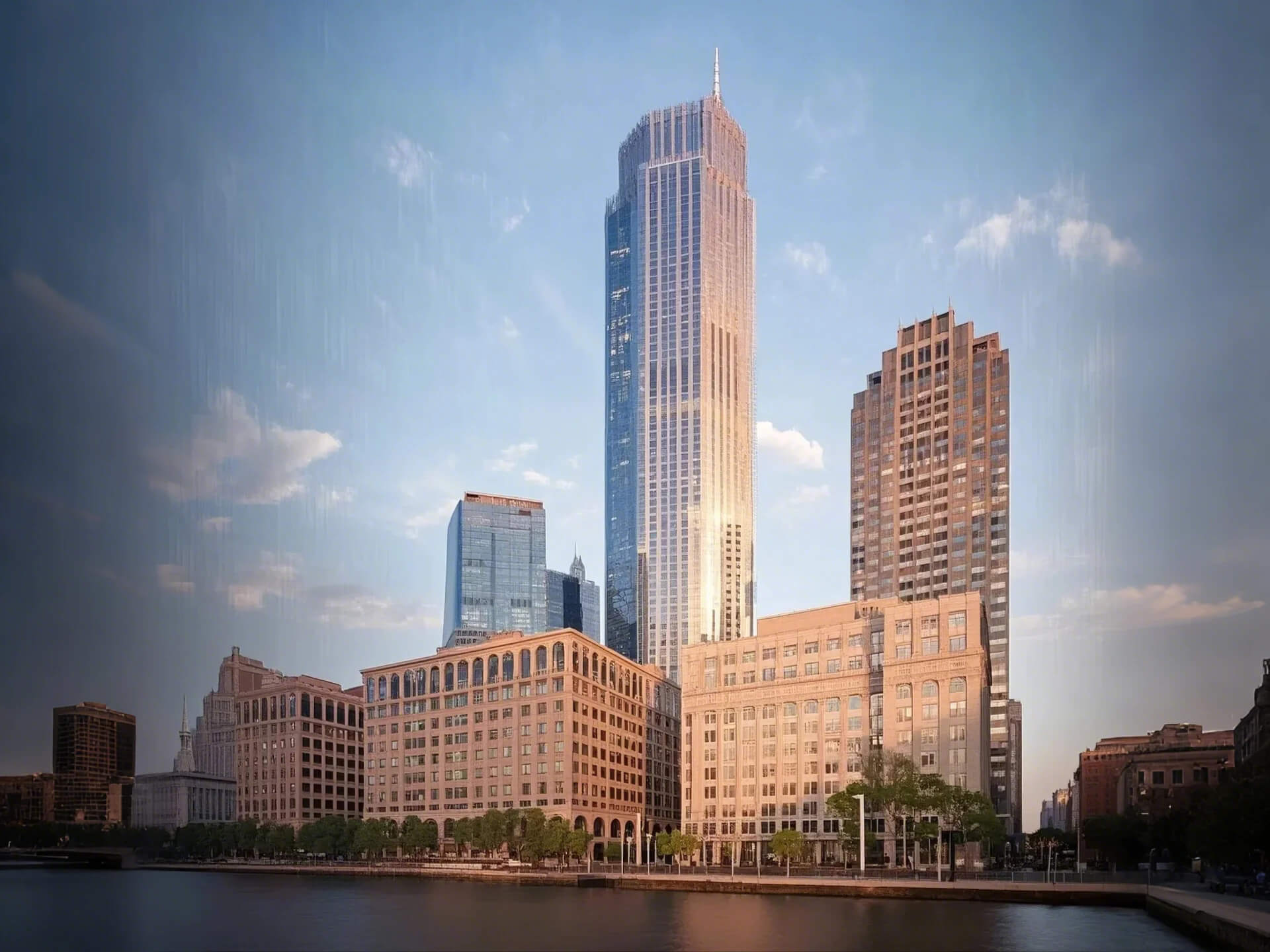
Walk out of the Exchange Place PATH station and you can't miss it. It sits there, a massive, glass-and-steel monolith right on the edge of the Hudson River. Honestly, if you've spent any time in Jersey City, 90 Hudson is basically a landmark you use to find your way back to the ferry. It’s one of those buildings that looks like it belongs in a high-stakes financial thriller, which makes sense considering its history.
But here’s the thing about 90 Hudson Jersey City—most people just see it as another corporate box. They see the "Charles Schwab" sign or the sleek lobby and assume it’s just where spreadsheets go to die. It’s actually a lot more interesting than that. It’s a core piece of the "Wall Street West" movement that transformed a decaying industrial waterfront into one of the most expensive zip codes in the country.
People forget that thirty years ago, this part of the Jersey City waterfront was mostly abandoned rail yards and broken piers. Now? It’s a dense forest of Class A office space and luxury high-rises. 90 Hudson was a massive bet on the idea that companies would flee Manhattan for better views and lower taxes.
The Architecture of 90 Hudson Jersey City
When you look at the building, you’re looking at over 400,000 square feet of prime real estate. It was designed by Perkins Eastman, a firm that knows how to handle large-scale urban projects. They didn't go for anything too "artsy" or experimental. Instead, they built something that feels permanent.
The facade is a mix of glass and masonry, reflecting the water on sunny days. It has twelve floors, which sounds small compared to the 70-story residential towers popping up nearby, but the floor plates are huge. We’re talking about massive, open-concept spaces that allow big financial firms to cram hundreds of traders or analysts onto a single level. That’s why firms like Lord Abbett and Charles Schwab have called it home.
It's got that classic early-2000s corporate aesthetic. High ceilings. Granite everywhere. Security turnstiles that look like they could stop a tank. But the real draw is the light. Because it sits right on the water, there’s nothing to block the sun. If you’re working on the eastern side of the building, the Manhattan skyline is basically your wallpaper. It’s distracting, honestly. You're trying to finish a report and the Freedom Tower is just... right there.
Why Location Is the Only Thing That Matters
Let’s be real. Nobody leases space at 90 Hudson Jersey City because they love the lobby art. They do it because the PATH train is a three-minute walk away.
You can get from your desk at 90 Hudson to the World Trade Center in about five minutes. It’s faster than getting from Midtown to Downtown Manhattan. That’s the "cheat code" of Jersey City. You get the New York City proximity without the New York City occupancy tax. For a business, that’s millions of dollars saved every year.
- Transit access: PATH, NY Waterway Ferry, and the Light Rail are all right there.
- The Boardwalk: You have immediate access to the Hudson River Waterfront Walkway.
- Dining: You’re steps away from places like Lokal or the lunch rush at Serefe.
The neighborhood, known as Paulus Hook/Exchange Place, is weirdly quiet on weekends compared to the madness of Hoboken or downtown JC. It feels grown-up. You see people jogging with strollers or walking French bulldogs along the pier. It’s a specific vibe—prosperous, calm, and very "New Jersey."
The Financial Impact and Market Shifts
For a long time, 90 Hudson was owned by Spear Street Capital. They eventually sold it as part of a massive deal that included its neighbor, 70 Hudson. These buildings are often bundled together in real estate conversations because they share a similar DNA and a common plaza.
In 2016, the deal for these two buildings was one of the biggest in the state’s history. It signaled that Jersey City wasn't just a "backup" for Manhattan anymore. It was a primary destination.
However, things have changed. Since 2020, the "Wall Street West" narrative has hit some speed bumps. Hybrid work changed everything. Huge floor plates that used to be full of life are sometimes half-empty now. You see more sublease signs than you used to. Yet, 90 Hudson stays relevant because it’s "Class A." In the real estate world, that’s code for "the nice stuff." Even when the market is down, companies move out of older, dingier buildings and "flight to quality" into places like 90 Hudson.
Common Misconceptions About the Area
One thing people get wrong is thinking that this area is just for commuters. It used to be. You’d see a ghost town after 6:00 PM. But the massive influx of residential towers like 99 Hudson (the tallest building in NJ) has changed the math.
There is a legitimate 24/7 community here now.
Another misconception? That it’s cheaper to live or work here than in Brooklyn. It’s not. Not anymore. Rents in Paulus Hook frequently rival or exceed those in trendy parts of Manhattan. If you’re looking at 90 Hudson Jersey City as a "budget" option, you’re about a decade too late. You pay for the view, the safety, and the fact that you can be in a Manhattan boardroom faster than someone living in the Upper East Side.
The Future of the Waterfront
What happens next? The building is currently managed and owned with an eye toward sustainability and tech upgrades. You can't just have a nice view anymore; you need "smart" building systems and LEED certifications.
There's also the constant threat of rising sea levels. Being right on the Hudson means 90 Hudson is on the front lines. Since Hurricane Sandy, the city has dumped millions into resiliency projects. The building itself has been hardened. It’s a survivor.
Practical Steps for Visiting or Leasing
If you're a business owner looking at space here, or just someone curious about the neighborhood, here is the ground-level reality of interacting with 90 Hudson Jersey City:
- Don't drive if you can help it. Parking in Exchange Place is a nightmare and incredibly expensive. The garage at 90 Hudson is convenient but will cost you a fortune for a daily rate. Take the PATH.
- Check the ferry schedule. The Harborside ferry terminal is close. It’s a more expensive commute ($9ish each way) but it’s the most civilized way to travel.
- Walk the pier. Even if you don't work in the building, the public space around it is world-class. The view of the Statue of Liberty from just south of the building is one of the best in the world.
- Research the sublease market. If you’re a startup wanting a "Big Finance" address without a 10-year commitment, look for sublease opportunities in the building. Smaller footprints are becoming more common as big firms consolidate.
90 Hudson isn't just a workplace. It’s a testament to how much a city can change in a generation. It stands as a symbol of Jersey City’s arrival on the global stage, transitioning from an industrial afterthought to a financial powerhouse. Whether you’re there for a meeting at Charles Schwab or just passing by on your way to the Hyatt, it’s hard not to respect the sheer scale of what it represents.
If you want to understand the modern Jersey City economy, you start here. You look at the glass, you look at the water, and you realize that the border between New Jersey and New York has never been thinner.