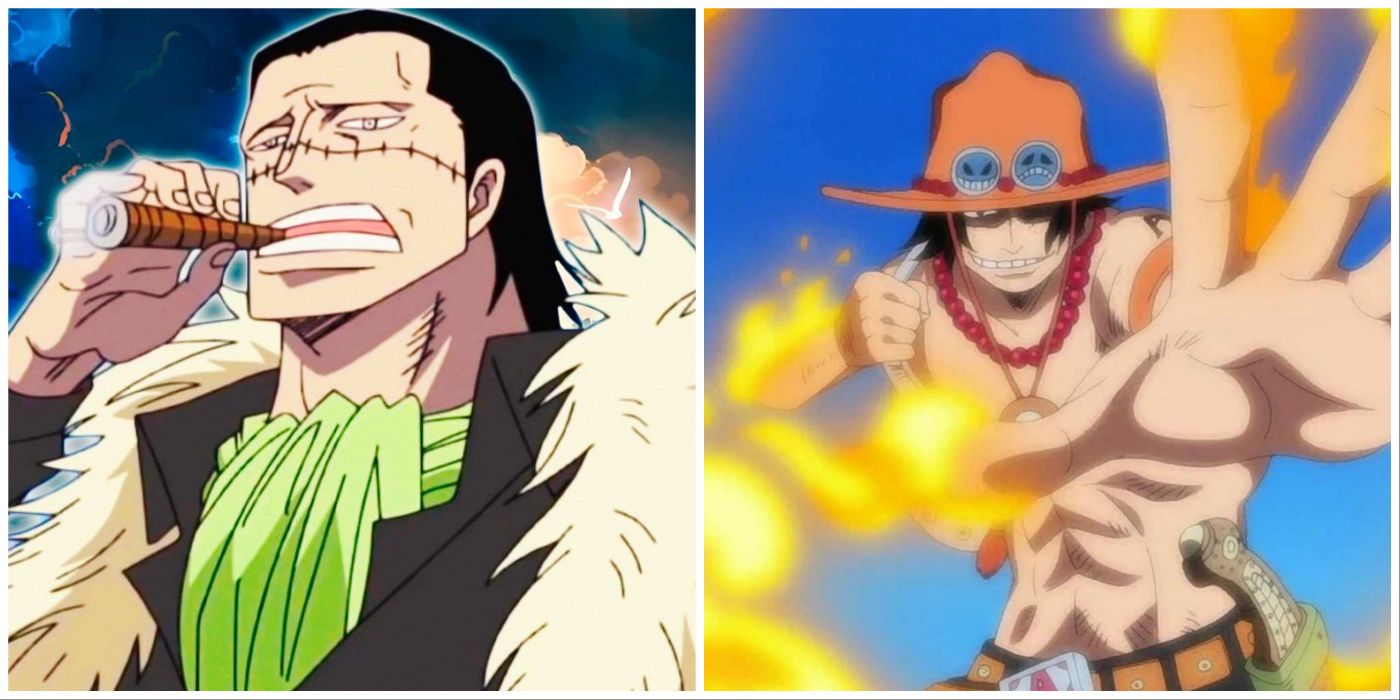
Honestly, if you go back and re-watch the Alabasta Saga today, Portgas D. Ace feels like a fever dream. He shows up in Nanohana, wrecks a few Billionaire ships with a single punch, hangs out with the Straw Hats for a few desert miles, and then just... leaves. It’s wild. Most shonen anime would use a character that powerful to bail the hero out of the final fight. But Eiichiro Oda isn’t most writers. Ace in the Alabasta arc of One Piece wasn't there to beat Crocodile; he was there to broaden the horizon of what we thought the world even looked like.
At that point in the story, we thought Luffy was the big man on campus. He’d beaten Arlong. He’d survived Loguetown. Then, suddenly, this guy with a flaming hat shows up and makes Smoker—the guy who literally terrified Luffy—look like a minor inconvenience.
The Mystery of the Vivre Card and the Satori of Strength
When Ace meets the crew in the Spice Bean restaurant, the vibe shifts instantly. It's hilarious, really. You have this legendary pirate falling asleep mid-meal because of his narcolepsy, and everyone thinks he’s dead. It’s the perfect introduction because it mirrors Luffy’s own chaotic energy. But the core reason Ace One Piece Alabasta remains such a massive talking point for fans is the power scaling shift it introduced.
Before this, the Grand Line felt dangerous, sure. But Ace brought the concept of the New World into the desert. He wasn't just Luffy’s brother; he was a Commander of the Whitebeard Pirates. That title carried a weight we didn't fully understand yet. When he hands Luffy that scrap of paper—the Vivre Card—he’s basically handing the audience a ticking time bomb. We didn't know it was made from fingernails and life force back then. We just knew it was important.
The desert trek wasn't just filler, even if the anime padded it out with those weird ruins and the Scorpion guy. In the manga, Ace’s presence is surgical. He’s looking for Blackbeard. That’s the real thread. While Luffy is worried about a civil war and a sand-man, Ace is hunting a shadow that would eventually redefine the entire series. It’s a brilliant bit of "B-plot" writing that makes the world feel like it’s moving even when the protagonist is distracted.
Why Ace Didn't Just Melt Crocodile
A lot of people ask why Ace didn't just walk into Rainbase and turn Crocodile into glass. It makes sense, right? Fire beats sand in a lot of elemental logic. But Ace has this weirdly strict code of honor. He tells Luffy, "I won't help you," because he knows this is Luffy’s fight. He’s not there to be the "deus ex machina."
He’s there to show Luffy that there are heights he hasn't even glimpsed.
If Ace had stayed, the stakes of the Alabasta rebellion would have evaporated. The tension of the ticking clock at the Alubarna clock tower only works because the Straw Hats are struggling. Ace is a ceiling. He represents the level Luffy needs to reach, and having him leave early was the only way to keep the threat of Baroque Works feeling real.
The Cultural Impact of the Flame-Flame Fruit in the Sands
The Logia reveal was still relatively new back then. We’d seen Smoker’s smoke, but Ace’s fire was different. It was destructive. It was beautiful. Watching him use the Kagerou (Heat Haze) to block Smoker’s attack was the first time we saw two Logia users cancel each other out. It set the rules for the rest of the series.
- It established that elements have natural counters.
- It proved that Logia users aren't invincible if they go up against their own weight class.
- It hinted that the "Top Tiers" of the pirate world were basically walking natural disasters.
Think about the visual of the Enkai (Flame Commandment). It’s iconic. Even now, decades later, when people think of Alabasta, they don't just think of Vivi’s screaming from the palace top; they think of the guy in the orange hat standing on a small boat in the middle of the ocean.
Misconceptions About Ace’s Time in the Desert
Let’s get one thing straight: Ace was never part of the crew.
Some casual viewers remember it like he was a temporary Straw Hat, but he was always a guest. His loyalty was never to Luffy’s dream; it was to Whitebeard’s. That’s a crucial distinction. In the Alabasta arc, Ace is constantly checking his pockets for info on Marshall D. Teach. Every conversation he has with Luffy is laced with a bit of "I’m glad you’re doing well, but I’ve got grown-up business to attend to."
Also, the "filler" episodes in the anime really warped people's perception of how long he was there. In the manga, he’s in and out. He meets them, they walk a bit, he leaves. The anime added hours of him wandering the desert, which honestly makes him feel a bit more aimless than he actually was. The real Ace was a man on a mission. He was a hunter.
The Legacy of a Burning Goodbye
The way Ace leaves in the Ace One Piece Alabasta chapters is purely symbolic. He gives Luffy the Vivre Card and tells him to meet him at the "top." It’s heartbreaking in hindsight. We all know where that journey ends. We know about Marineford. We know about the hole in the chest. But in Alabasta? In Alabasta, Ace was invincible.
He was the big brother who had it all figured out. He was the one who could handle anything. That’s why his appearance in this specific arc is so vital for the emotional payoff hundreds of chapters later. You have to see the sun at its brightest to feel the cold when it finally sets.
Real-World Lessons from the Alabasta Arc
If you're a writer or a creator, there’s a massive lesson here in world-building. Don't show your whole hand at once. Oda used Ace to tease a much larger world without letting him overshadow the local conflict. It’s a delicate balance.
For fans, the lesson is even simpler: pay attention to the small gifts. That Vivre Card seemed like a gimmick for 300 chapters. Then it became the most important object in the world. In One Piece, nothing is accidental. Not a piece of paper, and certainly not a brotherly visit in the middle of a desert revolution.
How to Deepen Your Understanding of the Alabasta Lore
If you really want to grasp the nuances of this era, go back and read the manga chapters 157 through 160. Pay close attention to the dialogue between Ace and the crew. Don't just watch the highlights on YouTube. There are subtle nods to his relationship with Whitebeard that hit differently once you know the ending of the series.
Next, look at the color spreads from that era. Oda often used Ace to contrast the blue and yellows of the desert with deep reds and oranges, signaling a shift in the story’s "temperature."
Lastly, track the timeline of Blackbeard’s movements during this arc. While Ace is in Nanohana, Teach is already making moves that will eventually lead to the greatest war the seas have ever known. Understanding that Ace was literally one step behind his prey the entire time he was smiling with Luffy adds a layer of tragedy to the Alabasta saga that most people completely miss. It wasn't just a fun reunion; it was a missed opportunity that changed the course of history.