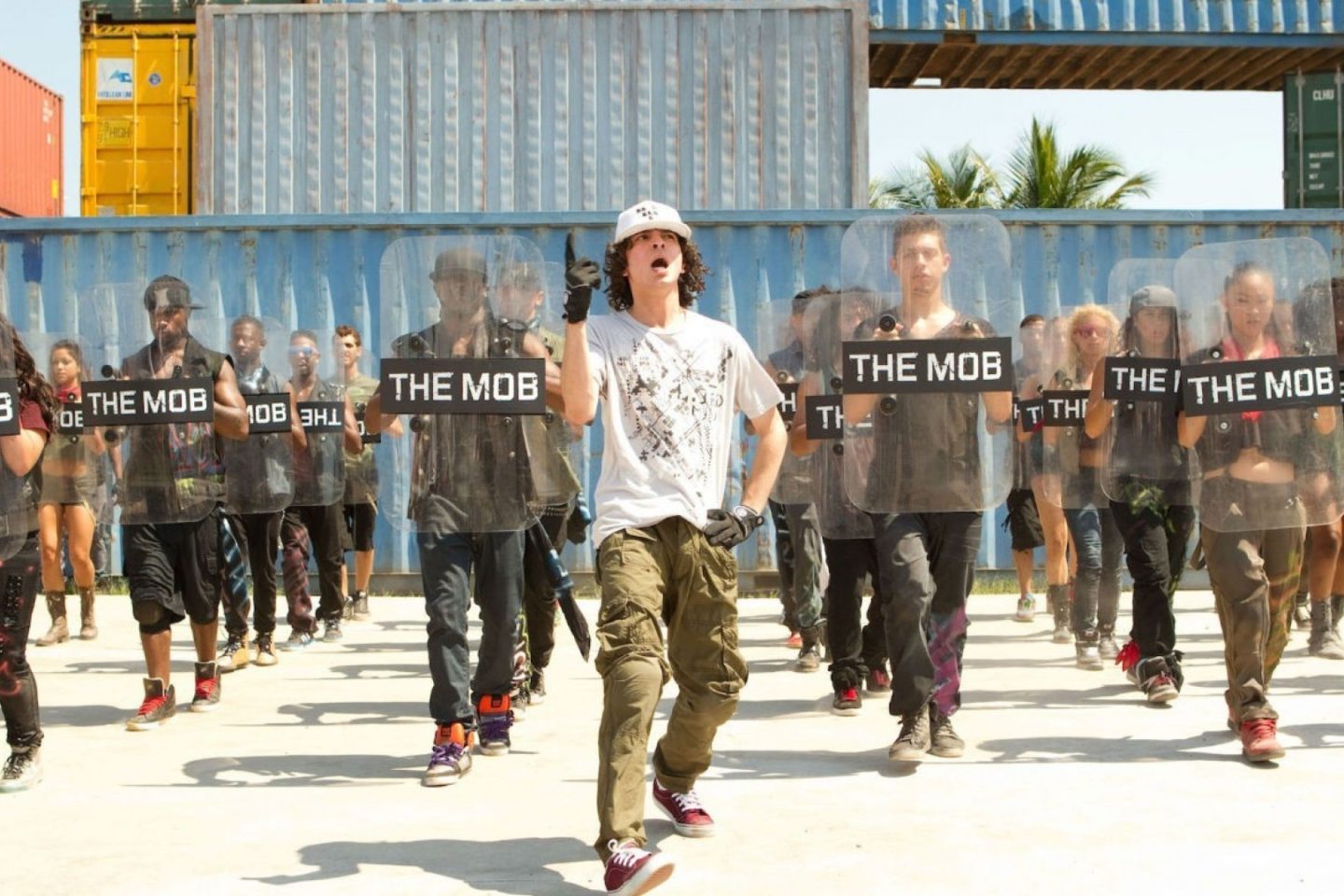
If you were around in 2008, you remember the hair. That wild, curly mop of dark hair bouncing in rhythm to a Flo Rida track. It belongs to Moose from Step Up, a character who basically redefined what it meant to be "the geeky dancer" in Hollywood.
Most movie franchises fade away. They get a reboot, people watch it for the nostalgia, and then they move on to the next TikTok trend. But Moose? He’s different. Played by the endlessly charismatic Adam Sevani, Robert "Moose" Alexander III didn't just show up for a sequel; he became the actual glue of the entire Step Up universe. It’s kinda wild when you think about it. He wasn't even the lead in his debut film, Step Up 2: The Streets, yet he’s the one we all remember.
He’s the skinny kid in the cardigan who could suddenly drop into a power move that would make professional b-boys question their career choices.
The Evolution of Moose from Step Up Now and Why He Sticks
The thing about Moose is that he wasn’t a stereotype. Usually, the "nerd" character in a dance movie is there for comic relief. They trip over their feet, provide a few laughs, and maybe get one lucky move at the very end.
Not Moose.
From the second he faced off against 410 in the subway station, it was clear Adam Sevani was bringing something elite to the table. He has this fluidity—this weird, rubber-band-man quality—that feels both improvised and perfectly rehearsed. It’s that specific "Moose" style.
Jon M. Chu, who directed the second and third films, knew exactly what he had. He didn't just cast a dancer; he cast a personality. If you look at the trajectory from The Streets to Step Up 3D and then Step Up: All In, you see a character growing up. We saw him go from a high school kid trying to fit in at MSA to an engineering student at NYU, and eventually, a guy trying to balance "real life" with his absolute need to move.
Breaking Down the Water Dance
Honestly, we have to talk about the puddle scene.
In Step Up 3D, there’s that iconic sequence where Moose and Camille (played by Alyson Stoner) dance through the streets of New York to a remix of "I Won't Dance." It’s a single-take masterpiece. No cuts. No CGI. Just two people who have been dancing together since they were kids in real life, hitting every beat in perfect synchronicity.
It feels like a love letter to Gene Kelly and Fred Astaire, but with Nikes on.
People always ask if that was actually them. Yeah, it was. Sevani and Stoner have a genuine history—they grew up in the same dance circles. That chemistry isn't something you can fake with a script. You can see the pure joy on their faces. It’s probably the most "human" moment in the entire franchise. It wasn't about a high-stakes battle or winning money; it was just about the feeling of the pavement under your feet.
Why Adam Sevani is the Secret Sauce
Let’s be real: without Adam Sevani, the Step Up series probably would have died out after the first sequel.
Sevani has this specific brand of awkward coolness. He’s not the jacked, brooding leading man like Channing Tatum or Ryan Guzman. He’s the guy you want to hang out with. His comedic timing is actually underrated. Think about the scene in Step Up 3D where he’s trying to hide his dancing from his parents while at NYU. It’s goofy, but he leans into it so hard that you can’t help but root for him.
He brought a level of "street" credibility to the films because he was actually part of that world. He wasn't just an actor who took a few hip-hop classes for a role. He was a kid who lived in his parents' dance studio.
The Technicality of the Movement
If you’re a dancer, you know.
Moose’s style is a mix of popping, locking, and what some call "animation." It requires insane muscle control. There’s a moment in the final battle of Step Up 2—the one in the pouring rain—where he does this slow-motion lean that looks like it defies gravity. That’s not a camera trick. That’s core strength and a deep understanding of weight distribution.
He makes it look easy. That’s the trap. Thousands of kids in the late 2000s tried to replicate his moves in their garages and ended up with twisted ankles. He has this way of "isolating" his joints so that one part of his body is moving at 100 mph while the rest is perfectly still.
The Cultural Impact: More Than Just a Movie Character
It’s 2026, and you still see Moose edits on social media. Why?
Because he represents the underdog who didn't have to change who he was to be cool. He kept the curls. He kept the awkward social vibes. He kept the engineering degree. He showed a generation of kids that you could be "smart" and still be the best dancer in the room.
The "Step Up" movies were often criticized by high-brow film critics for having thin plots. Okay, sure. Nobody is watching Step Up Revolution for the dialogue. We’re watching for the spectacle. And Moose was the heart of that spectacle. He provided a bridge between the different films, showing up in cameos and supporting roles that rewarded long-time fans for sticking around.
Reality Check: The Life of a Professional Dancer
The film industry is brutal for dancers. Most of the time, they are treated as background props.
Adam Sevani managed to break that ceiling. He became a household name. He showed that a dancer could have "star power" independent of a singing or acting career (though he did both). He’s worked with everyone from Miley Cyrus to Breezy, but he’ll always be Moose to us.
Interestingly, Sevani has stayed somewhat low-key in recent years. He isn't chasing every blockbuster. He’s selective. He knows the impact Moose had, and he treats the character with respect. He’s appeared in music videos and done various projects, but he hasn't let the industry "grind" him down into a generic Hollywood face.
What We Can Learn From the Moose Legacy
If you’re looking at Moose from Step Up now and wondering what the takeaway is, it’s about authenticity.
The reason that character worked—and continues to work on streaming platforms and YouTube clips—is that he felt like a real person. He wasn't a polished, manufactured pop star. He was a kid who loved what he did.
There’s a lesson there for anyone in a creative field. You don’t have to fit the mold. In fact, the things that make you "weird" are usually the things that will make you iconic. Moose was the weird kid. And he ended up being the king of the franchise.
Actionable Insights for Aspiring Performers
If you’re inspired by the "Moose" vibe, don't just copy his choreography. That’s boring. Instead, look at the mechanics of how he built that brand:
- Find Your "Signature": For Sevani, it was the hair and the fluid isolations. What is your unique "thing" that people will recognize instantly?
- Master the Basics First: You can’t do the "rubber man" moves without incredible core strength and balance. Moose’s style is built on a foundation of classic hip-hop techniques.
- Embrace the Contrast: The reason Moose was so impactful was the contrast between his appearance and his ability. Don't be afraid to be a "polymath"—the engineering student who can also win a dance battle.
- Collaboration is Key: Look at the way Moose interacted with "The Pirates" in Step Up 3D. He wasn't trying to outshine everyone; he was part of a crew. Your network is your greatest asset.
The Step Up series might be finished for now, but the legend of Moose is basically permanent. He’s the reminder that sometimes, the side character is actually the hero of the story.
Whether he’s dancing in a subway, a puddle of water, or a high-tech LED stage, he’s always going to be the guy who made us want to get up and move. Honestly, we probably won't see another character like him for a long time. He was a lightning-in-a-bottle moment for dance cinema.
If you haven't seen the "I Won't Dance" scene in a while, go find it on YouTube. It still holds up. Every single beat. Every single splash of water. It’s perfect. It’s Moose.