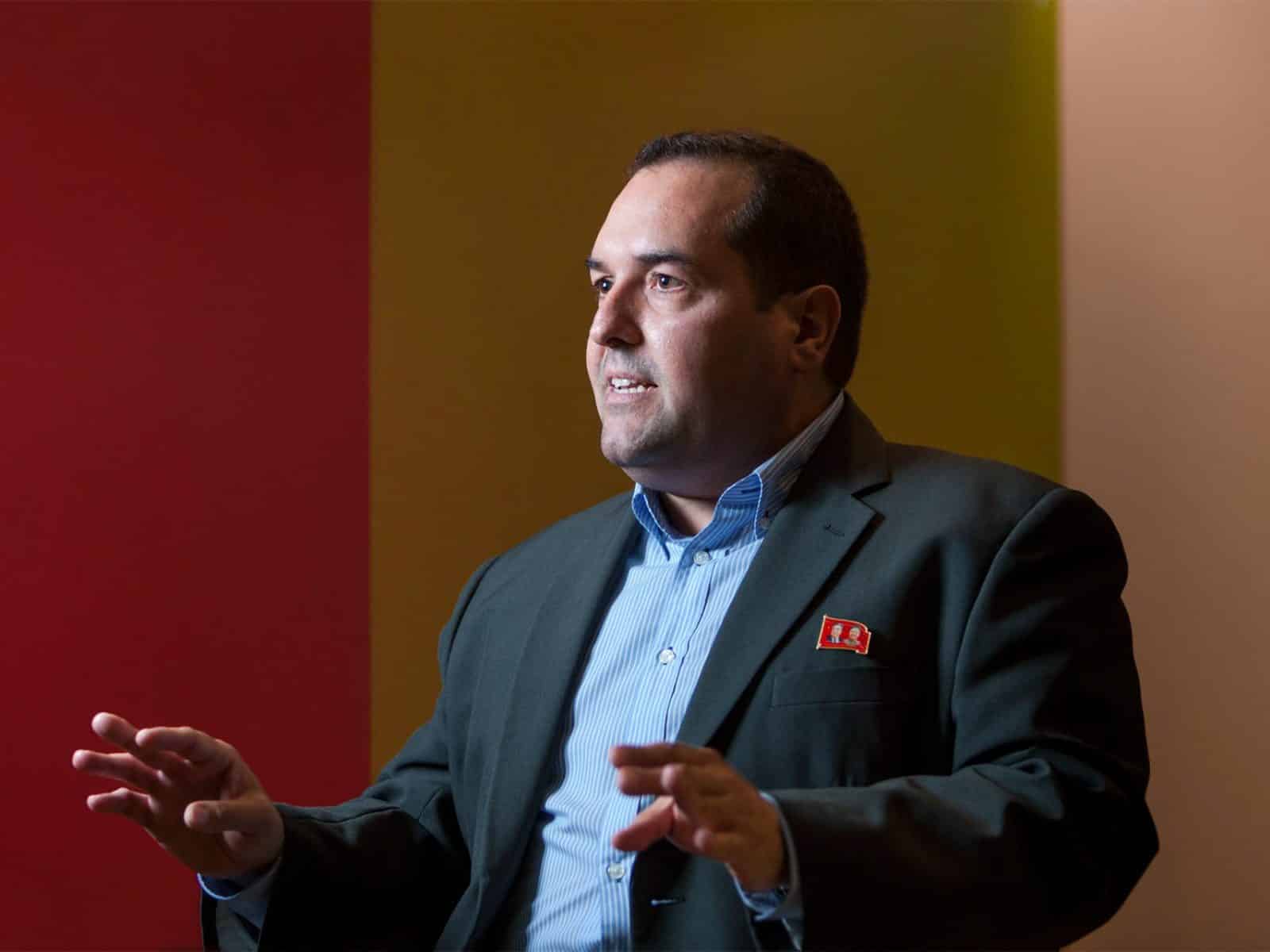
You’ve probably seen the guy in the news or some grainy YouTube documentary. He wears a sharp North Korean military uniform, speaks perfect Spanish, and defends the Kim regime with a level of zeal that feels, well, a bit surreal. His name is Alejandro Cao de Benos.
People usually have one of two reactions. They either think he’s a high-level operative or a complete eccentric playing a very long, very strange game of dress-up.
The reality is a lot messier. Alejandro Cao de Benos isn't just a fan of the DPRK; he is the founder of the Korean Friendship Association (KFA) and has spent decades acting as an unofficial gatekeeper for Westerners trying to get into the world's most reclusive nation. But lately, things have gotten heavy. The FBI wants him. Like, "Most Wanted" list wants him.
And it isn't about the uniforms anymore.
Who is Alejandro Cao de Benos?
Born in 1974 in Tarragona, Spain, Alejandro comes from an aristocratic family. His full name—Alejandro Cao de Benós de Les y Pérez—sounds like something out of a 19th-century novel.
His family had titles: Barons of Les, Marquesses of Rosalmonte. But money doesn't always follow titles. After his grandfather lost the family fortune, Alejandro’s father had to work a regular job. This "fall from grace" reportedly pushed a young Alejandro toward radical politics.
By 15, he was already active in communist youth groups in Granada. He didn't just want to read Marx; he wanted to see it in action. In 1990, he met North Korean diplomats at a UN event in Madrid. That was the spark. He made his first trip to Pyongyang in 1994, and he hasn't looked back since.
He goes by the Korean name Cho Son-il, which translates to "Korea is one."
Most Westerners find his devotion baffling. He speaks about the "superiority" of the North Korean system, citing free housing and education, while dismissing reports of human rights abuses as Western propaganda. To him, the West is the one that's brainwashed.
The KFA and the Gatekeeper Role
In 2000, he founded the KFA. For years, if you were a journalist, a filmmaker, or just a really curious tourist wanting to see Pyongyang, you had to go through him.
He became the "Special Delegate" of the Committee for Cultural Relations with Foreign Countries. It’s an unpaid title, but it gave him incredible leverage. He was the guy who could get you the visa—or have you kicked out if he didn't like your tone.
The KFA grew into a global network. It has thousands of members in dozens of countries. Some are true believers; others are just fascinated by the Cold War aesthetic.
But there’s always been a cloud over how official his role actually is. While he claims to represent the government, critics and North Korea experts often point out that he doesn't have a North Korean passport and doesn't actually live there full-time. He’s an IT consultant by trade.
Basically, he’s a bridge. A very loud, very controversial bridge.
The 2026 Legal Reality: Why the FBI is Involved
Things took a dark turn for Alejandro in 2022. The U.S. Department of Justice unsealed an indictment that reads like a techno-thriller.
The feds allege that Alejandro Cao de Benos conspired with a British citizen, Christopher Emms, and an American cryptocurrency expert named Virgil Griffith. The goal? To help North Korea use blockchain and crypto to bypass international sanctions.
In 2019, they organized the "Pyongyang Blockchain and Cryptocurrency Conference." Virgil Griffith ended up getting arrested and sentenced to over five years in prison. Alejandro, however, was in Spain.
The U.S. wants him for violating the International Emergency Economic Powers Act (IEEPA). They say he was teaching the regime how to launder money and hide transactions from global banks.
He was actually arrested in Madrid in late 2023. You’d think that would be the end of it, right?
Not exactly.
The Spanish National Court released him on bail almost immediately. Why? Because Spain doesn't necessarily see "violating U.S. sanctions" as a crime under Spanish law. In his own words on social media, he claimed the whole thing was a setup by the Trump administration and that "there is no extradition."
As of early 2026, he remains in a sort of legal limbo. He’s free in Spain, but he can’t really travel to many places without risking a pair of handcuffs and a one-way ticket to New York.
What People Get Wrong About Him
It's easy to mock the guy. The uniforms look like costumes to Western eyes. The rhetoric sounds like a script from the 1950s.
But Alejandro isn't a joke to the intelligence community. He represents a very real challenge to the way the world tries to isolate North Korea. If a Spanish citizen can help a nuclear-armed state navigate the world of crypto, then the traditional "embargo" strategy is basically broken.
Also, he's not just a "propagandist." He’s a survivor. He’s managed to stay relevant to the Kim regime through three different leaders. That requires more than just loyalty; it requires utility.
Realities and Risks for the Future
If you're following this story, here is what you need to keep an eye on.
First, the extradition battle. While Spain is hesitant now, diplomatic pressure from Washington is constant. If the legal definitions of "sanctions evasion" evolve in the EU, Alejandro’s safety net might vanish.
Second, the crypto connection. North Korea has been accused of stealing billions in digital assets to fund its missile programs. If Alejandro was the one who opened those doors, his role is much more significant than just being a tour guide for communists.
He currently spends his time defending his actions on X (formerly Twitter) and running KFA operations. He hasn't stopped his advocacy. He hasn't apologized.
Actionable Steps for Staying Informed
If you want to track the Alejandro Cao de Benos case or understand the broader implications of his work, here is how to do it without falling for the fluff:
- Monitor the FBI "Most Wanted" Counterintelligence page. This is the primary source for his current legal status in the U.S. system.
- Check the UN Panel of Experts reports on North Korea. They frequently mention the KFA and its business dealings. They provide the "boring" but factual data that social media posts omit.
- Differentiate between "Honorary" and "Official." When reading about his titles, remember that "Honorary Special Delegate" is a title given to many friends of the regime, not a position in the internal North Korean hierarchy.
- Follow Spanish legal news (using translation tools if needed). The National Court (Audiencia Nacional) in Madrid is where his fate will actually be decided, not in a U.S. courtroom.
The saga of Alejandro Cao de Benos is far from over. Whether he’s a misguided aristocrat or a dangerous intermediary, he remains one of the most unique figures in modern geopolitics. You don't have to like him to realize that what he does matters.