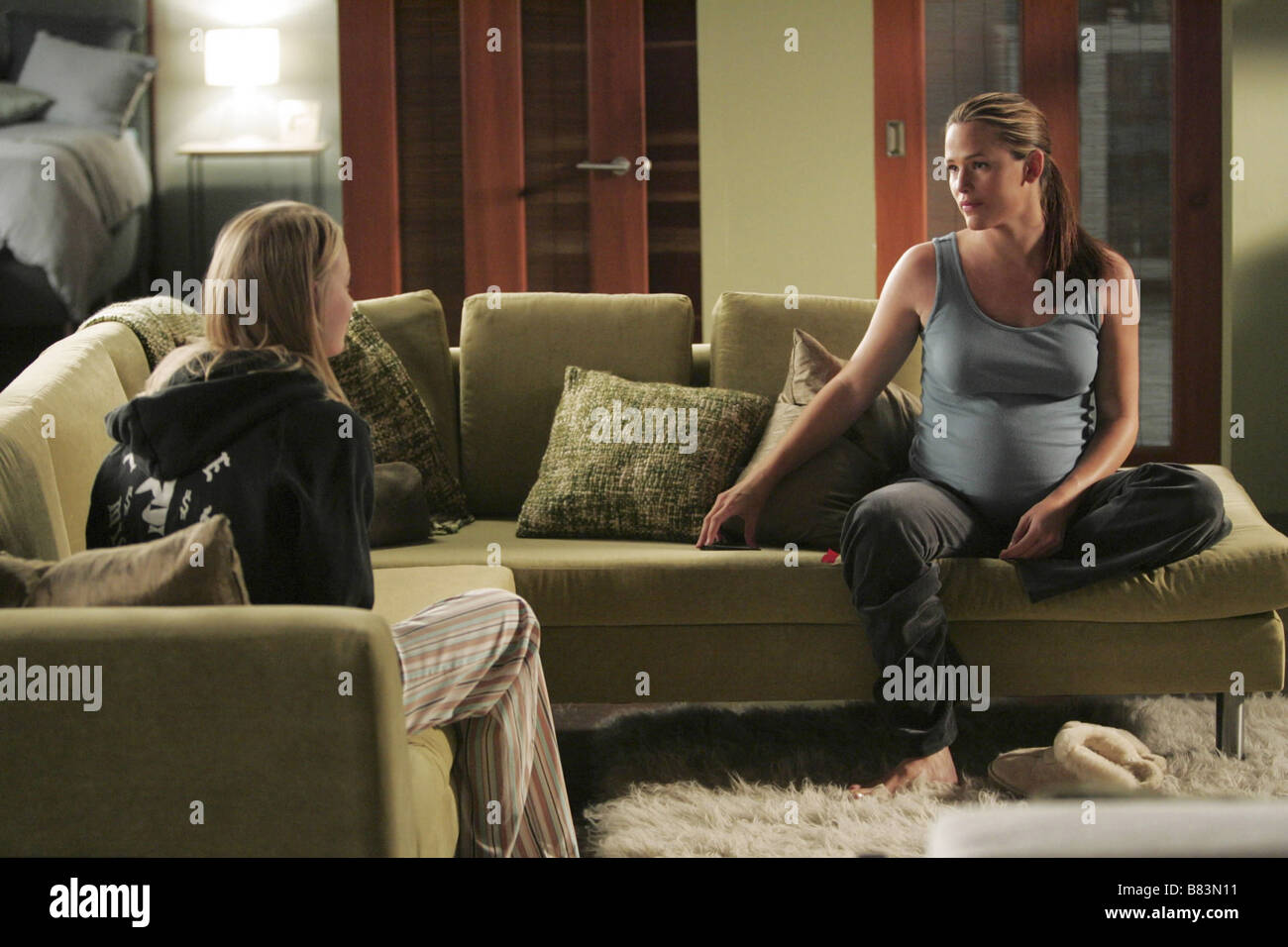
It was messy. Honestly, that’s the first word that comes to mind when you look back at the Alias TV series Season 5. By 2005, J.J. Abrams was already knee-deep in the early island mysteries of Lost, and Jennifer Garner was balancing a skyrocketing film career with a very real, very visible pregnancy. The show that redefined the spy genre on network television was suddenly sprinting toward a finish line it wasn't entirely prepared for.
Most fans remember the red wigs and the high-tech gadgets, but Season 5 was a different beast. It had to deal with the departure of Michael Vartan’s character, Vaughn, almost immediately. It introduced a "new generation" of spies that nobody really asked for. Yet, despite the chaos, it remains a fascinating study in how a cult classic tries to wrap up its own mythology while the wheels are coming off the wagon.
The Vaughn Problem and the Season 5 Pivot
You can’t talk about this season without mentioning the "death" of Michael Vaughn. It happened in the premiere, "Prophet Five." One minute Sydney and Vaughn are driving through Santa Barbara, finally sharing secrets, and the next, a car crash changes the entire trajectory of the show.
Killing off—or seemingly killing off—the primary romantic lead was a massive gamble. The writers were backed into a corner. They needed to explain why Vaughn wasn't around while Sydney was pregnant, but they also needed a narrative engine to keep the show alive after the SD-6 and Covenant arcs had dried up. This gave birth to Prophet Five.
Prophet Five was a shadowy organization that felt, to many viewers, like a recycled version of what we’d already seen. It was another group of powerful people chasing the Rambaldi artifacts. The stakes felt high, sure, but after four years of world-ending threats, the audience was starting to feel some serious "artifact fatigue."
Introducing the New Blood
Because Jennifer Garner’s pregnancy meant she couldn't do the heavy-duty stunts she was known for, the producers brought in Rachel Nichols as Rachel Gibson and Balthazar Getty as Thomas Grace.
Rachel was essentially a mirror of Sydney’s origin story—a naive researcher who realized she was working for the bad guys (Prophet Five) instead of the good guys. It was a neat parallel, but it never quite clicked with the hardcore fanbase. We wanted Sydney Bristow, not a proxy. Thomas Grace was even more of an enigma, a brooding agent with a tragic backstory involving his wife’s murder that never got the screen time it deserved to truly breathe.
The Rambaldi Obsession Reaches Its Peak
Milo Rambaldi. The name still triggers a mix of awe and frustration for Alias fans. In the Alias TV series Season 5, the 15th-century seer’s prophecies weren’t just a subplot; they became the entire point of the show’s existence.
Everything centered on "The Horizon."
Arvin Sloane, played with chilling perfection by Ron Rifkin, finally went full villain. His obsession with immortality and the Rambaldi endgame saw him betraying everyone he ever cared about, including his daughter Nadia. The season took a hard turn into the supernatural, or at least the "pseudo-science" version of it. We saw Sloane literally walking through fire and seeking eternal life in a tomb in Mongolia.
It was wild. It was weird.
For some, this was the payoff they’d waited years for. For others, it felt like the show had moved too far away from the grounded, emotional stakes of the early seasons. The tension between Sydney and Sloane reached a breaking point, and their final confrontation in the series finale, "All the Time in the World," is arguably one of the most satisfying—and bleakest—character conclusions in TV history. Imagine being buried alive for eternity in a cave because you chased a dream of living forever. That’s dark.
Production Hurdles and the Trimmed Episode Count
Usually, a network show gets 22 episodes. Season 5 got 17.
ABC moved the show to Thursday nights, then to Wednesdays, then put it on a four-month hiatus to let Garner have her baby. This scheduling chaos killed the ratings. You could feel the compression in the storytelling. Plot points that should have taken three episodes were resolved in ten minutes.
Despite this, the mid-season return featured the 100th episode, "The Horizon," which J.J. Abrams returned to direct. It was a reminder of what the show could do when it firing on all cylinders—dream sequences, deep-cut references to Season 1, and the return of Lena Olin as the incomparable Irina Derevko.
The Irina Derevko Factor
Irina was always the "X" factor of Alias. Her relationship with Sydney was the emotional heart of the series. In Season 5, her betrayal felt sharper. Seeing her prioritize Rambaldi’s power over her own daughter’s life in the final moments was heartbreaking. It served as the ultimate foil to Sydney, who chose her family and a normal life over the "Chosen One" destiny Rambaldi had laid out for her.
What Most People Get Wrong About the Ending
There’s a common misconception that Alias ended on a whimper. While the ratings weren't great, the final two hours were a masterclass in emotional payoff.
Jack Bristow’s sacrifice is the moment that sticks. Victor Garber’s portrayal of the stoic, protective father culminated in him blowing himself up to ensure Sloane could never hurt Sydney again. It wasn't just a plot point; it was the completion of Jack’s arc from a cold, distant spy to a father who gave everything for his child.
The very final scene—a flash-forward to a young Isabelle playing with the same wooden blocks Sydney used as a child—suggested that the "Bristow curse" might continue, but Sydney’s reaction was one of peace. She had broken the cycle of the CIA dominating her every waking thought.
A Legacy of Influence
You can see the DNA of the Alias TV series Season 5 in almost every modern spy thriller. The serialized mystery box, the high-concept gadgets, and the focus on a strong female lead paved the way for shows like Homeland, The Americans, and even the MCU’s approach to secret organizations.
It wasn't perfect. The Prophet Five villains were a bit generic. The new characters felt like placeholders. But the core performances—Garner, Garber, and Rifkin—held the crumbling structure together until the very last frame.
How to Revisit the Alias Experience Today
If you're looking to dive back into the world of SD-6 and Rambaldi, or if you're a newcomer wondering if the investment is worth it, here is how to approach the final season for the best experience.
- Watch the "Previously On" segments. Season 5 is dense. It relies heavily on lore established in the first three seasons. If you skip the recaps, the Prophet Five revelations will make zero sense.
- Focus on the Sloane/Jack dynamic. While the Rachel Gibson missions are fine, the real meat of Season 5 is the deteriorating friendship and escalating war between Jack Bristow and Arvin Sloane. Watch their scenes closely; the dialogue is some of the sharpest in the series.
- Appreciate the stunt work. Despite Garner's limited mobility, the choreography in Season 5 remained top-tier for its time. They used clever lighting and body doubles to maintain the show's signature kinetic energy.
- Listen to Michael Giacchino’s score. Long before he was winning Oscars for Up or scoring The Batman, Giacchino was creating incredible, percussion-heavy themes for Alias. The music in the finale is some of his most emotional work.
The final season is currently available on various streaming platforms like Disney+ (in some regions) or for digital purchase on Amazon. It remains a polarizing but essential piece of television history that proved you could do "big" sci-fi concepts on a weekly TV budget, even if the landing was a little bumpy.