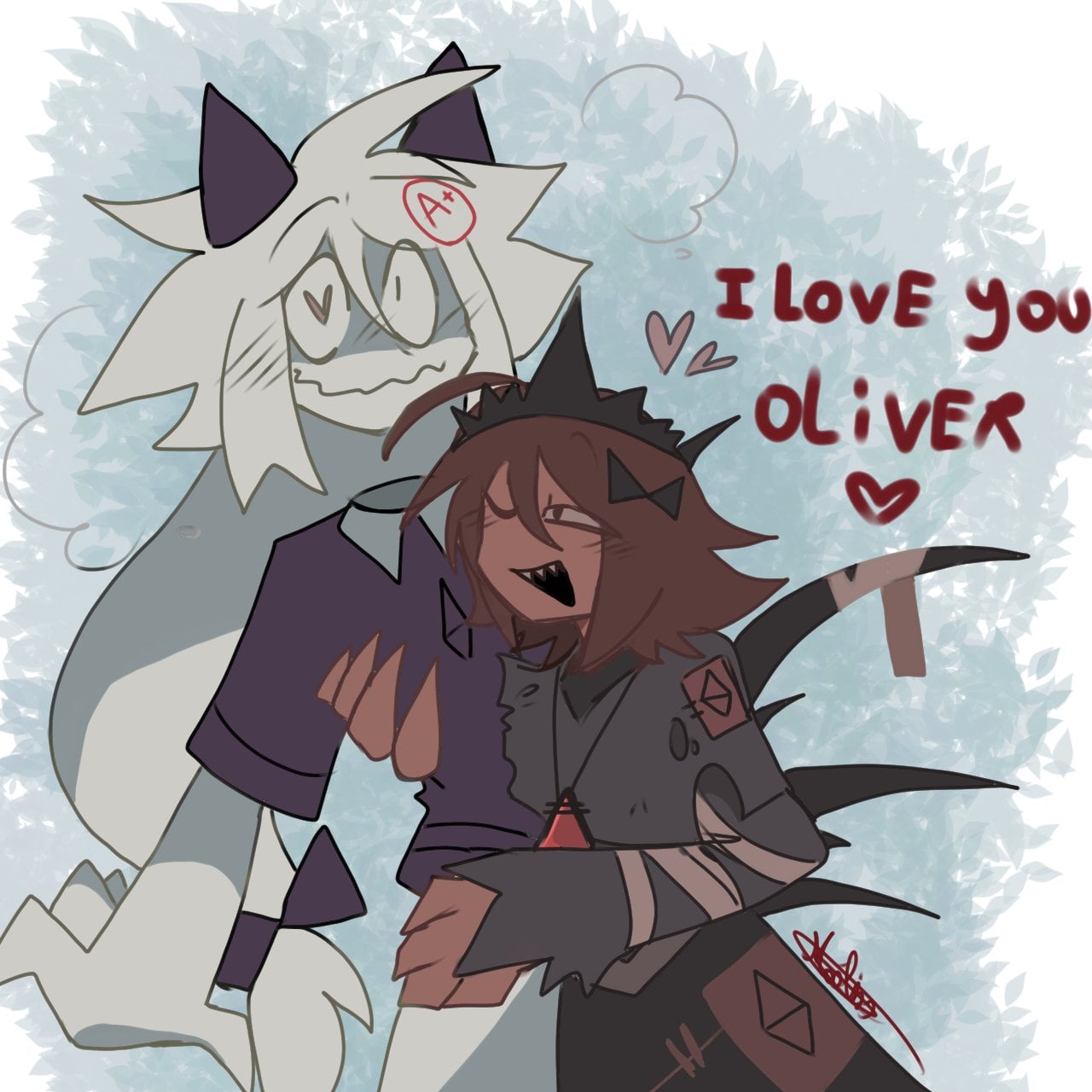
If you’ve spent more than five minutes on TikTok or YouTube lately, you’ve probably seen her. A towering, monochromatic figure with a compass for a hand and a look that says "I’ll kill you if you fail this math test." That’s Alice. She’s the Resident Evil-style stalker of the Fundamental Paper Education universe, and honestly, she’s the reason half the internet is currently obsessed with stationary-themed horror.
Created by Kaaatie, Fundamental Paper Education isn't a long-running series. Not yet, anyway. It started with a viral music video called "Basics in Behavior," and things just... exploded. People aren't just watching it; they're dissecting every frame. Alice is the crown jewel of this madness. She isn't just a monster under the bed. She’s a monster in the dormitory who lives behind a door labeled with a warning sign, and she represents the absolute peak of the "analog horror meets indie animation" trend that's currently dominating Gen Z culture.
The Mystery Behind Alice in Fundamental Paper Education
Who is she? Really?
In the short "Basics in Behavior" animation, Alice is framed as the ultimate consequence. While Miss Circle and the other teachers are busy dismembering students for bad grades, Alice feels like something else entirely. Something ancient. Something the school can't quite control. She lives in a room filled with black ink, or maybe it’s paper—it’s hard to tell in the scribbly, sketchbook aesthetic that defines the series.
She's huge.
Seriously, her height is one of the first things fans notice. She towers over the students, moving with a jagged, jerky motion that feels like someone crumbling a piece of paper. Her design is a masterclass in "less is more." You've got the black-and-white palette, the messy hair, and that terrifyingly sharp compass. It's a literal interpretation of school supplies turned lethal.
Kaaatie’s art style draws heavy inspiration from the "Abbie and Lana" era of internet doodles, but Alice brings a darker, more demonic energy to the table. She doesn't talk. She doesn't lecture. She just hunts. When Oliver (the resident bully of the school) leads Claire to Alice's room, it's not a prank. It's a death sentence. That scene alone cemented Alice as the "Final Boss" of the Fundamental Paper Education lore.
Why the Paper Aesthetic Actually Works
Most horror tries too hard. They want hyper-realistic blood or jump scares that blow out your speakers. Fundamental Paper Education does the opposite. It uses the visual language of a middle schooler’s notebook. You know those drawings you used to make in the margins of your notebook when you were bored in history class? Imagine if those drawings came to life and decided they were hungry.
That’s the hook.
It feels nostalgic but wrong. The "paper" gimmick isn't just a filter; it's the physics of the world. Characters get ripped. They get taped back together. When Alice attacks, it feels like a page being torn out of a book. It’s visceral in a way that 3D CGI often fails to be.
Alice vs. Miss Circle: The Power Dynamic
A lot of people get confused about who’s actually in charge at Paper School.
- Miss Circle is the face of the series. She’s the math teacher with the compass arm. She’s scary, sure, but she’s still a teacher. She follows a "logic"—fail the test, you die.
- Alice is the wild card. She doesn't seem to care about grades. She’s an anomaly.
There’s this unspoken tension in the animation where it feels like the teachers are keeping Alice contained. She’s the secret in the basement. When Claire accidentally enters Alice’s room, the atmosphere shifts from "slasher flick" to "cosmic horror." Alice transforms the environment. The walls start dripping. The shadows become physical. It’s a level of power that makes the Oreos-obsessed Miss Circle look like a playground bully by comparison.
The "Basics in Behavior" Impact
We have to talk about the song. "Basics in Behavior" by The Living Tombstone is the heartbeat of this entire movement. It was originally a Baldi's Basics fan song, but Kaaatie’s reimagining gave it a second life that, frankly, eclipsed the original context.
Music is the secret sauce here. The tempo matches Alice’s movements perfectly. When the beat drops and Alice emerges from her room, it creates a sensory overload that triggers the "fight or flight" response in viewers. This is why the video has tens of millions of views. It’s the perfect marriage of a catchy earworm and haunting visuals.
Fans have spent hours frame-by-framing the video to find Alice's backstory. Is she a former student? Is she a manifestation of the school's collective trauma? The lack of concrete answers is exactly what keeps the FPE (Fundamental Paper Education) community alive. If we knew everything about her, she wouldn't be scary anymore.
Dealing with the Fandom and Theories
Let's be real: the Alice fandom is intense.
You’ve got the "simps," the theorists, and the artists. Go to any fan-art site and search for Alice; you'll see thousands of interpretations. Some people see her as a misunderstood victim, while others embrace her as a pure villain.
One of the most popular theories is that Alice and Oliver have a deeper connection. In the animation, Oliver seems to be the only one who can interact with her door without immediate consequences. He’s the one who tricks Claire. Is he working for Alice? Is he her "familiar"? This dynamic adds a layer of psychological horror to the series. It’s not just about a monster eating kids; it’s about the cruelty of the students themselves.
The series also taps into a very specific fear: the pressure of education.
We’ve all had that dream where we’re taking a test we didn't study for. Alice is that dream turned into a nightmare. She is the physical manifestation of "failing." In the world of Fundamental Paper Education, your worth is tied to your performance, and Alice is what happens when you’re no longer "useful" to the system.
What Most People Get Wrong About Kaaatie's Work
Don't call it a show. Not yet.
A lot of newcomers go looking for "Episode 1" and get frustrated when they only find the music video and a few shorts. Fundamental Paper Education is currently an "animation project." It's a series of character designs and vignettes that tell a loose story.
This is part of the charm. It’s "fragmented storytelling." You have to piece the narrative together through Kaaatie’s social media posts, character sheets, and small animations. It makes the discovery process feel personal. When you figure out that Alice has a specific room number or a specific relationship with the other "monsters," it feels like you've uncovered a secret.
Also, Alice isn't a Baldi's Basics character.
While the song is a tribute to that game, Alice is an original creation. Mixing the two up is a quick way to get corrected by a hardcore fan. She belongs to the "Paper School" universe, which has its own rules, its own hierarchy, and its own unique brand of paper-thin existential dread.
Looking Forward: The Future of Alice
Where does Kaaatie go from here?
The demand for more Fundamental Paper Education content is staggering. Alice is clearly the "hook" that will pull people into a full series if one ever launches. Her design is iconic enough to support merchandise, plushies (which people are already making bootleg versions of), and even indie games.
If you're looking to dive deeper into the world of Alice, start with the official Kaaatie YouTube channel. Avoid the "content farm" Elsa-gate style videos that have started popping up to capitalize on the trend. Stick to the source material. Look at the character designs. Pay attention to the background details in Alice's room—the photos on the wall, the scratches on the floor.
The brilliance of Alice is that she represents the "new wave" of indie animation. It’s raw, it’s DIY, and it doesn't wait for a big studio's permission to be terrifying.
Actionable Insights for Fans and Creators
If you’re captivated by Alice and the world of Fundamental Paper Education, here’s how to engage with the medium effectively:
- Study the Silhouette: If you’re an artist, look at Alice’s silhouette. It’s incredibly distinct. That’s the secret to her design. Even without color or detail, you know exactly who she is.
- Support the Original: Follow Kaaatie on X (Twitter) or YouTube. Indie creators rely on direct engagement to keep these projects going.
- Analyze the Sound Design: Listen to the "Basics in Behavior" video with headphones. The spatial audio—how the sounds of paper tearing move from left to right—adds a lot to the Alice encounter.
- Join the Community: Discord and Reddit are the hubs for the latest theories. Just be prepared for a lot of "OC" (original character) talk, as the FPE community loves creating their own paper students.
Alice is more than just a scary drawing. She’s a reminder that the simplest materials—paper, ink, and a good song—can create something that haunts the internet's collective imagination. Just... maybe stay away from the room with the warning sign.
Next steps for exploring the FPE universe:
- Watch the original "Basics in Behavior" animation on Kaaatie’s official channel to see Alice’s debut.
- Check out the character sheets released by the creator to see the height comparisons between Alice and the faculty.
- Look for the "hidden" frames in the hallway scenes that hint at the school's history before Alice took over the dormitory.