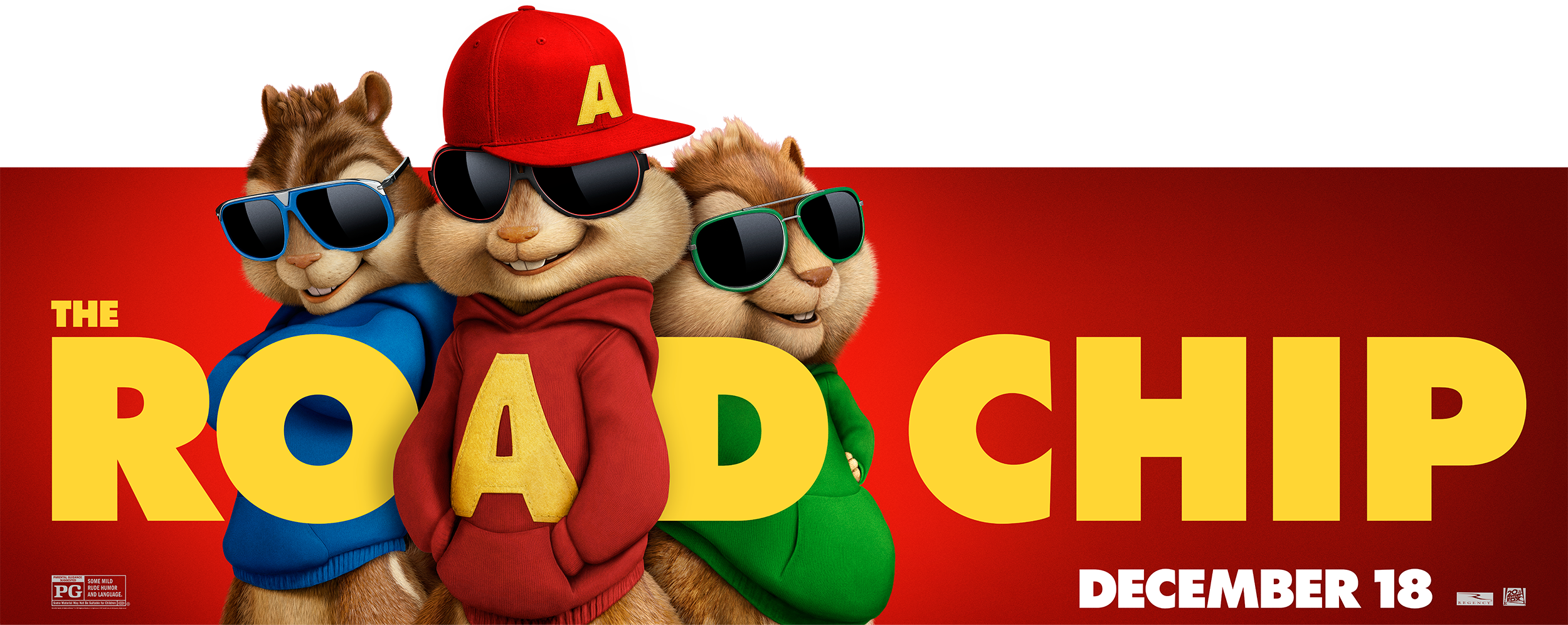
Ten years. That is how long it has been since we last saw the high-pitched trio on the big screen. When Alvin and the Chipmunks: The Road Chip hit theaters back in December 2015, nobody expected it to be a high-brow masterpiece. Honestly, it was never meant to be. It was a loud, colorful, and somewhat chaotic farewell to a live-action franchise that had somehow survived nearly a decade of critical bashing.
But here is the thing: people still watch it. It pops up on streaming, parents throw it on to keep the kids quiet for 92 minutes, and it remains a weirdly fascinating time capsule of mid-2010s pop culture.
The plot is basic. Simple, really. Alvin, Simon, and Theodore get it into their heads that Dave (Jason Lee) is going to propose to his girlfriend, Samantha, in Miami. They are convinced this means they’ll be dumped. Toss in a "terrible" potential stepbrother named Miles and a cross-country trip involving a very angry air marshal, and you've got a movie.
Why The Road Chip actually worked for its audience
Most critics hated it. They used words like "agonizing" and "brainless." Rotten Tomatoes has it sitting at a dismal 16%.
But look at the box office. It made over $234 million worldwide. For a fourth entry in a series about singing rodents, that is a massive win. Why? Because kids do not read the New York Times reviews. They just want to see a CGI chipmunk do a backflip and hear a squeaky version of "Uptown Funk."
- The Humor: It’s full of "rude" humor. Farts, burps, the works. It’s the kind of stuff that makes a seven-year-old lose their mind with laughter.
- The Music: Mark Mothersbaugh (of DEVO fame) did the score. The movie leans hard into then-current hits. Hearing a chipmunk cover "Turn Down for What" is a specific kind of fever dream.
- The Villain: Tony Hale joined the cast as Agent Suggs. He basically replaced David Cross’s Ian Hawke. While Cross was a legendary foil, Hale brought a different, more manic energy that actually kind of saved the human scenes.
A different look for the boys
If you watch the movies back-to-back, you might notice the Chipmunks look... different in this one. That wasn't just your imagination. Rhythm and Hues, the studio that did the effects for the first three films, went through a messy bankruptcy. Weta Digital—the same people who worked on Lord of the Rings—stepped in for the fourth film.
They refreshed the models. The fur looks a bit more realistic, and the lighting is softer. It didn't change the fact that they were talking animals, but the technical upgrade was there.
The weirdest cameo in family movie history
One of the most bizarre moments in Alvin and the Chipmunks: The Road Chip is when Alvin sneaks into a first-class cabin and sits next to... John Waters. Yes, the "Pope of Trash" himself.
Alvin actually makes a joke referencing Waters' 1972 cult classic Pink Flamingos. It is a reference that exactly zero children in the audience understood. It’s a "blink and you'll miss it" moment for the parents who were forced to sit through the film. It's easily one of the strangest crossovers in modern cinema.
The end of the road?
For a long time, fans wondered if there would be a fifth movie. Usually, if a movie makes money, a sequel follows. But the gap between the third and fourth movies was four years, and the returns were starting to dip.
- Alvin and the Chipmunks (2007): $361M
- The Squeakquel (2009): $443M
- Chipwrecked (2011): $342M
- The Road Chip (2015): $234M
You can see the trend. By the time 2015 rolled around, the "Squeakquel" era was fading. Plus, Alvin and the Chipmunks: The Road Chip had the misfortune of opening the same weekend as Star Wars: The Force Awakens. Trying to fight Han Solo with a singing chipmunk is a losing battle.
What you should take away from the film today
If you are planning a movie night or just feeling nostalgic, here is what actually matters about this flick. It’s a story about "found family."
The movie ends with Dave officially adopting the boys. It’s a sweet moment in an otherwise loud movie. It settles the "father-son" dynamic that had been the core of the series since 2007. It might be silly, but for kids who feel like they don't fit the "traditional" family mold, that message hits home.
Practical things to know:
- Where to watch: It frequently rotates through Disney+ and Hulu, but check your local listings as licensing deals change fast in 2026.
- Parental Guide: It's rated PG. There’s a bar fight scene and some mild "rude" language, but nothing that’s going to traumatize a kid.
- The Soundtrack: If you have a kid who loves the songs, the soundtrack is actually pretty well-produced for what it is.
If you want to revisit the franchise, start with the 2007 original to see the "evolution" of the CGI. It’s wild to see how much the technology changed in just eight years. You can also look up the 1980s animated series to see where the "Road Chip" travel themes actually originated; many of the 2015 plot points are subtle nods to the classic Saturday morning cartoon episodes like "Too Hip to Be Dave."