You know that feeling when you refresh a browser tab for the fourteenth time in an hour? I do. It's a specific kind of modern anxiety. We live in an era where Amazon orders placed by me recently basically dictates my weekend plans and my Tuesday morning mood. Honestly, it’s getting a bit ridiculous. One minute you’re just "browsing" for a new HDMI cable, and the next, you've somehow committed to a 12-pack of organic bamboo loofahs and a vacuum cleaner that costs more than your first car.
Retail therapy is real. But so is the logistical nightmare that follows.
The reality of managing a digital paper trail is messy. Gone are the days when you just walked into a Sears, handed over cash, and left with a toaster. Now, we’re juggling delivery windows, porch pirate paranoia, and the inevitable "Your package is running late" notification that feels like a personal betrayal. Tracking these things isn't just about clicking a button; it's about navigating a massive, algorithmic beast that sometimes loses its own tail.
Where Did My Stuff Actually Go?
Tracking Amazon orders placed by me recently isn't always as straightforward as that little green progress bar makes it look. You see "Shipped," and you think, Great, it’s on the truck. But is it? Often, that package is just sitting on a pallet in a warehouse in New Jersey waiting for a "scan event."
If you’ve ever looked at your order history and seen three different delivery dates for three different items in the same box, you’ve hit the consolidation wall. Amazon’s logistics engine, which relies heavily on predictive modeling—basically guessing what you’ll buy before you buy it—sometimes trips over its own feet. They use a system called "Random Stow." It sounds chaotic because it is. Instead of putting all the books in one aisle and all the blenders in another, they shove items wherever there's an open slot. This is supposed to make picking faster, but when you're looking at your recent orders, it explains why your socks are coming from Kentucky while your sneakers are coming from Nevada.
The Ghost of Deliveries Past
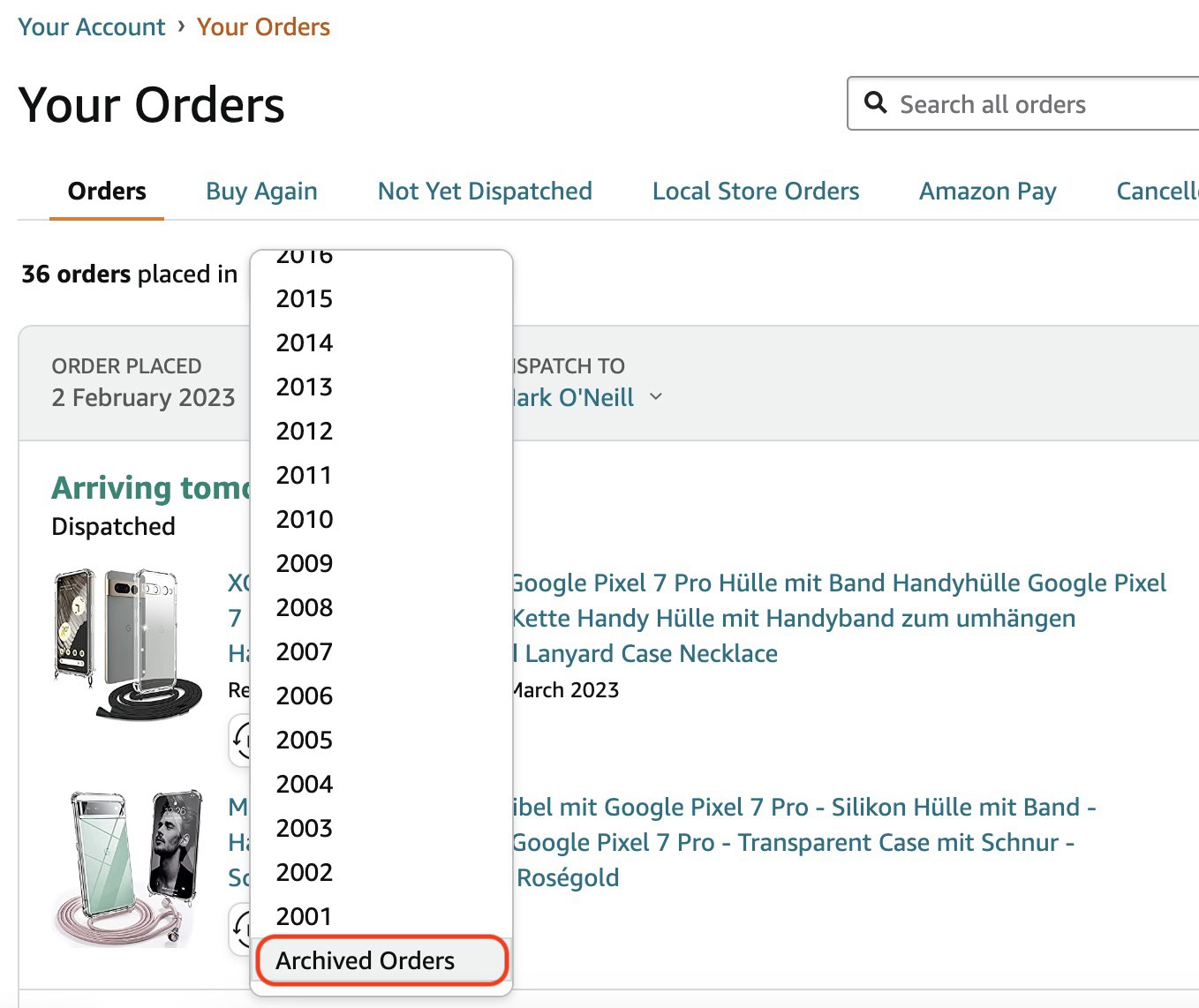
Have you checked your archived orders lately? Most people forget that section even exists. It’s the digital attic where all the impulse buys go to die. If you’re looking for Amazon orders placed by me recently and something is missing, check the Archive. Sometimes a stray click hides a transaction you actually need for tax purposes or a warranty claim.
It’s also worth noting that the "Buy It Again" feature is a trap. It’s designed to exploit our cognitive laziness. I’ve caught myself almost re-ordering specialized lightbulbs that I already had in a drawer upstairs, simply because the app put the "Buy Again" button right in my line of sight while I was checking on a delivery status.
Why Your Tracking Map Is Lying to You
We’ve all seen it. The "10 stops away" notification. You start peering through the blinds like a stakeout cop. Then, suddenly, the map disappears. Or the driver is somehow four miles in the opposite direction ten minutes later.
This happens because of the Rabbit routing system. Amazon’s proprietary software tells drivers exactly where to go, but it doesn't always account for human reality—like a closed road, a locked apartment gate, or a dog that looks a little too bitey. When a driver has to deviate, the "Live Map" we see as customers becomes a work of fiction.
- Pro Tip: If your order says "Out for Delivery" but it's 9:00 PM, don't hold your breath. Drivers are capped on hours, and if they hit their limit, that package goes back to the station. You’ll see it tomorrow. Usually.
- The "Handed to Resident" Lie: Sometimes drivers mark this just to stop the clock on their delivery metrics. If it says handed to you but you were in the shower, check the bushes.
The Returns Loophole Nobody Uses
Managing Amazon orders placed by me recently also means dealing with the stuff that showed up looking nothing like the picture. We’ve all been there. The "large" dog bed that would barely fit a hamster.
Did you know you can often get a refund without even sending the item back? For low-cost items, the shipping and processing labor costs Amazon more than the product is worth. If you start a return for a $5 plastic spatula that arrived snapped in half, the system might just tell you to keep it or dispose of it. It’s an automated decision based on your account's "trust score." If you’re a long-time Prime member with a low return rate, the algorithm is much more likely to give you a "returnless refund."
However, don't abuse this. Amazon is famously aggressive about banning accounts that show "extreme" return behavior. There are real people—well, real algorithms monitored by people—tracking your Return-to-Purchase ratio.
Dealing with the "Delivered but Not Here" Mystery
This is the peak of frustration. You get the notification. You check the porch. Nothing. Before you jump on a chat with a bot named "Alex," wait 24 hours. Often, USPS or third-party carriers mark an item as delivered when it arrives at the local sorting facility, not your front door. It’s a trick to meet their contractual Service Level Agreements (SLAs) with Amazon.
If it’s still missing after a day, skip the basic chat bot. Go straight to the "Call Me" feature. Speaking to a human—usually in a call center in the Philippines or India—is the only way to get a "concession" or a replacement sent via overnight shipping. Be polite. These folks deal with screaming people all day; a little kindness usually gets you a $5 or $10 promotional credit for your trouble.
Security, Privacy, and Your Order History
Your list of Amazon orders placed by me recently is a goldmine for data brokers. While Amazon doesn't "sell" your data in the traditional sense, they use it to build a terrifyingly accurate profile of your life. They know when you’re pregnant before you tell your parents. They know when you’re starting a new hobby or when you’re depressed (hello, 2 AM weighted blanket purchase).
If you share an account with a spouse or kids, use Amazon Household. It keeps your purchase histories separate while sharing the Prime benefits. This prevents your "recently placed orders" from spoiling birthday surprises or, worse, letting your kids see that you've been buying "Healthy Liver" supplements after a rough New Year's Eve.
The Real Cost of "One-Click" Buying
Speed kills—specifically, it kills your budget. The friction-less nature of the Amazon app is a masterclass in behavioral economics. By removing the "Add to Cart" and "Confirm Details" steps, they bypass the part of your brain that asks, Do I really need this? I’ve started a "24-hour cart rule." If I want something, I put it in the cart and walk away. If I still want it the next day, I buy it. You’d be surprised how many Amazon orders placed by me recently never would have happened if I’d just waited for the dopamine hit of the "Buy Now" button to fade.
Practical Steps for a Cleaner Order History
Managing your digital life shouldn't be a full-time job, but a little maintenance goes a long way. If you’re drowning in boxes and "order shipped" emails, here’s how to regain control of the chaos.
Audit your subscriptions. We all have those "Subscribe & Save" items we forgot about. That 48-pack of Gatorade was a great idea in July, but now it's January and you have a tower of plastic bottles in your garage. Go to "Memberships & Subscriptions" and prune the dead wood.
Use Amazon Map Tracking wisely. Don't stare at the map. It’s bad for your blood pressure. Instead, set up "Delivery Alerts" through the app so you get a push notification the second the photo of the package on your porch is uploaded. This is the most reliable way to beat porch pirates.
Download your data. If you’re a nerd for spreadsheets, you can actually request a full export of every order you’ve ever placed. It’s eye-opening. You can see exactly how many thousands of dollars you’ve funneled into the Jeff Bezos empire over the last decade. It’s a great way to reality-check your spending habits.
Check for "No-Rush" Credits. If you don't need that new book by tomorrow, take the No-Rush shipping. Those $1 or $2 digital credits add up. I’ve bought entire seasons of TV shows and dozens of Kindle books using nothing but credits from delayed shipping. It turns your Amazon orders placed by me recently into a piggy bank for digital entertainment.
Verify Third-Party Sellers. Always look at who is actually shipping the item. If it’s "Sold by [Random Name] and Fulfilled by Amazon," you’re usually safe. If it’s "Ships from and sold by [Random Name]," you are at the mercy of their specific shipping speeds and return policies. These orders won't show up on the Amazon delivery map, and getting a refund can be a headache if the item is a dud.
Stop letting the "Buy Now" button dictate your life. Be intentional. Check your history, verify your deliveries, and maybe—just maybe—close the app for a few hours. Your porch (and your bank account) will thank you.