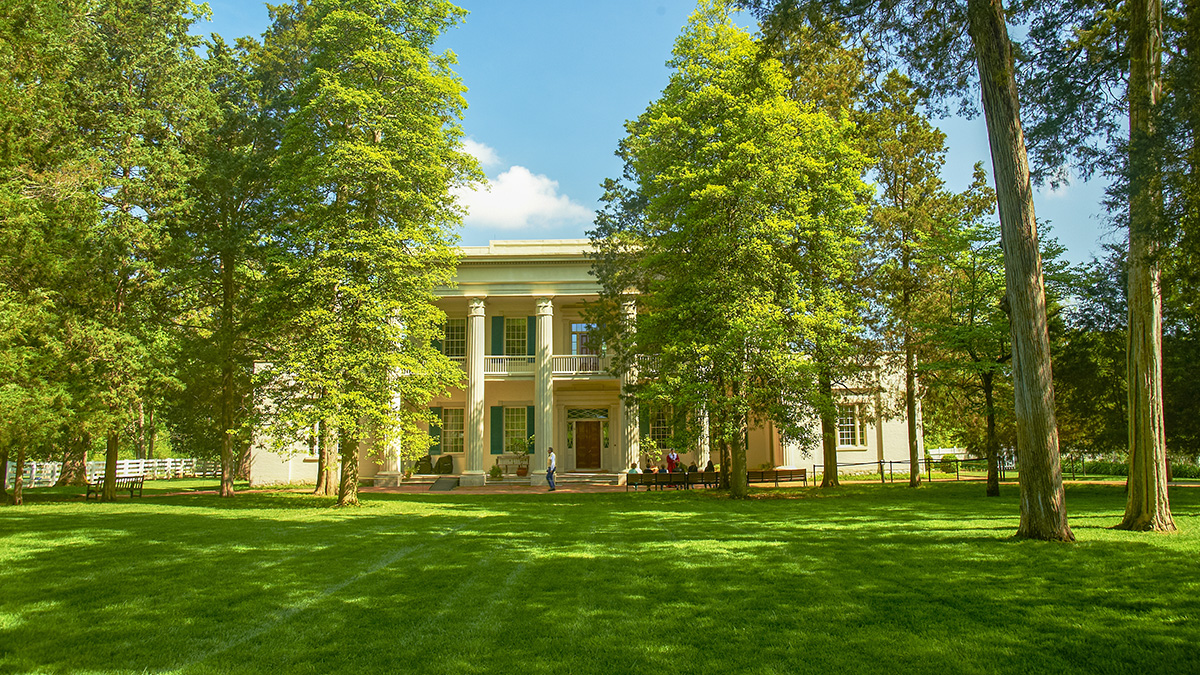
If you’re driving ten miles east of the neon chaos of Nashville’s Broadway, you’ll hit a patch of land that feels like a literal time warp. It’s quiet. Lush. A bit heavy, if you’re paying attention. Andrew Jackson's home The Hermitage isn't just a museum; it’s a 1,120-acre contradiction. People come for the Greek Revival columns and the "Old Hickory" lore, but they usually leave talking about the things that aren't in the history books.
Most folks think they know Jackson. The guy on the twenty-dollar bill. The hero of New Orleans. The "People's President." But his house? That’s where the real story lives. It’s where he was a husband, a gambler, a grieving widower, and—unavoidably—a major enslaver.
Walking onto the grounds today, especially with the recent discovery of the Enslaved Cemetery in late 2024, the vibe has shifted. It’s no longer just a shrine to a political giant. It’s a full-scale look at a working cotton plantation that functioned on the backs of hundreds of people whose names are finally being said out loud.
The Mansion That Fire (Almost) Destroyed
The house you see today wasn't the first one. Not even close. When Andrew and Rachel Jackson moved here in 1804, they were living in a two-story log blockhouse. It was rugged. Basically a cabin on steroids. They lived there for 15 years before Jackson decided he needed a home that matched his rising status.
He built a brick, Federal-style house between 1819 and 1821. It was nice, sure, but it wasn't the "palace" people expect.
Then came the fire of 1834.
While Jackson was busy being President in D.C., a chimney fire gutted the place. Instead of just fixing it, he went big. He hired architects Joseph Reiff and William Hume to rebuild it in the Greek Revival style. That’s where those iconic six Corinthian columns come from. Honestly, the front of the house is a bit of a flex. He wanted visitors to feel his power before they even stepped inside.
Inside the Walls: 80% Original Everything
One thing that’s wild about The Hermitage? It’s not filled with "period appropriate" furniture from eBay. About 80% of the furnishings are actually the ones the Jacksons used. That’s unheard of for a house this old.
- The Wallpaper: The front hall features panoramic French wallpaper (Joseph Dufour et Cie) depicting scenes from the myth of Telemachus. Rachel picked it out. It’s still there.
- The Staircase: There’s a free-hanging elliptical staircase that looks like it belongs in a movie. It’s a feat of 19th-century engineering.
- The "Eighth of January" Mantel: A veteran of the Battle of New Orleans carved a rustic mantelpiece for the dining room. He only worked on it on the anniversaries of the battle until it was finished in 1839.
The house feels lived in because it was. You can almost smell the cigar smoke in the library. Jackson died here in 1845, likely from a combination of lead poisoning (from old dueling bullets) and chronic illness. He’s buried just a few steps away in the garden, right next to Rachel.
Andrew Jackson's Home The Hermitage: The Story You Weren't Told
For a long time, the narrative at The Hermitage was very "Great Man History." We talked about Jackson’s presidency and his military wins. But in 2024 and 2025, the conversation expanded in a massive way.
Archaeologists recently confirmed the location of the Enslaved Cemetery about 1,200 feet from the mansion. They found at least 28 graves. It was hidden for decades under thick honeysuckle and privet.
The Hermitage was a massive cotton plantation. At its peak, Jackson enslaved over 150 people here. This wasn't a small family farm; it was an industrial operation. When you visit now, the "In Their Footsteps" tour is basically mandatory if you want the full picture. You see the triplex of brick cabins. You learn about Alfred, who was born into slavery at The Hermitage and stayed on as a tenant farmer after the Civil War, eventually becoming the first guide for the museum.
Why the Garden Matters
The garden isn't just for pretty photos. It was Rachel’s sanctuary. She died in 1828, right before Jackson was inaugurated. He was devastated. He visited her grave every single afternoon he was home.
If you're into the paranormal side of things—and plenty of Nashville locals are—the garden is where most "encounters" happen. People report the smell of cigars or the sound of a man whistling. Whether you believe in ghosts or not, the devotion Jackson had for his wife is tangible in that dirt.
What Most People Get Wrong About a Visit
A lot of tourists treat this as a quick 45-minute stop. Big mistake. The grounds are huge.
- Don't skip the movie. The 17-minute film in the visitor center is actually good. It doesn't shy away from the Indian Removal Act or the complexities of Jackson’s character.
- Look for the "Guitar Drive." The carriage path to the house is shaped like a guitar. Why? Some say it was just for easier carriage turns, others think it was a stylistic choice by the designer Ralph Earl. Either way, it’s a very "Nashville" detail for a house built way before the Opry.
- Check out Tulip Grove. This is the mansion across the street built for Jackson's nephew. It’s often quieter and gives you a great look at high-end 1830s architecture without the crowds.
Practical Steps for Your Trip
- Timing: Get there at 8:30 AM when they open. The morning light on the mansion is incredible for photos, and it gets humid as hell in the Tennessee afternoon.
- Tickets: Buy them online. The mansion tours are timed, and they do sell out, especially on weekends.
- Wear Sneakers: You're going to be walking on gravel, grass, and dirt paths. Leave the fancy boots for Broadway.
- The App: Download the Hermitage tour app or use the QR codes on-site. There’s a lot of audio content that explains the archaeological digs that you won't get from just reading the signs.
The Hermitage is a place of heavy contrasts. It's beautiful and brutal. It's a monument to the man who defined American democracy for an era, and a reminder of the people that democracy left behind. If you want to understand the DNA of the United States, you sort of have to stand on this porch.
Next Steps for Your Visit:
Plan for at least three to four hours to cover the mansion, the garden, and the newly opened Enslaved Cemetery paths. If you have extra time, drive the two miles down to the Hermitage Church—Jackson built it for Rachel, and it remains one of the simplest, most evocative buildings on the entire property.