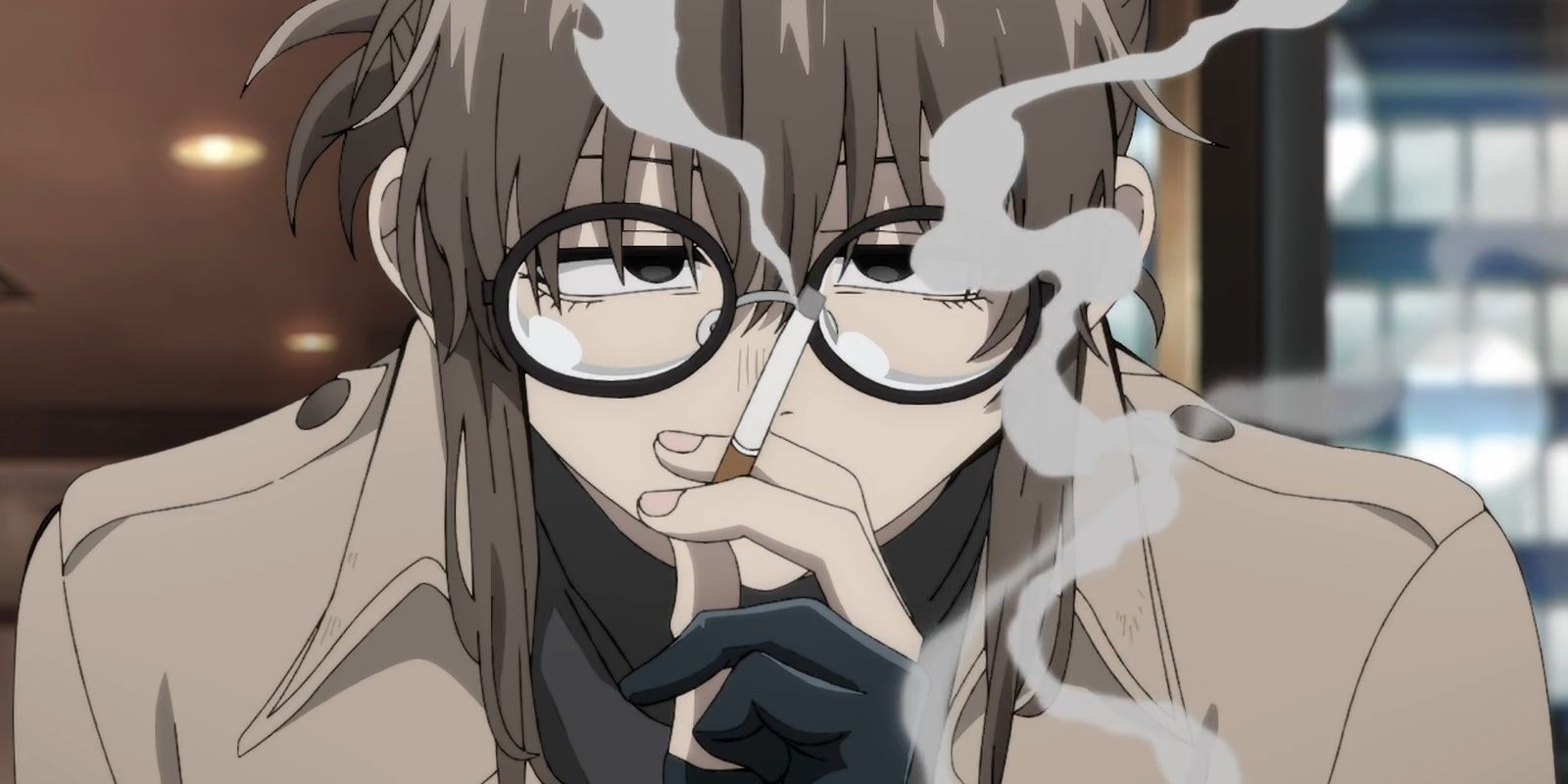
You’re cruising through Call of the Night—or Yofukashi no Uta, if you’re a purist—and everything feels like a hazy, neon-soaked dream about youth. It’s all about Ko and Nazuna, right? It's about that vibe of staying up late, the freedom of the streets, and the romanticized idea of becoming a vampire. Then, she shows up. The Call of the Night detective, Anko Uguisu, walks into the frame and basically shatters the glass.
She isn't just a side character. Honestly, she’s the narrative wake-up call that tells the audience, and Ko, that the night isn't just a playground. It’s dangerous.
Most fans initially mistake her for a background gag or a minor hurdle. But Anko represents the "adult" world intruding on a teenage fantasy. While Ko is busy trying to fall in love to escape his mundane life, the detective is there to remind us that immortality has a body count. She’s messy. She smokes too much. She looks like she hasn't slept since the Shōwa era. And that’s exactly why she’s the most compelling part of Kotoyama's masterpiece.
The Mystery of Anko Uguisu
When we talk about the Call of the Night detective, we're talking about a woman named Anko Uguisu—though we later find out her real name is Kyoko Mejiro. Her introduction is deliberate. She doesn't come in with superpowers or a flashy weapon. She comes in with questions.
She's looking for a missing person. Specifically, she's looking for Mahiru’s brother. This shift in the story is jarring for a reason. Up until her arrival, the stakes were mostly emotional. Will Ko fall in love? Will he become a vampire? Anko changes the "What if?" into "What happened?"
Her design is a masterclass in visual storytelling. She wears a trench coat that’s seen better days and has those deep bags under her eyes that scream "I’ve seen things you wouldn't believe." It contrasts sharply with Nazuna’s playful, punk-rock aesthetic. Nazuna is the dream of the night; Anko is the hangover.
Why the Detective is Essential to the Plot
The story needed a foil. Without the Call of the Night detective, the series risks becoming a repetitive "monster of the week" or a standard rom-com. Anko provides the friction. She is a vampire hunter, but not in the Van Helsing sense. She doesn't hate vampires because they're "evil" in a religious way. She hates them because of the collateral damage they leave behind.
Think about her history. Without spoiling every single beat for those catching up, her past is intrinsically tied to the very nature of what Ko wants to become. She knows the cost of the "one-year rule." She knows what happens when the love isn't mutual or when a vampire gets bored.
Her knowledge is her weapon. In a world where vampires have super strength and speed, Anko uses psychology, preparation, and a deep understanding of vampire weaknesses—like their attachment to their human belongings. She’s the only one playing chess while everyone else is playing tag.
Breaking the Vampire Rom-Com Trope
We've seen the "detective chasing monsters" trope a million times. Usually, they're the villain. But in Call of the Night, Anko is more of a tragic mirror. She represents what happens when the night consumes you and you don't have a Nazuna to catch you.
She’s basically the personification of the "burnout" that Ko is trying to avoid by quitting school. Ironically, by hunting vampires, she’s more tied to the night than almost anyone else in the series. She’s a human who has forgotten how to live in the sun.
Her interactions with Nazuna are particularly spicy. There’s a palpable tension there because Anko knows exactly how to get under a vampire's skin. She doesn't fear them. That lack of fear is her biggest advantage. When you stop being afraid of the predator, the predator starts feeling like the prey.
The Emotional Core of Kyoko Mejiro
Calling her "the detective" is a bit of a disservice once you get into the meat of her arc. Kyoko Mejiro is a woman haunted by her father. Her backstory is one of the darkest threads in the manga. It involves a vampire who didn't follow the rules—or rather, a vampire who followed them too perfectly.
This is where the series gets heavy. It explores the idea of "killing" a vampire by destroying their connection to their human past. It’s psychological warfare. Anko isn't trying to stake them through the heart; she’s trying to erase their existence.
It’s dark stuff. But it’s necessary because it balances the whimsical tone of the early chapters. It forces Ko to realize that his "cool" new life has a dark underbelly. The Call of the Night detective is the one who holds up the mirror and says, "Look at what you're actually signing up for."
The Significance of the Cigarette
It sounds trivial, but notice how she smokes. It’s constant. In manga, smoking is often shorthand for adulthood, stress, or a lingering attachment to a world that’s fading. For Anko, it feels like a tether. It’s a human habit. It’s smelly, it’s unhealthy, and it’s grounded. Everything the vampires aren't.
She uses her "plainness" as a disguise. She can blend into a crowd in a way Nazuna or Niko never could. That makes her dangerous. She’s the predator in the tall grass, waiting for the flashy vampires to make a mistake.
Key Takeaways for Fans and New Readers
If you're just getting into the series or you're a long-time fan re-evaluating her role, keep these points in mind.
First, look at the eyes. Kotoyama draws eyes very specifically in this series. The vampires have those swirling, hypnotic pupils. Ko’s eyes change as he gets closer to the "other side." Anko’s eyes? They’re dead. They’re flat. They’ve seen the end of the movie already.
Second, pay attention to her "investigations." She isn't just looking for people. She’s looking for weaknesses. Every question she asks Ko is a test. She’s gauging his resolve. She’s wondering if he’s worth saving or if he’s already gone.
Third, she is the catalyst for Ko’s growth. Without her, Ko would stay a passive participant in his own life. She forces him to take a stand. She forces him to define what his relationship with Nazuna actually is. Is it love? Or is it just a desire for power?
Actionable Insights for Engaging with the Series
To truly appreciate the depth of the Call of the Night detective, you should look beyond the anime's first season. While she appears, her true depth is revealed in the later half of the manga (around Volume 6 and onwards).
- Read the Manga for Nuance: The anime captures the vibe, but the manga’s linework during Anko’s more intense scenes is incredible. The way the shadows play on her face adds a layer of grit that’s hard to animate.
- Watch the Pacing: Notice how the music shifts when she enters a scene. The lo-fi, chill-hop beats often cut out or become discordant. This is a deliberate "vibe check."
- Analyze the Parallels: Compare Anko’s relationship with her parents to Ko’s relationship with his. Both are looking for an escape, but they chose opposite directions. One chose the night; the other chose to hunt it.
The Call of the Night detective isn't there to ruin the fun. She’s there to make the story real. By introducing consequences, she makes Ko’s journey meaningful. Without the threat of the detective, the night is just a dream. With her, it's a reality.
Check out the official VIZ Media translations of the manga to see her full arc unfold. It’s a masterclass in character writing that turns a simple detective story into a haunting exploration of grief and identity. Keep an eye on the background details in her apartment scenes—they tell you more about her than her dialogue ever will.