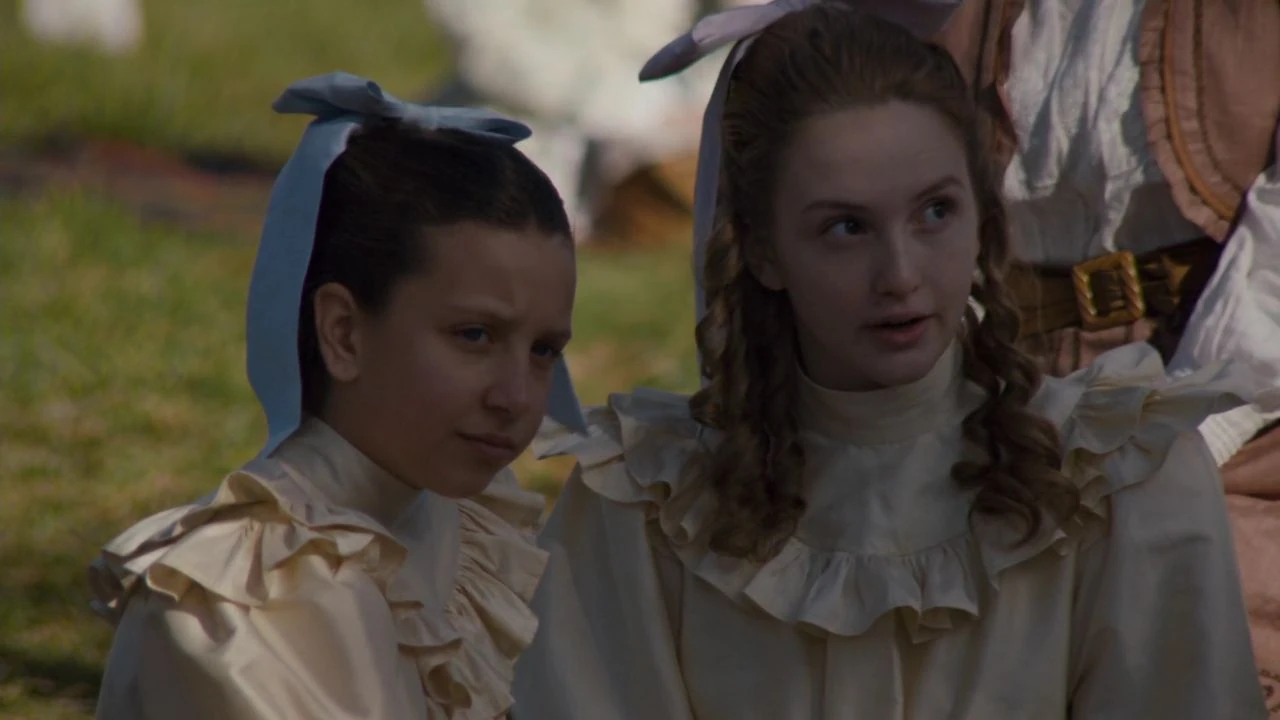
Honestly, if you're a fan of Anne with an E, you’ve probably spent most of your time obsessing over Anne’s dramatic outbursts or Gilbert’s smoldering looks. That’s fair. But if you look a little closer at the group of girls in Avonlea, there is one character who often gets overshadowed by Ruby’s hysterics and Josie’s sharp tongue. I’m talking about Anne with an E Jane Andrews.
In the original L.M. Montgomery books, Jane is described as "plain and sensible." Basically, she’s the one who doesn't cause trouble. But the Netflix adaptation, helmed by Moira Walley-Beckett, did something a bit different with her. They turned Jane into a lens through which we see the suffocating expectations of 19th-century girlhood. She isn't just a background character; she's a survivor of a very specific kind of social pressure.
Who is Jane Andrews in the World of Avonlea?
In the show, Jane is played by Lia Pappas-Kemps. She’s the sister of Billy Andrews—who, let’s be real, is the absolute worst—and Prissy Andrews. While Prissy gets the big "runaway bride" moment and Billy gets the "local bully" narrative, Jane occupies a weird middle ground. She’s part of the core "Story Club" group, but she’s often the one trying to keep the peace.
You’ve probably noticed that Jane is usually the one wearing yellow. In the costume design for Anne with an E, color theory is huge. While Anne is all earthy tones and Diana is in regal blues, Jane's yellow often symbolizes a mix of warmth and caution. She’s stuck in a family that is deeply traditional (and honestly, kind of toxic).
The Struggle of Being an Andrews
Living with Billy Andrews as a brother would be a nightmare for anyone. In the series, we see Jane constantly navigating the fallout of Billy's behavior. She’s expected to be a "proper lady" while her brother gets to run wild and cause havoc. There’s a specific tension in Jane’s character that stems from her family’s social standing in Avonlea. The Andrews family has money, but they also have a lot of baggage.
What makes Anne with an E Jane Andrews so interesting is her quiet resilience. She doesn't have Anne's vivid imagination to escape into, and she doesn't have Diana's wealth to shield her. She just has to deal with things. This is especially evident during the "period" episode (Season 2, Episode 3), where the girls discuss the "monthly visit" with a mix of terror and confusion. Jane is right there in the thick of it, trying to figure out what it means to grow up in a world that doesn't explain anything to you.
Jane Andrews: Books vs. The Show
If you’ve read the books, you know the show took some massive liberties. In the novels, Jane is actually one of Anne's closest friends, but she’s very... normal. She’s the one who eventually becomes a teacher and stays quite grounded.
In the show, the writers leaned into the "sensible" trait but added a layer of anxiety.
- The Billy Connection: In the books, Billy Andrews actually likes Anne and even tries to get Jane to propose to Anne for him (which is super awkward). In the show, Billy is much more of a villain, which makes Jane’s position at home feel way more precarious.
- The Academic Rivalry: While Jane isn't a top student like Anne or Gilbert, the show depicts her as someone who is trying hard to meet expectations.
- The Friendship Dynamic: Jane often acts as a bridge between the "good" girls (like Diana) and the "mean" girls (like Josie Pye). She’s the social glue that keeps the group from imploding.
Why We Should Talk About Lia Pappas-Kemps
The performance by Lia Pappas-Kemps is actually quite underrated. She manages to convey a lot with just a look—usually a look of "Oh no, what is Anne doing now?" or "I hope my brother doesn't ruin this." Since the show ended in 2019, Lia has actually shifted her focus toward music. She’s released several songs (like "Sad in Toronto") that have a totally different vibe from the Victorian lace of Avonlea. It’s kinda cool to see the "plain and sensible" Jane Andrews turn into a 90s-style indie rock artist in real life.
The "Sensible" Girl in a Radical Show
Anne with an E was often criticized for being too "dark" or too "woke" compared to the source material. It tackled things like PTSD, racism, and gender identity. Jane Andrews represents the girl who is just trying to survive the status quo. She isn't a revolutionary like Anne, but she isn't a villain either. She’s a girl who is being taught that her only value is in her future marriage, yet she’s watching her sister Prissy demand more for herself.
There's a scene where the girls are practicing their "womanly" skills, and you can see the boredom and frustration on Jane's face. It’s subtle. It’s not a big speech. But it’s there. That’s the brilliance of the character—she represents the majority of women at the time who weren't necessarily "extraordinary" orphans, but who were still feeling the weight of the world on their shoulders.
Understanding the Legacy of Jane Andrews
If you want to really appreciate the character of Anne with an E Jane Andrews, you have to look past the main plotlines. She’s the character that reminds us that even the "quiet" ones have stories worth telling. Her presence in the Story Club and her loyalty to her friends, despite her family's reputation, makes her a true kindred spirit in her own right.
Next Steps for Fans:
- Re-watch Season 2, Episode 3: Pay close attention to Jane’s reactions during the "menstruation" talk; it’s a masterclass in subtle character acting.
- Compare the Proposals: Read Chapter 8 of Anne of the Island to see the hilarious (and cringey) book version of Jane proposing to Anne on behalf of Billy.
- Check out the Music: Search for Lia Pappas-Kemps on Spotify to see how the actress behind Jane has evolved since the show.
Jane Andrews might not have been the star of the show, but she was the heart of the Avonlea schoolyard. Her journey from a quiet follower to a young woman finding her own voice is one of the most relatable arcs in the entire series.