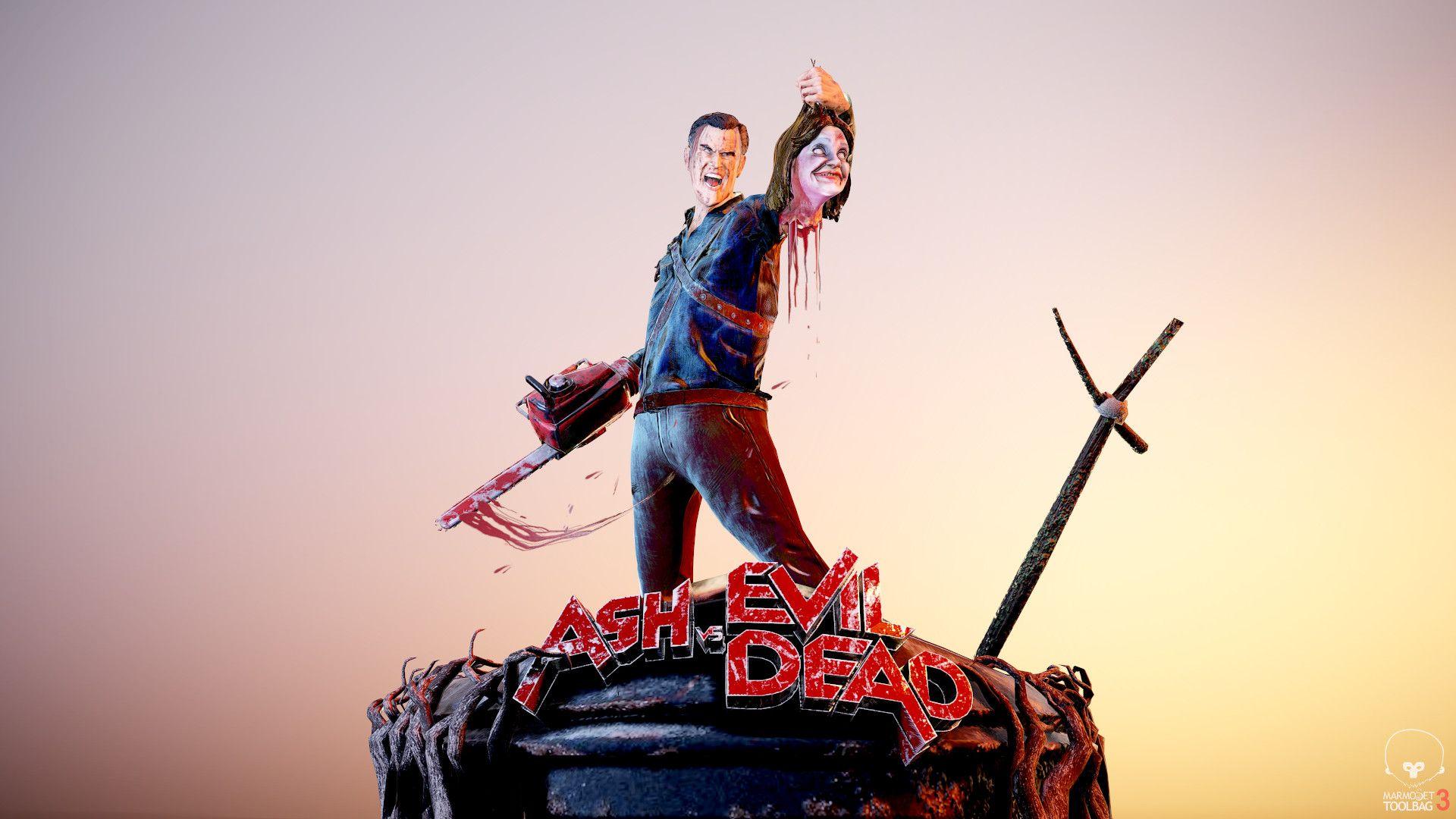
Ash Williams shouldn't have lasted five minutes.
Think about it. He’s a guy who worked at a "S-Mart," had zero survival training, and somehow ended up in a cabin in the woods with a book made of human skin and some of the nastiest demons ever put to film. In 1981, Sam Raimi unleashed The Evil Dead on a shoestring budget, and nobody—literally nobody—expected Ashley J. Williams to become the blue-collar face of horror for the next four decades. He isn't a superhero. He’s a loudmouth. He's kind of a jerk sometimes. But Ash vs Evil Dead became a cultural phenomenon because he is the ultimate "wrong guy for the job" who somehow, through sheer stubbornness and a chainsaw hand, gets the job done anyway.
Honestly, the evolution of the character is one of the weirdest arcs in cinema history. If you watch the original 1981 film, Ash is actually a bit of a "final girl" archetype, just played by a man. He’s sensitive, he’s terrified, and he spends most of the movie crying or being thrown through walls. It wasn't until Evil Dead II that Bruce Campbell really found the "Groovy" swagger we know today. That shift from victim to survivor to arrogant Deadite-slayer is why the character has such staying power. He’s deeply flawed. You’ve got a hero who basically caused the apocalypse multiple times because he was too lazy to read some Latin properly. That's relatable.
The Brutal Evolution of Ash Williams
When people talk about the legacy of this franchise, they usually point to the gore. And yeah, there’s a lot of it. Gallons. Buckets. Swimming pools. But the real magic is the physical comedy of Bruce Campbell.
Sam Raimi has a famously "sadistic" relationship with his lead actor. In the original trilogy—The Evil Dead, Evil Dead II, and Army of Darkness—the camera acts as a predator, chasing Ash through cabins and medieval forests. This style of "splatstick" (splatter + slapstick) is incredibly hard to pull off. It requires a specific type of performance where the actor is essentially a cartoon character in a R-rated world. Ash isn't just fighting demons; he's fighting his own severed hand. He’s losing his mind in a room where the deer head on the wall is laughing at him. It’s a descent into madness that somehow feels like a Three Stooges routine.
Breaking Down the Timeline (It's Messy)
The continuity of the series is a total nightmare, mostly because of rights issues. You have the first film, which is straight horror. Then you have the second, which is a "re-quel" (a remake and a sequel) that changes the ending. Then Army of Darkness goes full-on fantasy. For years, fans begged for a fourth movie. We didn't get a movie; we got something better. Ash vs Evil Dead, the Starz television series, actually gave the character room to breathe.
In the show, we see Ash thirty years later. He’s living in a trailer. He wears a girdle. He’s still trying to pick up women at bars by making up fake stories about how he lost his hand. It’s tragic, but it’s also peak Ash. The series introduced Kelly and Pablo, forming a "Ghostbeaters" trio that actually gave the character a sense of family he hadn't had since he accidentally killed all his friends in 1981. This wasn't just fanservice. It was a genuine exploration of what happens to a "chosen one" when they’re old, tired, and still have to kill their possessed neighbors with a power tool.
Why the Chainsaw Hand Works (And Why We Still Care)
The iconography of the character is undeniable. The blue button-down shirt. The leather harness. The "boomstick" (a 12-gauge double-barreled Remington). And, of course, the chainsaw.
It’s an absurd weapon. Practical? Not really. It requires gas, it’s loud, and it gets gummed up with viscera constantly. But it’s the perfect metaphor for the character’s DIY approach to demon-slaying. Ash is a mechanic of the macabre. He doesn't use magic or holy water; he uses hardware store logic. This "Average Joe" energy is what separates him from the polished heroes of the MCU or the brooding protagonists of modern "elevated horror." He’s just a guy who wants to drink a beer and watch TV, but the universe keeps ruining his afternoon.
The Bruce Campbell Factor
You cannot separate Ash from Bruce Campbell. It’s one of those rare instances where an actor and a character are perfectly fused. Campbell’s "Chin" and his ability to take a physical beating are legendary in the industry. During the filming of the original movies, he was covered in corn syrup and food coloring for weeks at a time, often in freezing temperatures.
That sweat equity shows on screen. There’s an authenticity to his misery. When Ash looks exhausted, it’s because Bruce Campbell was probably exhausted. Fans appreciate that. There’s a level of respect for the "B-movie" grind that defines the entire Evil Dead ethos. It’s about making something incredible out of nothing.
Misconceptions About the Franchise
A lot of people think Evil Dead is just about Ash. That’s not quite right anymore.
The 2013 remake by Fede Álvarez and the 2023 Evil Dead Rise by Lee Cronin proved that the "Necronomicon" is the real star. You don't need Ash to make a great Evil Dead story, but his absence is always felt. The newer films are much darker, leaning back into the "The Ultimate Experience in Grueling Horror" vibe of the '81 original. They’re great, but they lack that specific, manic energy that Ash brings.
- The "Chosen One" Prophecy: In Army of Darkness, we see a drawing of Ash in an ancient book. He’s the "one who fell from the sky." But he isn't "pure of heart" or "destined for greatness" in the traditional sense. He’s the chosen one because he’s the only one left standing.
- The Deadites: These aren't zombies. They're parasitic demons. They talk. They taunt. They know your secrets. This is a crucial distinction. When Ash is fighting a Deadite, he’s often fighting a version of someone he loved, which adds a layer of psychological cruelty to the slapstick.
The Cultural Impact of the Boomstick
Ash has influenced everything. Without him, we don't get Buffy the Vampire Slayer. We don't get Supernatural. We don't get the "horror-comedy" genre as a viable commercial force. Even video games like Doom and Duke Nukem owe a massive debt to the character's aesthetic and quips.
The phrase "Groovy" has been reclaimed by horror fans everywhere. It’s a shorthand for a specific kind of vibe: when things are at their absolute worst, but you’ve got the tools to fight back. It’s an optimistic brand of nihilism.
What’s Next for Ash?
Bruce Campbell has officially retired from playing the character in live-action. It’s a bummer, but honestly, the man is in his 60s and his back probably can't handle being thrown into a breakaway table anymore. However, the world of Ash vs Evil Dead isn't dead.
There are talks of an animated series, which would allow Campbell to voice the character without the physical toll. This is actually a brilliant move. The Evil Dead world is essentially a live-action cartoon anyway. Animation would allow for even more "over the top" gore and physics-defying stunts that would be impossible or too expensive in live-action.
Also, we have the games. Evil Dead: The Game allowed players to step into the boots of various versions of Ash, from the terrified kid in the woods to the grizzled old man in the trailer park. It kept the community alive and introduced a younger generation to the lore of the Kandarian Demon.
Actionable Insights for Fans and Creators
If you're a filmmaker or a writer, there is so much to learn from the Ash Williams playbook.
- Embrace the Flaws: A hero who is "too cool" is boring. A hero who is terrified but does it anyway is a legend. Give your characters a "chainsaw hand"—something that is both a disability and a strength.
- Tone is Everything: Don't be afraid to mix genres. You can have a scene that is genuinely terrifying and follow it immediately with a joke. The "tonal whiplash" is what makes the franchise unique.
- Physicality Matters: In an era of CGI, practical effects and physical performances stand out. Even if you're using digital tools, the "physics" of the scene should feel heavy and messy.
- Know Your Lore, But Don't Be a Slave to It: The Evil Dead series is famous for ignoring its own continuity if it means a better scene. Focus on the feeling of the world rather than a perfect timeline.
The legacy of Ash Williams is one of resilience. He’s the guy who loses everything—his hand, his girlfriend, his sanity—and still finds the energy to come up with a one-liner before pulling the trigger. He’s the ultimate underdog. And as long as there’s a Necronomicon somewhere waiting to be read, we’re going to need a guy like Ash to clean up the mess.
If you want to experience the full arc, start with the 1981 original to see the "pre-cool" Ash. Then, move to Evil Dead II for the birth of the icon. Follow that with Army of Darkness for the comedy, and finish with all three seasons of the Starz show. It’s a long, bloody road, but it’s worth every drop of red corn syrup. Keep your boomstick close and your chainsaw gassed up. Groovy.
Next Steps:
- Watch the "Lost" 1981 short film Within the Woods to see the proto-Ash concept.
- Research the history of Renaissance Pictures to understand how independent horror can build a global brand.
- Study the cinematography of Peter Deming in Evil Dead II to see how camera movement can define a character's internal state.