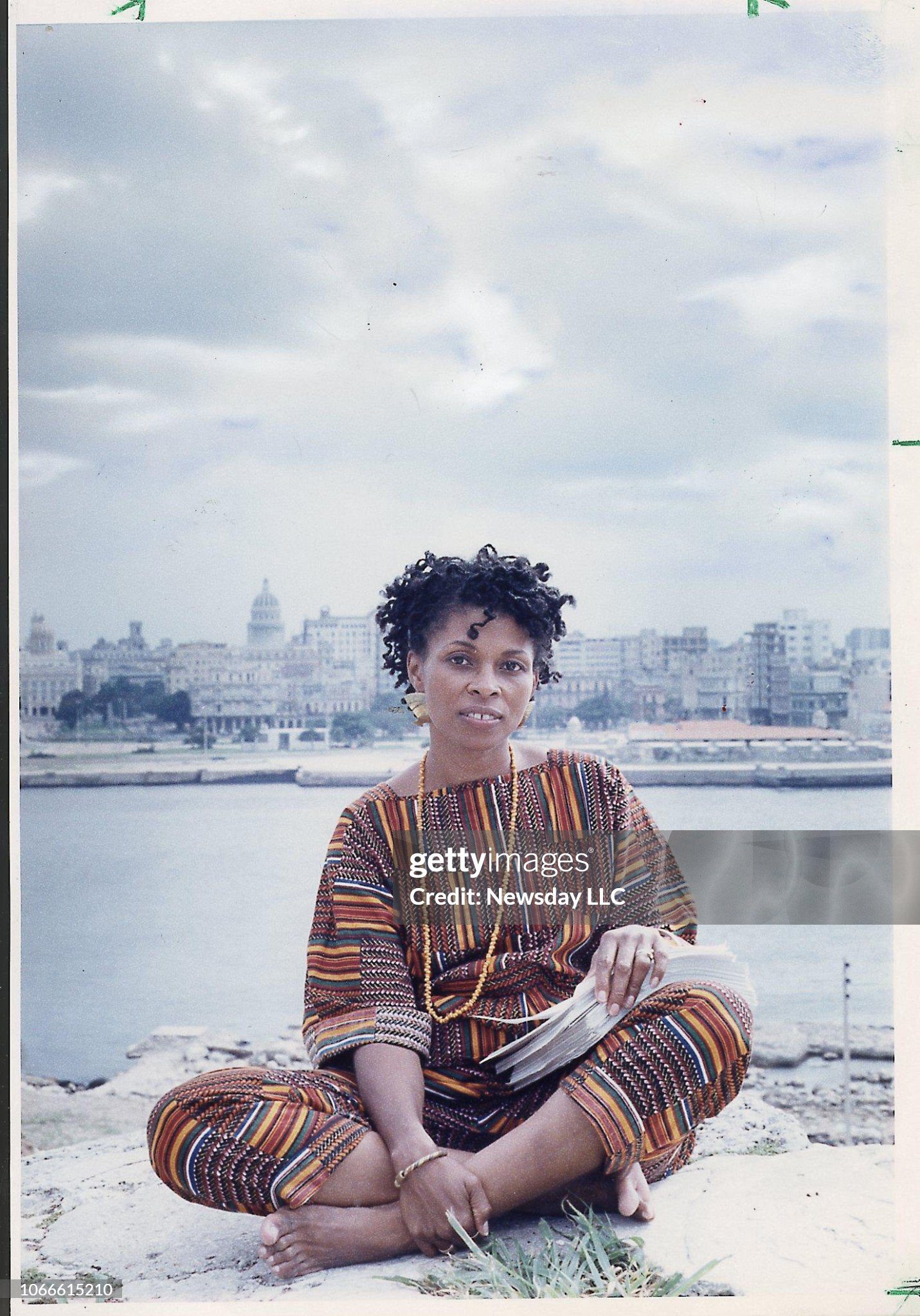
She was gone. For decades, the name Assata Shakur was a ghost that haunted the halls of the FBI and a rallying cry in the streets of Harlem and Oakland. People wondered if she was even still alive, or if the $2 million bounty on her head had finally been collected in some dark alley in Havana. Honestly, the mystery was part of the legend. But the reality is that Assata Shakur lived out the rest of her days in a sort of quiet, revolutionary limbo. She died in Cuba on September 25, 2025, at the age of 78, leaving behind a legacy that still divides America right down the middle.
To the U.S. government, she was Joanne Chesimard, a "cop-killer" and a domestic terrorist. To her supporters, she was a political prisoner and a symbol of resistance against a system that wanted her dead. When she escaped from a New Jersey prison in 1979 and surfaced in Cuba five years later, she didn't just find a place to hide. She found a sanctuary.
The escape that changed everything
Most people think Assata Shakur just disappeared into the night. It wasn't that simple. In 1979, members of the Black Liberation Army (BLA) basically staged a military-style breakout. They walked into the Clinton Correctional Facility for Women, took guards hostage, and drove her away in a prison van. It’s the kind of stuff you see in movies, but for the FBI, it was an embarrassment they never got over.
She went underground for years. You've got to imagine the pressure of being the most wanted woman in America while trying to navigate the Caribbean. When she finally landed in Havana in 1984, Fidel Castro did something that infuriated the White House: he gave her political asylum. He called her a victim of racial persecution. For the next 40 years, she was the ultimate "one who got away."
Life in Havana: Not exactly a vacation
There’s this weird misconception that Assata was living it up in a mansion on the beach. Truthfully? Life in Cuba for a fugitive is complicated. While she was protected by the state, she was also living in a country under a heavy embargo. She spent her time writing, editing, and occasionally speaking to visitors who made the trek to see her.
She lived under the name Assata Shakur, abandoning the name "Joanne Chesimard" which she viewed as a slave name. Her autobiography, published in 1987, became a foundational text for activists. In Havana, she wasn't just a face on a poster. She was a mother, a writer, and a godmother to the late Tupac Shakur. She lived in a modest apartment and was often seen by locals, though she kept a very low profile as the political heat between the U.S. and Cuba waxed and waned.
The $2 million question
In 2013, the FBI upped the ante. They put her on the Most Wanted Terrorists list—the first woman ever to be there—and doubled the bounty to $2 million. This was 40 years after the New Jersey Turnpike shootout that started it all. Why now? Basically, it was a political chess move. The U.S. was trying to pressure Cuba into handing over fugitives as part of the "thaw" in relations under the Obama administration.
Cuba didn't budge. They viewed her case as a matter of principle. To the Cuban government, she hadn't received a fair trial in 1977. They pointed to the fact that she was shot with her hands up, and that forensic evidence suggested she couldn't have even fired a weapon during the shootout that killed State Trooper Werner Foerster.
What most people get wrong about the conviction
If you read the official reports, it’s an open-and-shut case. But if you look at the trial transcripts, it’s a mess.
- The Paraffin Test: A test performed after her arrest showed no gunpowder residue on her hands.
- The Injuries: Medical experts testified that her injuries were consistent with her having her arms raised in surrender when she was shot.
- The Jury: She was convicted by an all-white jury in a highly charged atmosphere.
These are the details that fueled the "Hands Off Assata" campaign for decades. Whether you believe she was a cold-blooded killer or a framed revolutionary, you can't ignore the procedural red flags that defined her legal battle.
The end of an era
When the Cuban Ministry of Foreign Affairs announced her death in late 2025, it felt like the closing of a chapter on the 1960s radical movements. She died of "health conditions and advanced age," a peaceful end for someone whose life was defined by violence and flight. Her daughter, Kakuya Shakur, confirmed the news, sparking a wave of tributes from Black Lives Matter activists and sharp rebukes from law enforcement groups who still wanted her brought to "justice."
Even in death, she remains a polarizing figure. For some, she is the "escaped slave" who made it to the Maroon colony of Cuba. For others, she is a criminal who escaped a life sentence.
Actionable insights for those following the legacy
If you're trying to understand the full weight of Assata Shakur’s story, don't just stick to the headlines. Here is how to actually dig deeper into the history:
- Read the Autobiography: Assata: An Autobiography provides the perspective that the FBI records omit. It's essential for understanding the COINTELPRO era.
- Examine the Forensic Reports: Look into the 1977 trial's medical testimony regarding her nerve damage. It’s the strongest evidence used by her defense to claim she couldn't have fired a gun.
- Study the Extradition Laws: Research the 1904 extradition treaty between the U.S. and Cuba. Understanding why it didn't apply to "political" crimes explains why she was never sent back.
- Follow the Bounty Status: As of 2026, the legal status of the bounty and the FBI records are transitioning into historical archives, but the political implications for U.S.-Cuba relations remain relevant.
Assata Shakur's life was a testament to the power of narrative. She managed to survive the most powerful law enforcement agency in the world by moving to a small island that refused to blink. She died free, which, in the eyes of her supporters, was her final victory.