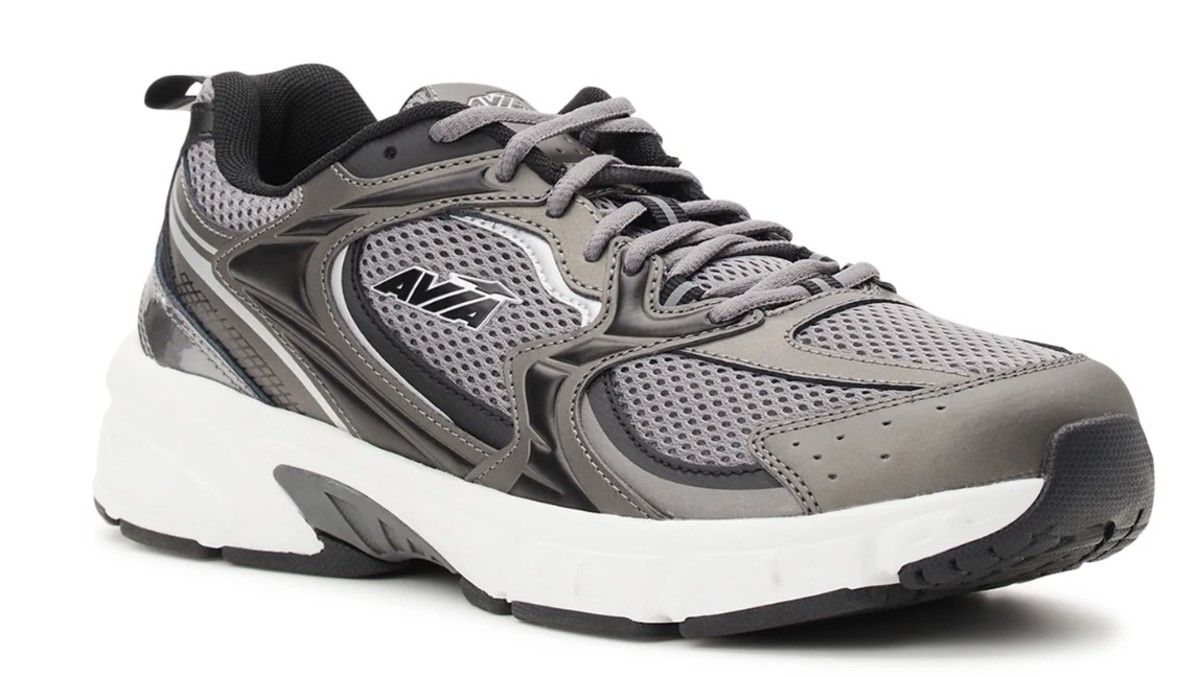
You’ve seen them in the aisles of big-box retailers or buried in the back of a gym locker. Maybe you even owned a pair back when "affordable" didn't mean "disposable." Honestly, the Avia Men’s 5000 athletic performance running shoes are a bit of a weird anomaly in the modern footwear world. While brands like Nike and Hoka are busy engineering $300 carbon-plated "super shoes" that practically run the race for you, Avia stays in this gritty, utilitarian lane. They aren't trying to win the Boston Marathon. They’re trying to survive a three-mile jog and a trip to the grocery store afterward without falling apart.
People underestimate them.
The Avia 5000 is basically the Toyota Corolla of the running world—it isn't flashy, it won’t turn heads at the starting line, but it’s surprisingly resilient for the price point. If you’re looking for high-end energy return that feels like jumping on a trampoline, you're looking in the wrong place. But if you want a reliable, neutral runner that handles pavement without punishing your arches, there’s a lot to talk about here.
What’s Actually Inside the Avia Men’s 5000 Athletic Performance Running Shoes?
Most cheap shoes feel like cardboard. You put them on, and within three weeks, the foam has compressed into a flat, lifeless pancake. Avia avoids this by sticking to their Cantilever System. This isn’t some marketing gimmick they cooked up last Tuesday; Avia has been using this tech since the 1980s.
Basically, the heel is shaped like a concave lens. When your foot hits the ground, the outsole flares out. This does two things: it absorbs the shock by spreading the impact outward and then centers your heel for the next step. It’s mechanical cushioning rather than just relying on the chemistry of the foam. For a budget shoe, that’s a big deal. You get a level of stability that most sub-$50 shoes completely lack.
The upper is usually a mix of synthetic overlays and breathable mesh. It feels sturdy. Almost too sturdy for some people who are used to those sock-like knit uppers that are popular right now. But that extra structure means your foot isn't sliding around when you take a corner too fast. It's a trade-off. You lose that "weightless" feeling, but you gain a shoe that actually holds its shape after 200 miles.
The Reality of Performance: Road vs. Gym
Let’s be real. If you’re training for a sub-3-hour marathon, the Avia Men’s 5000 athletic performance running shoes probably aren't your primary trainers. The weight is the main hurdle. They’re heavier than elite models because the materials are denser.
However, for the "everyday" athlete, that weight translates to durability.
In the gym, these actually shine more than many high-end runners. Why? Because the midsole isn't too squishy. If you try to do squats or overhead presses in a shoe with 40mm of soft PEBA foam, you’re going to wobble. The Avia 5000 has a firmer base. It gives you better ground feel for lifting, making it a "cross-performance" shoe even if it’s labeled for running.
Why the "Performance" Label Matters
Don't let the price fool you into thinking these are just "walking shoes." Avia specifically tuned the 5000 series with a focus on gait cycle efficiency. The flex grooves in the forefoot are placed where the foot naturally bends. This sounds simple, but you’d be surprised how many budget brands just slap a slab of rubber on the bottom and call it a day.
When you’re at mile four, and your form starts to get a little sloppy, a shoe with a rigid forefoot becomes a literal drag. The Avia 5000 bends enough to keep your stride feeling relatively natural. It’s not "bouncy," but it is "smooth." There is a massive difference between the two.
Common Misconceptions About Budget Runners
Most people think cheap shoes cause injury. That's a half-truth.
Research, including studies often cited by kinesiologists like those at the University of Calgary's Running Injury Clinic, suggests that the "comfort filter" is one of the best predictors of injury prevention. If a shoe feels good, it usually works for your biomechanics. The problem with many budget shoes isn't the lack of tech; it's the poor quality control.
Avia has actually maintained a fairly high standard here. You don't often see the 5000 series with delaminating outsoles or crooked stitching. They use high-abrasion rubber on the high-wear areas of the heel and toe. That’s why you’ll see guys wearing these for a year or two before they finally retire them to "lawn mowing shoe" status.
Addressing the "Dad Shoe" Aesthetic
We have to talk about the look. The Avia Men’s 5000 athletic performance running shoes have a very specific vibe. It’s chunky. It’s unapologetic. It looks like something a high school PE teacher would wear.
Interestingly, that’s become a trend. The "normcore" or "dad shoe" movement has made brands like New Balance and Avia cool again. But while New Balance 990s will set you back $200, the Avia 5000 gives you a similar silhouette for a fraction of that. You aren't paying for the hype. You're paying for the foam and the rubber.
The Longevity Factor: How Many Miles?
Usually, a running shoe is toast after 300 to 500 miles.
With the Avia 5000, you should realistically aim for the lower end of that spectrum if you’re a heavy runner. The EVA foam (Ethylene Vinyl Acetate) used in the midsole is standard grade. It will eventually pack out. You’ll know it’s time to replace them when you start feeling more of the road than you used to, or if you wake up with that specific "achy" feeling in your shins.
But for walkers or light joggers? These can easily last 600+ miles. The outsole rubber is surprisingly thick. You'll likely wear out the inner lining of the heel before you burn through the tread.
Practical Tips for Getting the Most Out of Them
If you decide to pick up a pair, don't just lace them up and go for a 10k.
- Swap the Insoles: The stock insoles in Avia shoes are... fine. Just fine. If you have high arches or need specific orthopedic support, pull them out. The 5000 has a deep enough heel cup to accommodate a third-party insole without your foot popping out of the shoe.
- The Lace Lock: Use the extra eyelet at the top. Because the material is a bit stiffer, using a "runner's knot" (or heel lock) helps prevent heel slippage and makes the shoe feel like an extension of your foot rather than a heavy attachment.
- Rotate Them: If you’re using these for daily performance, give the foam 24 hours to "recover" between runs. EVA foam is made of tiny air cells; if you compress them every single morning without a break, they’ll lose their bounce twice as fast.
Who Is This Shoe Actually For?
It isn't for everyone.
If you have chronic plantar fasciitis, you might need something with a more aggressive rockered sole. If you're a trail runner, the lugs on the Avia 5000 aren't deep enough to handle mud or loose scree; you’ll slide everywhere.
This shoe is for the guy who hits the pavement three times a week. It’s for the person who spends eight hours on their feet on concrete floors and needs something that won't quit. It’s for the budget-conscious athlete who realizes that a $150 price difference between shoes is better spent on a gym membership or better food.
There is a certain honesty in a shoe that doesn't pretend to be something it’s not. The Avia Men’s 5000 athletic performance running shoes are built for work. They are built to be used, abused, and eventually replaced without a second thought. In a world of over-engineered gear, there’s something genuinely refreshing about that.
Moving Forward With Your Training
If you're ready to integrate these into your routine, start by assessing your current foot strike. If you're a heavy heel striker, the Cantilever system in the Avia 5000 is going to feel great. If you're a forefoot striker, you might find the 10mm-12mm drop (the height difference between heel and toe) a bit steep.
Start with a few short 1-2 mile "break-in" sessions. Pay attention to any hot spots or rubbing around the Achilles. Once the synthetic overlays soften up after about 10-15 miles, the shoe will feel significantly more flexible. At that point, you're good to go for your standard training volume. Just remember to track your mileage; even the best budget legends have an expiration date.