Let’s be real. Most of us have spent way too much time staring at our armpits in the bathroom mirror, wondering why they look like a topographical map of a stormy sea. It’s annoying. You want to wear that cute sleeveless top, but the dark patches or the "chicken skin" texture makes you reach for a cardigan instead. Even in 2026, with all our tech, underarm hyperpigmentation remains one of those stubborn beauty hurdles that feels personal.
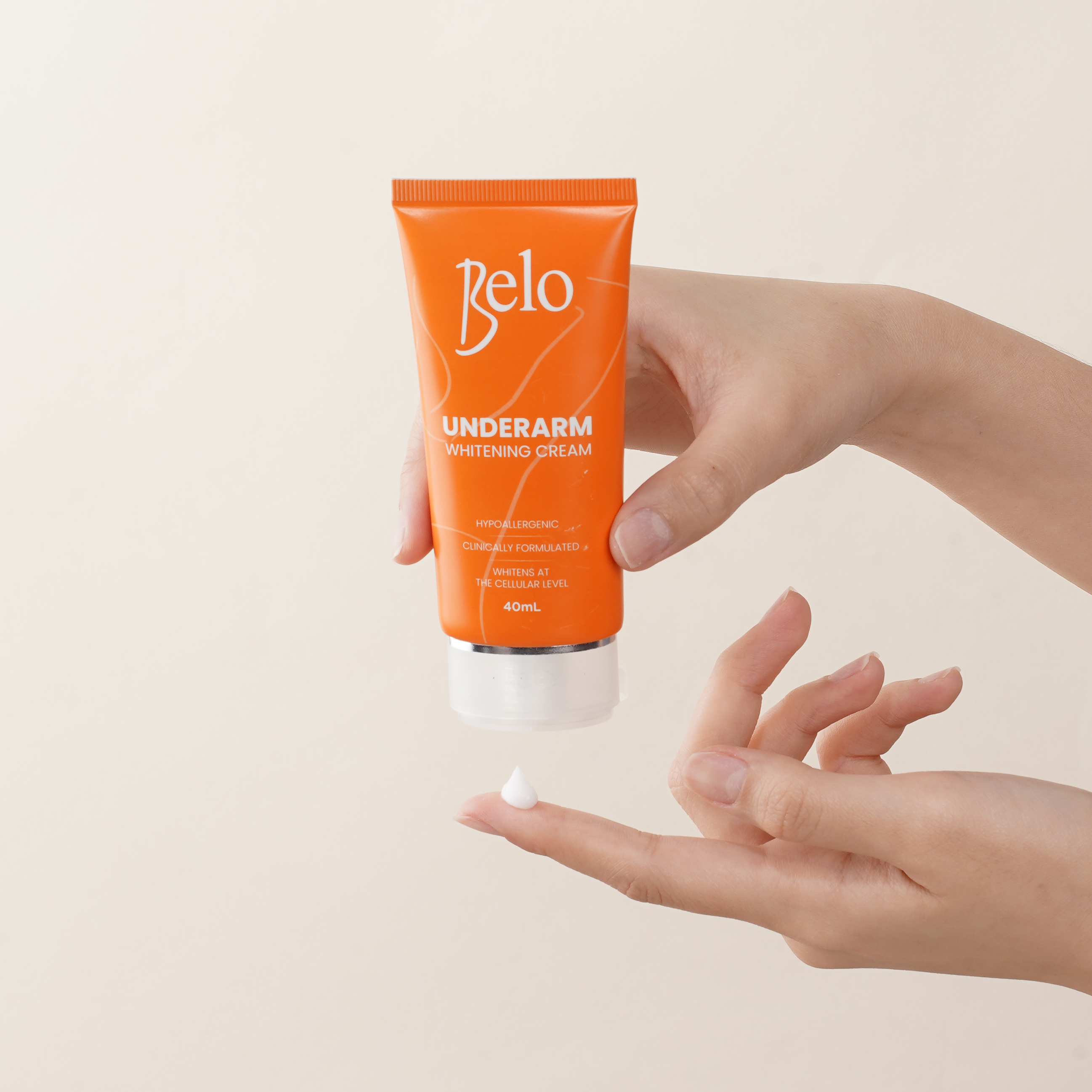
Enter the Belo underarm whitening cream.
If you’ve spent any time in a Watsons or scrolled through Filipino skincare threads, you’ve seen it. It’s that small, unassuming tube promising "Belofied" pits. But does it actually work, or is it just another marketing gimmick backed by a famous name? I’ve looked into the science, the ingredient list, and the actual user experiences to see if it’s worth your hard-earned cash.
The Science of What’s Actually Inside the Tube
Most people just slap the cream on and hope for the best. Big mistake. To understand if this thing will work for you, you’ve gotta look at the actives. This isn't just a basic moisturizer.
The heavy lifter here is Alpha Arbutin. If you aren't familiar with it, think of it as the gentler, more stable cousin of hydroquinone. It basically tells your melanin-producing cells to chill out. It blocks tyrosinase—the enzyme responsible for pigment—without being as aggressive as some of the "old school" bleaching agents that used to burn people's skin.
Then there’s Niacinamide. This is the Swiss Army knife of skincare. It’s great for the underarm because it strengthens the skin barrier. When you shave or pluck, you’re basically micro-traumatizing your skin. Niacinamide helps repair that damage while also subtly brightening.
Key Ingredients Breakdown:
- Hydroxyphenoxy Propionic Acid: This is a fancy name for a brightening agent that specifically targets dark spots at a cellular level. It’s a newer-gen ingredient that focuses on evening out the tone.
- Licorice Extract: A natural anti-inflammatory. If your pits are dark because they’re constantly irritated (looking at you, dull razors), licorice helps soothe that redness before it turns into a permanent brown smudge.
- Bee Venom: Sounds scary, right? It’s actually there to boost collagen and refine the skin texture. It’s why some people notice their "chicken skin" (those little bumps) smoothing out after a few weeks.
Why Most People Fail to See Results
"I used it for three days and nothing happened!"
Yeah, I hear that a lot. Here’s the truth: your skin takes about 28 days to renew itself. If you expect a miracle in a weekend, you're setting yourself up for disappointment. The Belo underarm whitening cream is formulated to show visible changes in about 14 days, but that's for surface-level brightening. For deep-seated hyperpigmentation caused by years of plucking, you're looking at a month or two of dedicated use.
Consistency is the absolute killer here. People skip nights. They forget to apply it when they're tired.
Honestly, the best way to use this is as a night cream. Why? Because at night, your body is in repair mode. You aren't sweating as much, you aren't moving your arms and creating friction, and the product actually has time to sit there and penetrate the skin. If you put it on in the morning and then immediately swipe on a heavy deodorant and start running errands, you're basically washing the product away before it can do its job.
The Friction Problem: It's Not Just About the Cream
You can buy the most expensive cream in the world, but if you're still dry-shaving with a rusty razor every Tuesday, you’re wasting your money.
Dark underarms are often a result of post-inflammatory hyperpigmentation (PIH). Every time you pluck a hair, you're causing a tiny bit of inflammation. Your skin responds by producing melanin to "protect" itself. Over time, that adds up to a dark shadow.
Switch to waxing, or better yet, laser hair removal if you can afford it. If you must shave, use a sharp blade and a lubricating gel. Apply the Belo cream after the skin has settled down, not immediately after shaving when the pores are raw and vulnerable.
A Quick Note on "Chicken Skin"
Those bumps are often caused by folliculitis or just general irritation. The inclusion of Gluconolactone (a PHA) in some Belo formulations helps gently exfoliate without the sting of harsher acids. It's subtle, but it helps smooth out the texture so the light reflects off your skin better, making it look brighter instantly.
Real Talk: Is it Safe for Everyone?
Belo claims this is "clinically-proven safe for sensitive skin," and for the most part, the reviews back that up. It's alcohol-free and paraben-free. However, skin is weird and individual.
I’ve seen some users on Reddit mention that they got itchy after a few days. This usually happens if you have an undiagnosed allergy to something like bee venom or certain fragrances.
Always patch test. Put a tiny dab on your inner elbow for 24 hours. If you don't turn bright red or start itching like crazy, you're probably good to go.
Also, don't use this on broken skin. If you accidentally nicked yourself while shaving, wait a day. Putting active whitening ingredients on an open cut is a one-way ticket to Sting City.
Moving Beyond the Underarms
One thing a lot of people don't realize is that you can use the Belo underarm whitening cream on other dark spots too.
- Elbows and Knees: These areas are prone to friction and get thick, dark skin.
- Inner Thighs: Friction from walking (the "chub rub") causes darkening. This cream works well there because it's non-sticky.
- Areolas: Some people use it here, though you should be extra careful as that skin is incredibly delicate.
The formula is lightweight enough that it won't feel like you've smeared grease all over your joints. It absorbs pretty fast, which is a major plus if you're trying to get to sleep without feeling "tacky."
Practical Steps for a Brighter 2026
If you’re serious about fixing the "dark pit" situation, you need a routine, not just a product.
- Stop the trauma. Switch from plucking to waxing or laser. If shaving, use a fresh razor and shaving cream.
- Exfoliate gently. Twice a week, use a soft loofah or a gentle chemical exfoliant (like a low-percentage lactic acid) to clear away dead skin cells.
- The Nightly Ritual. Every single night, after your shower, dry your underarms completely. Apply a pea-sized amount of the Belo cream to each side. Massage it in until it's gone.
- Deodorant Check. Check your daily deodorant. If it’s packed with high amounts of aluminum or harsh alcohols, it might be working against your whitening cream. Try a more "skin-friendly" version during the day.
- Sun Protection. If you’re at the beach in a bikini, remember that your underarms can tan too. If you’re lifting your arms in the sun, that pigment is going to darken.
The Belo underarm whitening cream isn't a magic wand, but it's a very solid, dermatologically-backed tool. It’s accessible, it’s relatively cheap, and it uses ingredients that actually have a track record of working. Just remember: your skin took years to get dark; it’s going to take more than a week to get light. Give it the time it needs.
To get the most out of your treatment, start by documenting your progress with a photo in the same lighting once a week—it’s the only way to objectively see the fading since we often miss the gradual change when looking in the mirror every day. Also, ensure you are drinking enough water and eating a diet rich in antioxidants, as systemic skin health plays a massive role in how quickly your body repairs hyperpigmentation.
Finally, if you don't see any change after three months of perfect consistency, it might be time to see a professional. Sometimes darkening is caused by Acanthosis Nigricans, which is related to insulin levels and won't respond to topical creams alone. Knowing the difference can save you a lot of frustration and money.