Let's be real. We've all done it. You buy a pint of Half Baked, grab a spoon, and start a surgical excavation. You aren't there for the chocolate ice cream. You aren't even there for the vanilla. You’re hunting. You’re digging for those soft, salty-sweet nuggets of dough that make Ben & Jerry's what it is. It’s a messy process. Honestly, by the time you’ve fished out the good stuff, you’re left with a melted soup of "meh" ice cream and a sense of mild guilt for ruining the pint for everyone else in the house.
The folks in Vermont finally got the hint.
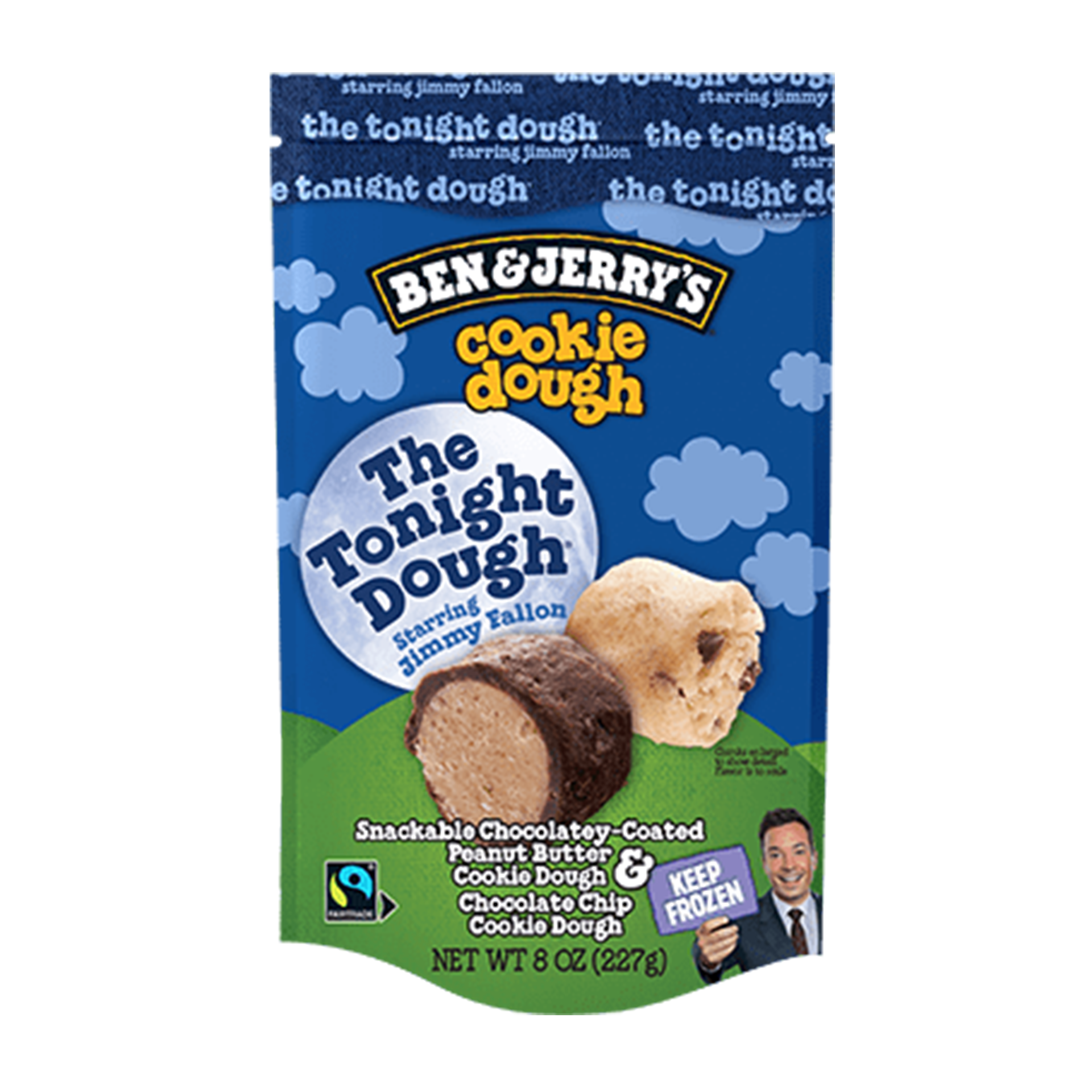
Ben and Jerry's snackable cookie dough is the answer to a prayer that ice cream lovers have been whispering into their freezers for decades. It is exactly what it sounds like: bags of just the dough. No ice cream. No spoons. No excavation required. It’s a product born out of pure fan demand, and it changed the way we think about freezer-aisle snacks.
The Science of Not Getting Sick
You can't just eat raw cookie dough from a tube. Well, you can, but it's a gamble. Most of us grew up with moms shouting about salmonella and raw eggs, and for the most part, they were right. Raw flour is actually a bigger culprit than eggs sometimes because it can carry E. coli if it isn't heat-treated. This is where Ben and Jerry's snackable cookie dough differentiates itself from the stuff you mix in a bowl at home.
They use heat-treated flour. They use pasteurized eggs.
This makes the dough "shelf-stable" in the freezer and perfectly safe to eat raw. It’s a specific formulation designed to stay soft even when it’s kept at sub-zero temperatures. If you’ve ever tried to freeze homemade dough, you know it usually turns into a tooth-breaking rock. These little chunks? They stay chewy. It’s a feat of food engineering that most people overlook while they're inhaling a handful during a Netflix binge.
Why the Frozen Aisle Looks Different Now
For a long time, the "edible dough" trend was limited to boutique shops in places like New York or LA. You’d pay ten bucks for a scoop of dough in a cup. Ben & Jerry’s saw that hype and decided to democratize it. When they launched the snackable line in 2019, it wasn't just a gimmick; it was a business pivot. They realized that their brand wasn't just about "ice cream"—it was about the "chunky experience."
The variety is actually pretty wild. You have the classic Chocolate Chip Cookie Dough, which is the gold standard. But then they branched out into Peanut Butter, Cinnamon Bun, and even Vegan versions.
The Vegan Chocolate Chip Cookie Dough is particularly interesting. Often, dairy-free alternatives feel like a compromise. They're gritty or they have that weird aftertaste of pea protein. But because the fat content in cookie dough usually comes from oils or vegan butter anyway, the transition to plant-based was seamless here. It’s one of the few vegan snacks where you honestly might not tell the difference if you weren't looking at the bag.
The Problem With Portion Control
Here is the truth. These bags are dangerous.
The serving size on the back of a bag of Ben and Jerry's snackable cookie dough is usually about two tablespoons. Let’s be honest with each other for a second. Nobody eats two tablespoons. The bag is resealable, which is a nice gesture toward self-control, but the reality is that once the bag is open, the "snackable" nature of it makes it way too easy to finish in one sitting.
It’s the "popcorn effect." Because the pieces are small, your brain doesn't register the caloric density as quickly as it would if you were eating a giant cookie or a bowl of ice cream. You just keep reaching in.
What most people get wrong about the flavors
People assume the dough in the bag is identical to the dough in the pint.
It's close, but it's not a carbon copy. The dough inside an ice cream pint is surrounded by moisture. It's designed to interact with the cream. The snackable dough in the bags is a bit "drier" to prevent the chunks from sticking together into one giant, amorphous blob of sugar.
There are also flavors in the snackable line that don't exist in the permanent pint lineup. Take the Gingerbread Cookie Dough that pops up around the holidays. It’s spicy, heavy on the molasses, and hits a totally different profile than the standard sugary vanilla dough. Then there’s the S’mores version, which mixes in graham cracker grit and marshmallow swirls.
How to Actually Use the Dough (Beyond Just Eating It)
While most of us eat it straight from the bag while standing in the kitchen at 11 PM, there are better ways to utilize this stuff.
- The Topping Strategy: Buy a cheap tub of plain vanilla bean ice cream. Throw a handful of these chunks on top. You’ve just upgraded a $4 tub into a premium dessert for half the price of a boutique pint.
- The Milkshake Secret: Toss a handful into a blender with milk and ice cream at the very end. If you blend it too long, you lose the texture. But if you pulse it for five seconds? You get a "Concrete" style shake that's better than anything you’ll find at a fast-food joint.
- The Air Fryer Experiment: Believe it or not, you can actually bake these. They aren't designed for it—they'll spread out into weird, thin puddles because the leavening agents aren't tuned for the oven—but if you put them in an air fryer for 3 minutes, you get a warm, gooey center with a crispy exterior.
The Competition and the Market
Ben & Jerry's isn't alone anymore. Brands like Nestlé Toll House and various "dough bars" have flooded the market. Even store brands like Target’s Favorite Day have started doing their own versions.
But Ben & Jerry’s has the "chunk factor." Their brand is built on the specific mouthfeel of those inclusions. When you buy the name brand, you’re paying for the specific ratio of salt to brown sugar that defines the Vermont style. It’s also about the ethics. Using Fairtrade-certified cocoa and sugar isn't just a marketing buzzword; it changes the flavor profile. Cheap cookie dough uses cheap vanilla, and you can taste the chemical "fake" notes.
The price point is usually the sticking point. A bag usually runs between $4.99 and $6.49 depending on where you shop. For a 8oz bag, that’s a premium. You’re paying for the convenience of not having to make it yourself and the safety of the heat-treated ingredients.
Is It Actually "Healthier" Than Ice Cream?
In a word: No.
People sometimes trick themselves into thinking that because it’s "just a snack" and doesn't have the heavy cream of ice cream, it's a lighter option. It isn't. Ben and Jerry's snackable cookie dough is calorie-dense. It’s flour, sugar, and butter. It’s delicious, but it’s high-octane fuel.
However, for people with specific dietary needs, it can be a safer bet. The Gluten-Free Chocolate Chip Cookie Dough is a massive win for the Celiac community. Finding a gluten-free snack that doesn't taste like cardboard is a struggle, and Ben & Jerry’s managed to nail the texture by using a blend of rice flour and potato starch. It still has that "gritty" sugar feel that people crave.
Where to Find It and What to Look For
You’ll usually find these in the frozen fruit or frozen novelty section, not necessarily right next to the ice cream pints. Retailers like Target, Walmart, and Whole Foods are the most consistent stockists.
If you see the Dirt Cake or Half Baked chunks, grab them. They tend to sell out faster than the standard chocolate chip. The Half Baked chunks are a mix of chocolate chip cookie dough and fudge brownies. It is the ultimate "I can't decide" snack.
Actionable Tips for Cookie Dough Lovers
If you want to maximize your experience with this stuff, stop eating it directly out of the freezer. Let the bag sit on the counter for exactly five minutes.
That short window allows the fats in the dough to soften just enough. When it's bone-cold, the flavor is actually muted because your taste buds are slightly numbed by the temperature. At a "soft-frozen" state, the salt pops more, and the chocolate chips have a better snap.
Also, keep an eye on the "best by" date. Because the flour is heat-treated and there are no preservatives like you’d find in a shelf-stable cookie, the dough can eventually dry out and get a bit crumbly even in the freezer.
Next Steps for the Ultimate Snack:
- Check the Ingredients: If you have allergies, remember that while they offer vegan and gluten-free options, cross-contamination is a reality in large-scale production.
- Mix Your Textures: Try pairing the salty Peanut Butter chunks with something acidic, like fresh raspberries. The contrast is surprisingly sophisticated.
- Storage: If you don't finish the bag (unlikely, but possible), squeeze all the air out before resealing. Freezer burn is the enemy of dough texture.
The era of digging through ice cream for "the good parts" is officially over. We live in the age of the chunk. Enjoy it responsibly, or don't. Sometimes finishing the whole bag is the only way to go.
Key Insight: Ben and Jerry's snackable cookie dough succeeded because it solved a specific consumer pain point: the desire for the "inclusions" without the "filler." By focusing on heat-treated safety and maintaining a soft-frozen texture, they moved from being an ice cream company to a general confectionery powerhouse. When shopping, look for the "Fairtrade" logo to ensure you're getting the original recipe quality that justifies the premium price.