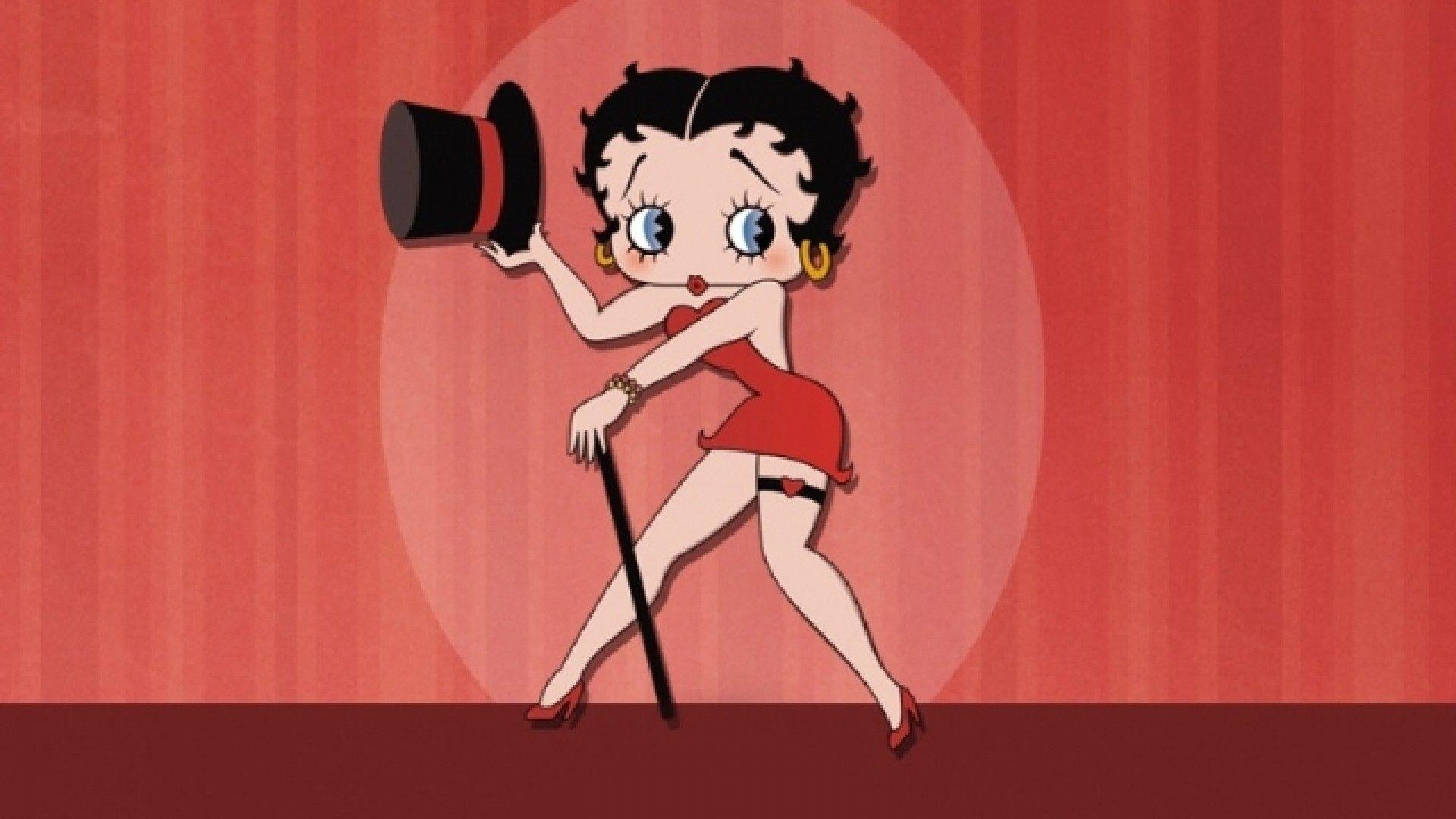
If you close your eyes and think of Betty Boop, you probably see a flash of crimson. It's that strapless, thigh-high red dress, the matching garter, and those pouty lips. She’s the ultimate pin-up, right?
But here’s the thing that’s kinda wild: for most of her original life, Betty Boop wasn't in red at all. She was a grayscale star in a black-and-white world. The betty boop in red phenomenon is actually a mix of a single 1934 experiment, a massive 1980s rebranding, and a bunch of lawyers fighting over who owns a cartoon dog’s ears.
Honestly, the history is way messier than the cute merch makes it look.
The Only Time She Was Actually "Official" Red
In 1934, Fleischer Studios decided to take a gamble. Disney was crushing the game with Technicolor, and the Fleischer brothers wanted in. They released a short called Poor Cinderella. It was the first—and only—time Betty Boop appeared in color during her original theatrical run.
But if you watch it, you’ll notice something weird. She isn't wearing the red dress. She actually has bright red hair.
Because of weird licensing deals at the time, Disney had a total monopoly on the "three-strip" Technicolor process. This meant everyone else was stuck with "two-color" systems that basically only showed reds and teals. To make Betty pop, they gave her a copper-toned bob. The dress? In that specific short, she’s playing Cinderella, so she’s mostly in rags or a shimmering ball gown.
The betty boop in red we know today—the one on the coffee mugs and the leather jackets—didn't really become "the" look until much later when colorization and 1980s marketing departments decided red was her power color.
Why the Red Dress Saved Her (and Ruined Her)
You’ve gotta understand the vibe of 1930s animation. Betty started as a dog. Seriously. In her 1930 debut Dizzy Dishes, she was a French poodle with long ears. By 1932, they turned the ears into hoop earrings and made her human.
Then the "Hays Code" hit.
This was a set of strict moral rules for movies. Suddenly, Betty’s short skirt and garter were a problem. The censors hated her. To keep her on screens, the animators had to change her.
- They made her skirts longer.
- They added sleeves.
- They turned her from a flirty flapper into a "career woman" or a housewife.
When the cartoons were colorized for TV in the 1970s and 80s, the artists chose red for her dress because it signaled that "pre-code" rebellion. It was a way to reclaim her sex appeal. Red meant danger. Red meant the jazz age. Red was basically the shorthand for "this isn't your grandma's boring cartoon."
The 2026 Public Domain Chaos
As of January 1, 2026, things got legally spicy. The very first version of Betty Boop—the poodle-eared one from 1930—entered the public domain.
This is where it gets confusing for creators. You can now technically use the 1930 version of the character for free. You want to make a Betty Boop horror movie? Go for it. But there’s a massive catch. The "fully evolved" version of Betty—the one with the human face and the signature betty boop in red aesthetic—might still be protected by later copyrights and trademarks held by Fleischer Studios.
Mark Fleischer, the grandson of the creator, has been pretty vocal about this. The studio’s stance is basically: "Sure, you can use the dog-girl, but if you use the red dress or the iconic 1932 human look, we’ll see you in court."
It’s a trademark trap. Trademarks don’t expire like copyrights do. Even if her 1930 film is free, the brand of Betty Boop is still very much owned.
Why Red Still Matters for the Brand
Walk into any vintage shop today. You’ll see her. The betty boop in red imagery has basically outlived the actual cartoons. Most people under 40 have never even seen a full Fleischer short, but they know the red dress.
In 2017, Pantone even created an official color called "Betty Boop Red." It’s a specific, high-saturated crimson meant to represent her "fearless" spirit. It was a huge fashion push involving Marie Claire and USA Today. It worked. It solidified the idea that she is the lady in red, even if she spent the 1930s in shades of gray.
Real Talk: How to Use the Look Now
If you’re a designer or a fan trying to stay on the right side of the law while celebrating the betty boop in red vibe, here is the reality check:
- The 1930 Loophole: You can use the character from Dizzy Dishes. But she has dog ears. If you give her the humanized look from 1932, you're entering a legal gray zone that won't fully clear up until 2027 or 2028.
- The Trademark Factor: Don't put the words "Betty Boop" on a t-shirt you’re selling. Even if the image is public domain, the name is a registered trademark.
- The Colorization Trap: Remember that the red dress itself is often a "derivative work" from later colorized versions. Using that specific shade of red on the strapless dress might actually be using a version of the character that isn't public domain yet.
Honestly, the safest way to channel her is through the "aesthetic"—the hoop earrings, the spit curls, and that specific Pantone red—without trying to copy the exact character model from the mid-30s.
Betty Boop in red isn't just a cartoon. She’s a 100-year-old survivor of censorship, corporate hand-offs, and color technology. She’s basically the original influencer.
Next Steps for Your Project
If you're planning to use her image, your best bet is to stick to the 1930 "Talkartoon" assets and avoid using the "Betty Boop" name in your branding to steer clear of trademark infringement. You should also check the specific copyright dates for the 1932 humanized shorts if you want to move away from the "poodle" look, as those won't hit the public domain for another two years.