Honestly, the name usually gets a laugh before it gets a booking. If you tell your friends you’re heading to Big Bone Lick Campground, you’re going to get some looks. But once you pull into this pocket of Boone County, Kentucky, the jokes kind of fade into the background. You’re standing on what was essentially a prehistoric graveyard. Thousands of years ago, mammoths and mastodons—huge, shaggy beasts that would make an elephant look like a toy—trampled through this exact mud because they were desperate for salt. They got stuck. They died. Now, you can pitch a tent right next to their ghosts. It's easily one of the most unique state parks in the country, and yet, a lot of people just treat it as a quick pit stop off I-75. That’s a mistake.
The Reality of Staying at Big Bone Lick Campground
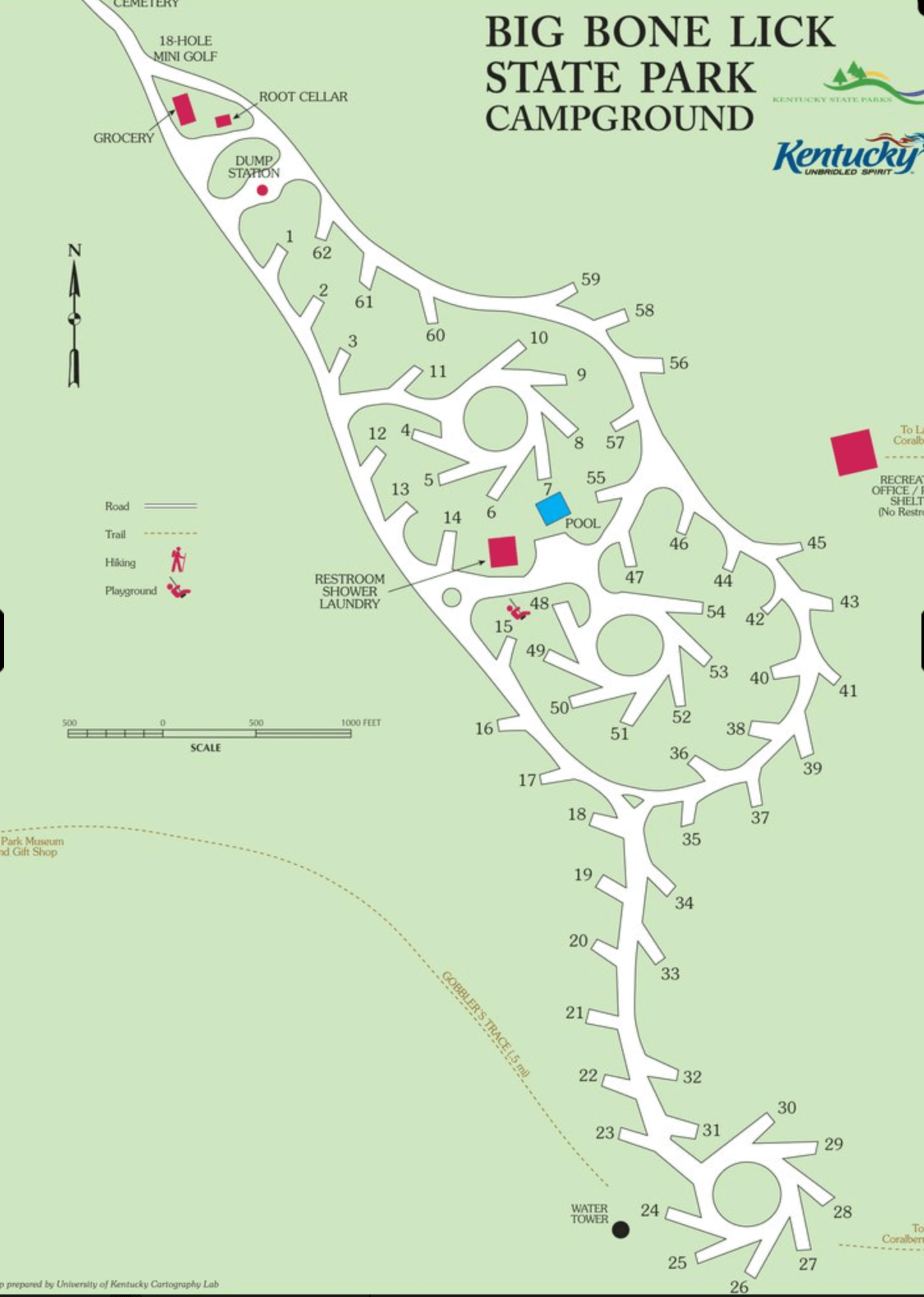
Most state park campgrounds feel the same. You get a gravel pad, a fire ring, and maybe a neighbor who plays 80s rock a little too loud. Big Bone Lick Campground has 62 sites, and they aren't all created equal. If you’re coming in a massive 40-foot rig, you’ve got to be careful. Some of these spots are tight. You’ve got electric and water hookups, which is standard, but the vibe here is different because of the geography. You're tucked into these rolling hills that feel incredibly secluded even though you’re technically not that far from the suburban sprawl of Northern Kentucky and Cincinnati.
The pool is a big draw in the summer. It’s basic, sure, but when the Kentucky humidity hits 90% and the air feels like a warm wet blanket, that concrete pond is a lifesaver. There’s a mini-golf course too. It’s a little dated, maybe even a bit kitschy, but it fits the retro-family-vacation energy of the place.
What the Website Doesn't Tell You About the Sites
Check the site maps closely. Some spots, particularly in the middle loops, offer almost zero shade. If you’re tent camping in July, you will bake. Try to snag something on the perimeter. The bathhouses are generally clean—thanks to a dedicated crew—but they show their age. It’s a state park, not a Ritz-Carlton. You're here for the dirt and the history.
One thing that surprises people is the noise. Or lack thereof. Despite being relatively close to the highway, the way the valley sits tends to muffle the world. You hear owls. You hear the wind in the hardwoods. Occasionally, you hear the low grunt of a bison.
The Bison: The Real Residents
You can't talk about Big Bone Lick Campground without talking about the herd. These aren't just for show. The park maintains a living herd of American Bison to remind everyone what this land looked like before it was "settled." Seeing them in the morning mist is genuinely haunting. They are massive, stoic, and slightly intimidating.
- Pro tip: Don't just look at them from the fence near the museum.
- Take the Big Bone Creek Trail.
- It’s a 2.9-mile loop.
- It takes you through wooded areas and meadows where the bison actually roam.
- The Discovery Trail is shorter but gives you a better look at the "marsh" areas where the fossils were originally found.
Thomas Jefferson was obsessed with this place. Seriously. He sent Meriwether Lewis (of Lewis and Clark fame) here to collect bones. Jefferson actually had mammoth bones laid out in the East Room of the White House. He was terrified that these animals weren't actually extinct and might be roaming around the West. Standing at the campground, looking at the bison, you can kind of see why he was so paranoid. The scale of the history here is heavy.
Dealing with the "Salt Lick" Sulfur Smell
Let's be real: sometimes it smells like rotten eggs. Not everywhere, and not all the time, but the "Lick" in the name comes from the salt sulfur springs. The water bubbling up from the ground is full of minerals. It’s what drew the megafauna here 10,000 years ago. On a hot, still day, the sulfur scent can drift. Most campers get used to it within an hour, but if you have a sensitive nose, just be prepared. It’s the smell of ancient history, or so the locals say.
The salt springs are actually why this place exists. In the late 1700s and early 1800s, this was a massive resort. People traveled from all over to "take the waters," believing the stinky springs could cure everything from gout to "the vapors." The hotel is long gone, but the springs still trickle. You can walk right up to them. The ground is grey and gooey, a literal trap for anything heavy.
Hiking and Survival Tips
The trails at Big Bone Lick Campground aren't particularly grueling, but they are muddy. If it rained yesterday, don't even think about wearing your nice white sneakers. The clay here is thick and clings to everything.
- Cedar Run Trail: This is the one you want for birdwatching. It’s quiet and winds through a lot of cedar thickets.
- Coralberry Trail: Short, easy, and great if you have kids who are prone to complaining after twenty minutes of walking.
- The Museum: It’s small, but it’s high quality. They have actual Pleistocene fossils found on-site. Seeing a mammoth tusk that’s longer than you are tall puts the whole campground experience into perspective.
If you’re a fisherman, bring your gear. The lake is stocked with bass, catfish, and bluegill. It’s not a massive body of water, but it’s peaceful. There’s something deeply satisfying about catching dinner in a place where creatures used to hunt for their own survival eons ago.
The "Hidden" Nearby Gems
If you’re staying for more than a weekend, you’ll probably want to venture out. Just a short drive away is the Ohio River. You can head over to Rabbit Hash, Kentucky. It’s a tiny "town" (basically a general store and a few outbuildings) that famously elects a dog as its mayor. It’s the perfect weird pairing for a trip to a place called Big Bone Lick. The General Store there is original and survived multiple massive floods. Grab a root beer, sit on the porch, and watch the barges go by.
For supplies, you’re not stranded. Florence is about 20 minutes away. You have every big-box store imaginable if you forgot your tent stakes or need more charcoal. But once you retreat back to the campground, the modern world feels surprisingly far away.
Why People Keep Coming Back
It’s not just the bones. It’s the weird intersection of prehistoric mystery and Kentucky bluegrass beauty. You have families who have been camping here every summer for thirty years. They know which sites get the best breeze. They know the rangers by name.
There is a sense of "deep time" here. You aren't just in a park; you're in a graveyard, a prehistoric pantry, and a scientific landmark. When the campfire dies down and the sky gets dark—and it gets dark out there—it's easy to imagine a mastodon crashing through the brush just beyond the tree line.
Actionable Steps for Your Trip
To get the most out of your stay at Big Bone Lick Campground, you need a plan that goes beyond just unrolling a sleeping bag.
- Book Early: Kentucky State Parks use an online reservation system. Holiday weekends fill up months in advance. Aim for a mid-week stay if you want the bison viewing areas to yourself.
- Site Selection: Aim for sites 1-15 if you want to be closer to the woods and slightly further from the main road noise. If you have kids, the sites near the playground (40s-50s) are more convenient but much busier.
- Gear Up for Mud: Bring extra shoes. The "lick" area is perpetually damp. Also, bring a good pair of binoculars. The bison aren't always standing right at the fence, and you'll want a close-up look at their coats and horns.
- Visit the Museum First: Don't save the museum for the last day. Go as soon as you set up camp. It provides the context you need to appreciate the trails. When you see the size of the skulls they pulled out of the muck, the landscape starts to look a lot different.
- Check the Event Calendar: The park often hosts "Frontier Days" or salt-making demonstrations. These aren't your typical cheesy historical reenactments; they use authentic methods that show just how brutal life was for the early settlers who tried to farm this salty soil.
Pack some bug spray—the Kentucky mosquitoes are basically small drones—and keep your food locked up. The local raccoons are incredibly smart and have figured out most "child-proof" coolers. This is their territory; you’re just a temporary guest in the land of the giants.