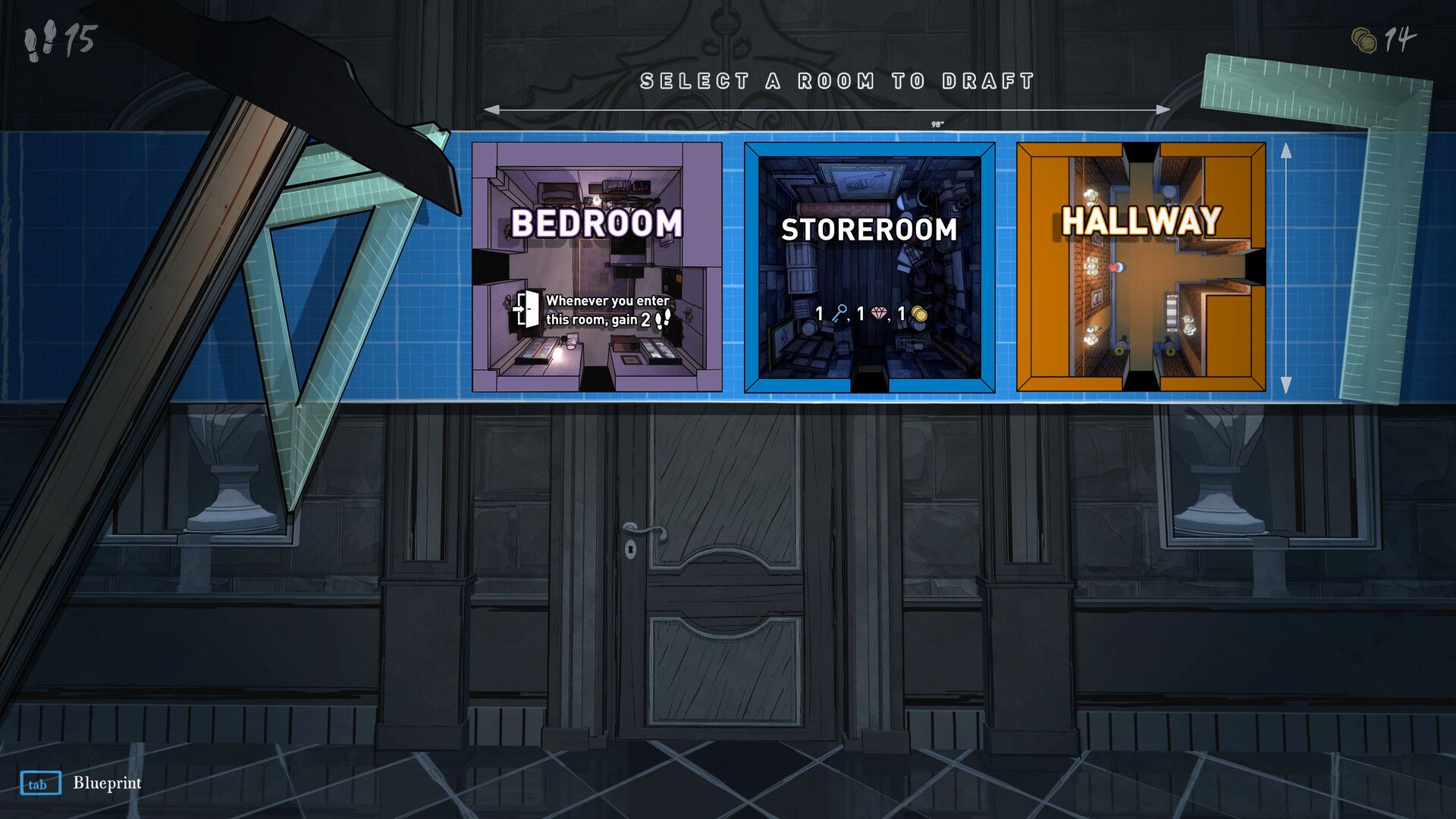
You're standing in the middle of a dimly lit room in Mount Serein, staring at a door that refuses to budge. If you've spent more than an hour playing Blue Prince, you know the feeling. The game—developed by Bolt Blaster Games—is basically a love letter to people who enjoy being confused by floor plans. But the real obsession for most players isn't just mapping out the ever-shifting rooms of Mt. Serein; it's the Blue Prince reservoir chests. These things are the lifeblood of a successful run, yet they are remarkably stingy if you don't know the internal logic of the house.
It's a puzzle game. It's a strategy game. Honestly, it's mostly a game about managing your own frustration when you realize you spent all your gems on a room that contains absolutely nothing of value.
The Reality of Blue Prince Reservoir Chests
Let's be real for a second. Most players expect "chests" to work like they do in Zelda or Elden Ring. You find one, you open it, you get a shiny thing. In the world of Blue Prince reservoir chests, things are significantly more transactional. These chests are specifically tied to the Reservoir mechanic, which acts as your primary resource pool for staying alive and expanding the manor.
If you run out of juice, your run is over. Period.
The reservoir isn't just a mana bar. It's a ticking clock. Every time you draft a new room card or step through a doorway into the unknown, you're drafting against your total capacity. The chests found within these rooms—often hidden behind environmental puzzles or locked behind specific "Key" attributes—are your only consistent way to refill that pool mid-run.
People get this wrong constantly. They think the reservoir chests are bonus loot. They aren't. They are the fuel. If you aren't prioritizing the pathing toward these chests, you're essentially walking into a dead end with a smile on your face.
Why Your Strategy is Probably Failing
The house changes every day. That’s the gimmick, right? But the distribution of Blue Prince reservoir chests follows a semi-predictable weighted randomness. If you’re just picking the coolest-looking room cards, you’re going to starve.
Smart players look for the "High Yield" tags.
I’ve seen streamers spend twenty minutes trying to solve a light puzzle for a chest that only granted a meager +5 Reservoir boost. It’s painful to watch. You have to weigh the cost of entry. If it costs you 3 Reservoir to open the door and solve the room, and the chest only gives you 2 back, you’ve just committed tactical suicide. This is the math of Mt. Serein. It is cold. It is unforgiving.
Finding the High-Value Chests in Mt. Serein
Not all chests are created equal. In the early game, you’ll mostly encounter "Low Flow" canisters. They look like chests, they behave like chests, but they’re basically the crackers-and-water of the item world.
To find the actual Blue Prince reservoir chests that matter—the ones that can sustain a 50-room run—you need to look for specific architectural markers.
Look for the pipes.
The visual language of the game is actually quite honest. If you see gold-filigree piping running along the baseboards of a room card before you place it, there is a significantly higher chance of a Reservoir node appearing. These nodes often contain the "Grand Reservoir" chests. These are the ones that don't just refill your current meter but can actually expand your maximum capacity.
The Gem vs. Reservoir Trade-off
You’ve got gems. You’ve got tools. You’ve got limited inventory.
A common mistake is using gems to "reroll" your room hand in hopes of finding a better layout. Don’t do that. Save your gems for the Blue Prince reservoir chests that are locked. Some of the highest-value chests in the game require a "Gem Tribute" to open. It feels bad to pay for your own loot, but the ROI (Return on Investment) on a locked reservoir chest in the Library or the Solar sections is massive compared to a random room reroll.
The Role of the "Void" Chests
Sometimes you'll find a chest that looks exactly like a reservoir chest but emits a faint purple glow. These are the "Void" variants. Bolt Blaster Games really leaned into the risk-reward aspect here. Opening these might give you a massive boost, or it might permanently lock one of your equipment slots for the rest of the day.
Is it worth it?
Usually, no. Unless you’re at the end of your rope and you literally can’t afford to move into the next room, stay away from the purple glow. It’s a trap for the desperate.
Advanced Pathing for Maximum Yield
If you want to master the search for Blue Prince reservoir chests, you have to stop thinking about the house as a series of rooms and start thinking about it as a circuit.
- Prioritize the Perimeter: The edges of the map tend to spawn more utility rooms.
- Watch the Room Levels: A Level 3 "Study" is almost always better than a Level 1 "Grand Hall" for resource gathering.
- The "Sniff Test": Listen for the hum. The audio design in the game actually hints at the proximity of reservoir units. It’s a low-frequency vibration.
I remember a specific run where I was down to my last 2 Reservoir points. I was certain it was over. I placed a "Storage Closet" card—a room I usually ignore because it’s boring. It turned out to have a hidden floor panel leading to a massive Blue Prince reservoir chest that gave me +20. That single chest saved a three-hour run.
The lesson? Don't be a room snob. Even the "boring" utility rooms have a higher-than-average spawn rate for resource chests compared to the flashy "Art Gallery" or "Master Bedroom" cards.
Breaking the "Dry Spell"
Every player hits a wall where the RNG (Random Number Generation) just hates them. No chests. No refills. Just empty corridors and expensive doors.
When this happens, you have to pivot to "Salvage Mode."
There are certain tools—like the Wrench or the Siphon—that allow you to interact with the environment to extract small amounts of Reservoir without a chest. It's not as efficient as finding a Blue Prince reservoir chest, but it keeps the lights on. It's the difference between a pro player and a hobbyist. The pro knows how to squeeze blood from a stone.
Common Misconceptions About Reservoir Loot
There's a rumor floating around some forums that the "Blue Prince" himself—the ghostly figure you see in the murals—influences chest spawns.
That’s nonsense.
The spawns are determined the moment you "deal" the cards at the start of the day. You can't pray to a ghost for more loot. What you can do is equip the "Dowsing Rod" item if you find it. It specifically highlights the location of Blue Prince reservoir chests through walls. It's easily the most "broken" item for resource management in the current build of the game.
Another myth: "Opening chests increases the difficulty."
I’ve tested this across thirty different runs. The difficulty scaling in Mt. Serein is tied to your total room count and how deep you are into the manor's floor plan. It has nothing to do with how much loot you've grabbed. Take everything. If you see a chest, open it. Leaving a Blue Prince reservoir chest behind "for later" is a fool's errand because you might never find a path back to that room again.
The Importance of the "Master Key"
You’ll eventually find a Master Key. It’s rare. It’s beautiful.
Most people save it for the big ornate doors at the end of a wing. Don't. Use it on the high-tier Blue Prince reservoir chests. The content of a Tier 3 reservoir chest is often more valuable than the contents of a boss room because the chest gives you the ability to reach three more boss rooms. Think about it.
Actionable Steps for Your Next Run
Stop treating the game like an exploration sim and start treating it like a resource management puzzle. If you want to actually see the end of the story, you need to master the hunt for Blue Prince reservoir chests.
- Check the Room Tags: Always prioritize "Utility," "Storage," or "Maintenance" rooms when your Reservoir is below 40%. These have the highest chest density.
- Invest in "Siphon" Tools: If a chest is empty (it happens!), use a siphon on the surrounding pipes to claw back at least 1 or 2 points.
- Map Your Returns: Before moving into a new "Wing," ensure you have a clear path back to a known reservoir station.
- Identify the Sound: Turn your SFX volume up. The hum of a nearby reservoir unit is distinct and can be heard through adjacent walls.
- Don't Fear the Gem Cost: A chest that costs 5 gems but gives 15 Reservoir is a bargain every single time.
The mystery of Mt. Serein isn't just in the story or the strange characters. It’s in the architecture itself. The house wants to starve you out. It wants you to run out of breath in a hallway that leads nowhere. By understanding exactly how Blue Prince reservoir chests function—and where they like to hide—you’re no longer just a guest in the house. You’re the one who owns the floor plan.
Next time you're looking at a hand of four cards and none of them look "cool," look for the one with the pipe icon in the corner. That's your lifeline. Grab it. Open the chest. Keep moving. The Prince is waiting, but he won't wait forever, and he certainly won't give you a refill for free.