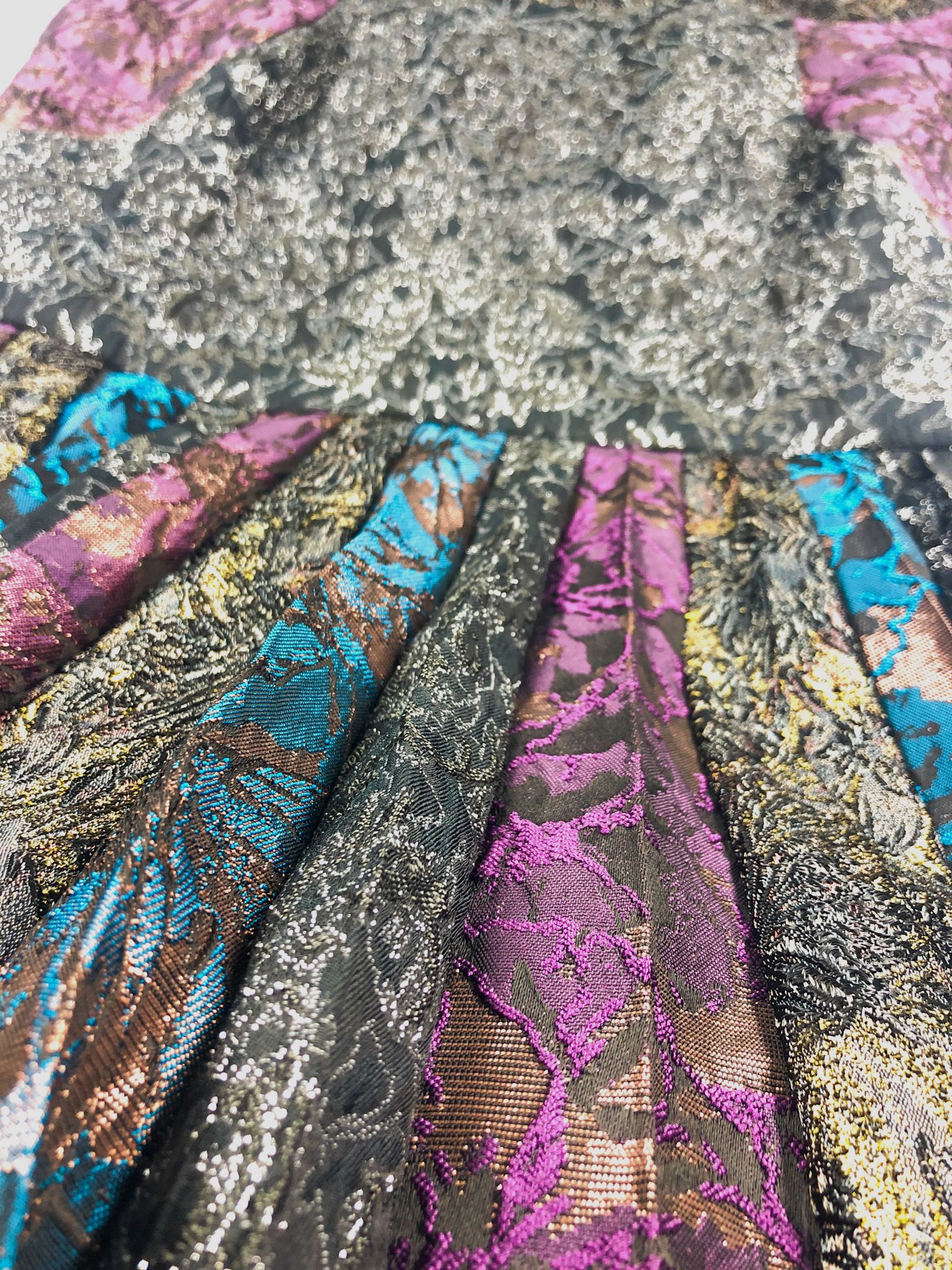
You’ve seen them. Those stiff, shimmering, impossibly detailed gowns that look like they belong in a Renaissance painting but somehow keep showing up on the red carpet at the Met Gala. They’re heavy. They’re loud. And honestly, brocade dresses for women are probably the most misunderstood category in fashion today. Most people think "grandma's curtains" when they hear the word brocade, but that’s just plain wrong.
Brocade isn’t just a pattern printed on a piece of polyester. It’s a technique. It’s history you can actually feel between your fingers. Unlike damask, which is reversible and usually flatter, brocade uses a "floating" thread method to create a raised, 3D effect. It’s tactile. When you run your hand over a high-quality brocade, you’re feeling the extra weft threads that aren't tied into the main structure of the fabric. It’s basically embroidery’s more sophisticated, built-in cousin.
Why Real Brocade Dresses for Women Cost a Fortune
Let’s get real about the price tag. If you’re looking at a dress for fifty bucks at a fast-fashion outlet, it’s not brocade. It’s a jacquard knit or, worse, a cheap screen print. Authentic brocade requires specialized looms. Historically, we’re talking about the Silk Road, Chinese emperors, and Byzantine royalty. Even today, brands like Dolce & Gabbana or Gucci lean into brocade because it conveys a level of "old money" wealth that a simple silk slip just can't match.
The weight is the first giveaway. A genuine brocade dress has heft. It doesn't drape like water; it stands its ground. This is why you see it so often in structural fashion—think A-line skirts that actually hold their shape or sharp, architectural shoulders. Designers like Erdem Moralioglu often use these fabrics to bridge the gap between "dainty floral" and "powerful structure." It's the armor of the fashion world.
The Science of the Weave
Technically speaking, the magic happens on a Jacquard loom. Before Joseph Marie Jacquard revolutionized the industry in 1804, these patterns had to be woven by hand with a "drawboy" sitting atop the loom manually pulling threads. It was grueling. Today, the complexity remains, but the speed has increased. You’ll find gold or silver threads—often called nulla or zari in Indian brocades like the famous Banarasi—interwoven with silk or synthetic blends.
This creates a "lustre" effect. It’s not just shiny. The light hits the raised threads at different angles, making the dress look like it’s changing color as you walk. If you’re wearing a deep navy brocade with gold undercurrents, it’ll look midnight blue in the shade and like a molten sun under a spotlight.
How to Wear Brocade Without Looking Like a Sofa
This is where most women get stuck. The fear of looking "upholstered" is very real. Because the fabric is so busy and thick, the styling needs to be surgically precise. You can't just throw on a brocade dress and hope for the best.
First off, keep the accessories quiet. If your dress is doing the talking (and brocade screams), your jewelry should whisper. Skip the chunky necklaces. Go for a simple diamond stud or a sleek gold band.
- Balance the Bulk: Since brocade is thick, it adds visual volume. If you’re petite, look for a "mini" silhouette to show off some leg and prevent the fabric from swallowing you whole.
- Contrast the Texture: Pair a brocade midi dress with a sleek, matte leather jacket. The juxtaposition of the "royal" fabric with "street" leather is a classic move for a reason.
- The Shoe Factor: Avoid heavy platforms. You already have weight in the fabric; you need something sharp to ground it. A pointed-toe pump or a very minimalist strappy sandal usually does the trick.
Actually, the "power suit" version of brocade is having a massive moment right now too. While the focus is often on dresses, a brocade shift dress worn over a crisp white button-down is a total boss move for high-stakes business meetings. It says you’re not afraid of being noticed, but you’re also serious about quality.
The Sustainability Problem (and Solution)
We have to talk about the elephant in the room: synthetic fibers. Most modern brocade dresses for women found in mid-tier retail are made of polyester or nylon blends. Why? Because silk is expensive and hard to maintain. But polyester doesn't breathe. If you wear a full-length synthetic brocade gown to a summer wedding, you’re going to melt.
There’s a growing movement among sustainable luxury brands to return to natural fibers. Stella McCartney, for example, has experimented with bio-based materials that mimic the stiffness of traditional brocade without the environmental toll of virgin plastic. If you’re hunting for a piece that will last thirty years, check the label. You want a high percentage of silk, cotton, or wool. Anything else is basically a fancy plastic bag that will pill after three wears.
The Cultural Significance of the Banarasi Dress
You can't discuss brocade without looking at India. The Banarasi brocade is arguably the pinnacle of the craft. Hand-woven in Varanasi, these pieces use real gold and silver threads. They are heirlooms. A woman in India doesn't just "buy" a Banarasi dress; she invests in a piece of family history. The motifs—often the kalga (mango) or bel (floral vines)—are steeped in Persian and Mughal influence.
When Western designers "discover" brocade, they are usually just scratching the surface of what these master weavers have been doing for centuries. If you want the real deal, looking toward South Asian artisans is the best way to find a piece that has soul.
Seasonal Shifts: Brocade Isn't Just for Winter
Conventional wisdom says brocade is for the holidays. Red and gold brocade at a Christmas party? Groundbreaking. (Insert sarcasm here).
But the "Spring Brocade" is a real thing. Designers are now using lighter-weight silk brocades in pastels—mint greens, pale lavender, and sky blue. These work beautifully for spring weddings or Easter celebrations. The trick is the "ground" fabric. A cotton-based brocade is much cooler than a silk-satin blend.
Honestly, a sleeveless brocade mini dress in a citrus yellow is probably the coolest thing you could wear to a June garden party. It’s unexpected. It’s preppy but with a sharp, expensive edge.
Cleaning and Maintenance: The "Do Not Touch" Rule
Whatever you do, don't put it in a washing machine. Ever. The "floating" threads I mentioned earlier? They are incredibly delicate. One snag on a zipper or a rough spin cycle and your dress is ruined. The threads will pull, the metallic luster will dull, and the structural integrity will collapse.
- Spot Clean Only: Use a very damp (not wet) microfiber cloth for small marks.
- Professional Dry Cleaning: Find a cleaner who specializes in "couture" or "evening wear." They know how to handle the heat settings so they don't melt the metallic threads.
- Storage: Never hang a heavy brocade dress by thin straps. The weight of the skirt will eventually tear the bodice. Use padded hangers or, better yet, store it flat in a garment box with acid-free tissue paper.
Common Misconceptions About the Silhouette
People think brocade makes you look older. It can. If you choose a floor-length, high-neck, long-sleeve brocade gown in burgundy, you’re basically a Victorian ghost.
The key to keeping it modern is the cut. Look for contemporary details:
- Asymmetrical necklines.
- Cut-outs at the waist.
- Thigh-high slits.
A "mini" brocade dress with a square neckline is arguably one of the most flattering things a woman can wear. It creates a frame for the face and neck while the stiff fabric hides any lumps or bumps you might be self-conscious about. It’s nature’s shapewear.
Actionable Steps for Your First Brocade Purchase
If you're ready to dive into the world of high-texture fashion, don't just buy the first shiny thing you see. Follow this roadmap to ensure you get a piece that actually works for your life.
Assess the "Hand": Before buying, touch the fabric. If it feels scratchy or "crunchy," it’s low-quality synthetic. Good brocade should feel substantial but surprisingly smooth.
Check the Inside: Flip the dress inside out. In high-quality brocade, you'll see a complex "negative" of the pattern. If it’s lined, feel the lining. A silk lining is a sign of a premium garment; polyester lining will make the dress hot and uncomfortable.
Start with a Skirt: Not ready for a full dress? A brocade pencil skirt paired with a simple grey t-shirt is the "cool girl" way to test the waters. It breaks up the intensity and makes the fabric feel wearable for a casual dinner.
Hunt the Vintage Shops: Brocade was massive in the 1950s and 60s. You can often find incredible vintage brocade cocktail dresses for a fraction of what a modern designer would charge. These older pieces often use much higher quality silk than what you’ll find in a mall today.
Brocade is a commitment. It’s a statement that you value craftsmanship over trends. While "quiet luxury" and "minimalism" have their place, sometimes you just want to wear something that looks like it took a hundred hours to make. That’s the power of the brocade dress. It’s unapologetic, historically rich, and, when styled with a bit of modern grit, absolutely timeless.
To maintain the longevity of your piece, always check the "float" density on the fabric surface. If the threads are too long, they will snag on your jewelry. Look for a tight weave where the decorative threads are closely integrated into the base. This ensures your dress stays looking like a masterpiece rather than a frayed mess after one night out. Store it in a cool, dry place away from direct sunlight, as metallic threads can oxidize and change color over years of exposure. Your wardrobe is an investment, and brocade is the gold standard of that portfolio.