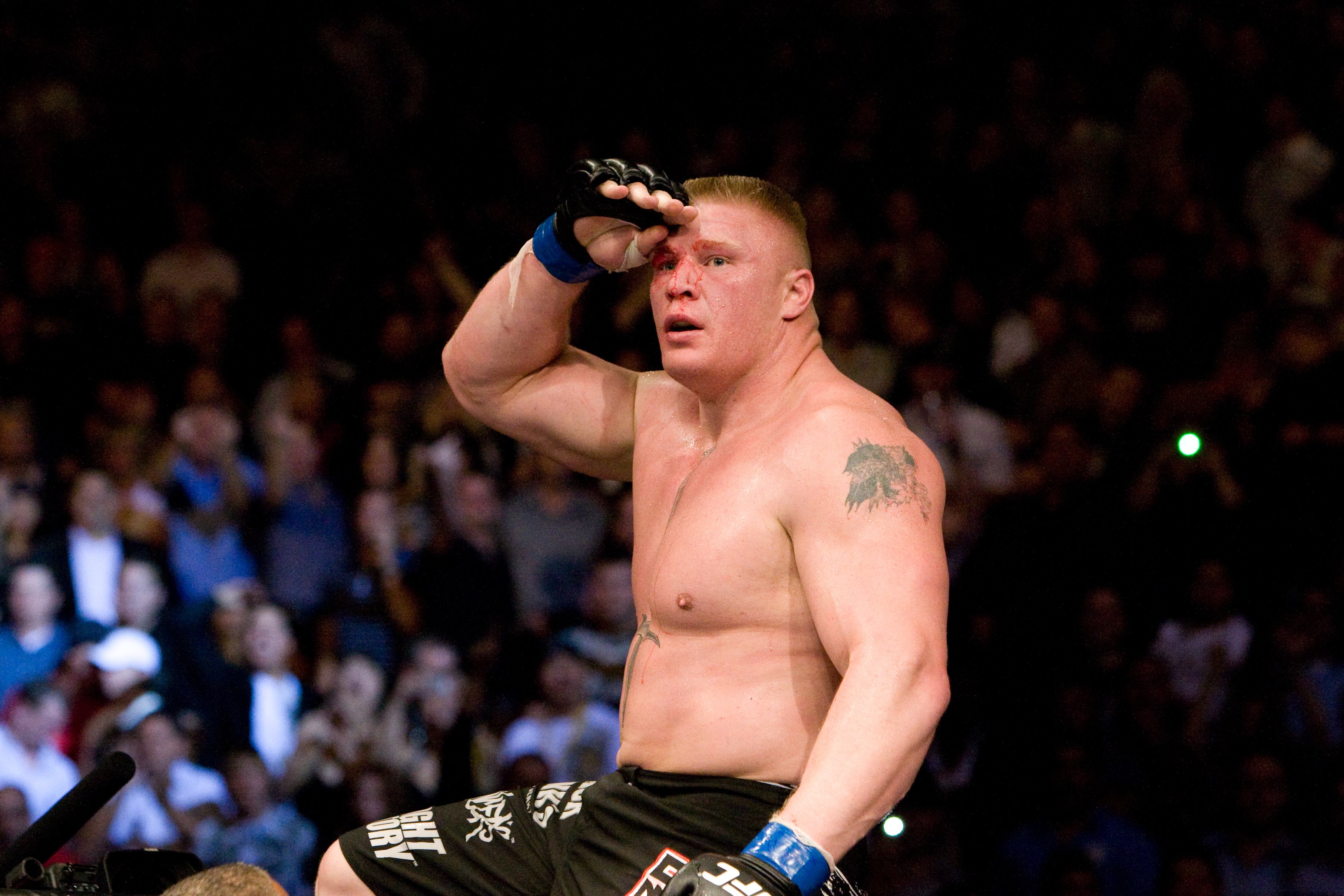
You’ve seen it. If you’ve watched even five minutes of a Brock Lesnar match or a UFC main event, that massive, snarling image on his back is impossible to miss. It’s as much a part of "The Beast" as his 280-pound frame and that signature side-to-side shoulder hop.
But honestly, most fans just see a "scary monster" and leave it at that. There’s actually a lot more going on with the brock lesnar back tattoo than just wanting to look intimidating.
He didn’t just walk into a shop and ask for "something tough." The ink back there—and the drama it caused behind the scenes in WWE—tells the story of a young athlete who didn't care about corporate rules or "likeness rights."
The Anatomy of the Beast: Breaking Down the Design
The back piece isn't just one single image; it's a composition. It centers around a massive, stylized demonic skull. It’s got this aggressive, almost biomechanical look to it, with the skull appearing cracked and weathered.
Look closer at the shoulders. You’ll see two large, meaty hands gripping what look like ice hooks or meat hooks. These hooks extend toward his traps, framing the central skull.
Then there’s the part most people miss because of his fight trunks. Down on his lower back, tucked away near the waistline, are the words "Kill 'Em All." Is it a Metallica reference? Maybe. Lesnar is a fan of the band (he famously used "Enter Sandman" for his UFC walkouts). But it’s also just a perfect summary of his "get in, destroy, get paid, go home" philosophy.
The Secret Drama: Why Jim Ross Was Furious
Here’s a bit of history that doesn't make the highlight reels. Back when Brock was in Ohio Valley Wrestling (OVW)—the old developmental territory for WWE—he decided to get that back piece done.
He didn't ask permission. He just did it.
Jim Ross, who was the head of Talent Relations at the time, was absolutely livid. Why? Because of money. Basically, WWE had already signed deals with action figure companies and video game developers like THQ. Those companies had already spent thousands of dollars rendering Brock’s 3D model based on his "clean" look.
Suddenly, their "Next Big Thing" shows up with a massive, complicated mural on his back. JR had to sit a young, defiant Brock down and explain that his body wasn't just his own anymore—it was a licensed property.
"We had an agreement with action figure people and video game people... and then all of a sudden you've got this giant tattoo on a guy's back that is missing from all the other stuff." — Jim Ross, Grilling JR
Brock, being Brock, didn't really care about the toy logistics. He kept the ink, and the video game designers just had to crunch to add the textures in.
Does the Skull Actually Mean Anything?
Fans love to theorize about the "deep meaning" behind the demonic skull. Some say it represents his "inner demons" or his battles with addiction and health issues like diverticulitis.
The truth? It’s probably simpler.
Brock has always been a guy who values strength and "warrior culture." On his left shoulder, he has the Yautja (the alien from Predator). On his right, another skull. The back piece is a logical extension of that aesthetic. It’s about being the most terrifying person in the room.
Unlike his chest tattoo—the famous sword/dagger that he explicitly said represents the "knife to his throat" feeling he had during his legal battles with Vince McMahon—he’s been pretty quiet about the back piece.
In his autobiography Death Clutch, he talks plenty about the sword, but the back tattoo is treated more like a permanent part of his uniform. It’s his logo. In fact, WWE eventually just started using the skull design as his official merchandise branding.
The "Tramp Stamp" Controversy
Because the internet is the internet, people have spent years joking about the "Kill 'Em All" text on his lower back. Since it’s located in the classic "tramp stamp" position, fans on forums like Reddit have poked fun at the toughest man on earth for having a lower-back script tattoo.
Of course, nobody says that to his face.
The placement is actually practical for a fighter. If you’re going to have text that long on your back, it either goes across the shoulders or along the waist. Since his shoulders were already occupied by the meat hooks, the lower back was the only flat "canvas" left.
Why it Still Matters for His Brand
The brock lesnar back tattoo is a masterclass in accidental branding.
- It makes him look wider. The way the hooks pull toward the center accentuates his V-taper.
- It adds to the "final boss" vibe. When he turns his back to the hard cam during an entrance, it’s the first thing the audience sees.
- It separates him from the "clean-cut" amateur wrestler he was at Minnesota.
If you’re looking to get something similar, just remember: that’s a lot of black-and-grey shading. It likely took multiple sessions and a very high pain tolerance, especially over the spine and the kidneys.
Key Takeaways for Fans and Ink Enthusiasts
If you're fascinated by the artwork or thinking of paying homage with your own ink, keep these reality checks in mind:
- Copyright is Real: WWE eventually trademarked designs similar to Brock’s tattoos for his t-shirts. If you're a professional athlete, check your contract before hitting the parlor.
- Placement Matters: The way the "meat hooks" follow the lines of his trapezius muscles is why the tattoo looks so "right" on his body. Good tattoos should flow with your anatomy, not just sit on top of it.
- The Chest vs. Back: Don't confuse the two. The back is his "Beast" persona; the chest sword is his personal "survival" symbol.
Whether you love the design or think it's a bit much, you can't deny it worked. It turned a human being into a walking, breathing action figure. Just don't expect him to give you a heart-to-heart about the "symbolism" of the skull's jawline anytime soon. He’s probably too busy on his ranch in Saskatchewan, far away from anyone asking questions about his ink.