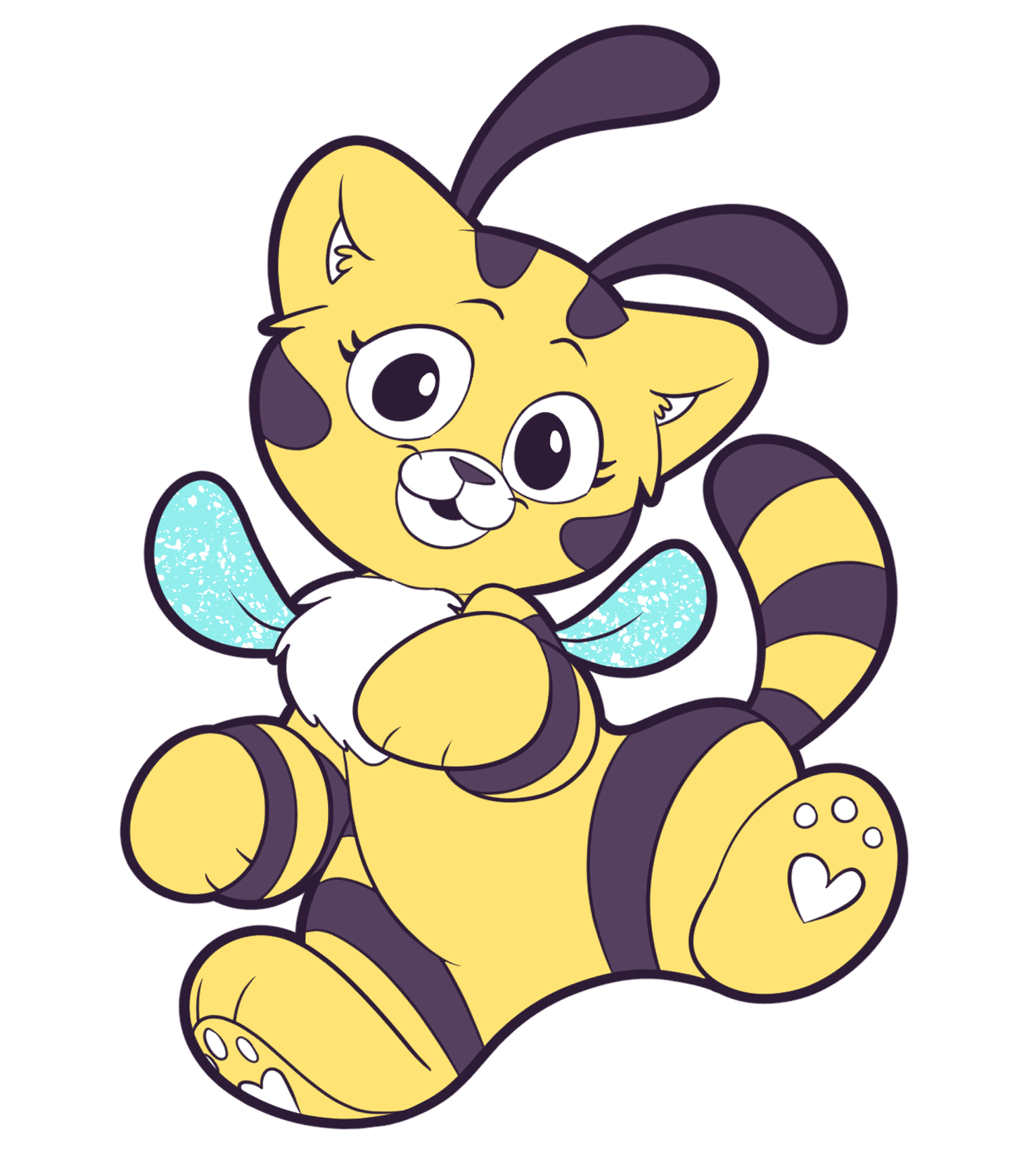
You’ve probably seen her. That bright, cyan fur and those oversized, glazed-over eyes. Candy Cat Poppy Playtime isn't exactly a new face in the survival horror genre, but she’s definitely one of the most unsettling characters lingering in the shadows of the Playtime Co. factory. While Huggy Wuggy gets the fame and Mommy Long Legs gets the chase sequences, Candy Cat represents a specific kind of "toy-gone-wrong" dread that most players overlook. Honestly, she’s more than just a piece of plastic merchandise. She is a reminder of the twisted biological experiments that define Mob Entertainment’s universe.
When you first walk through the decaying halls of the factory, you see her everywhere—on posters, in cutouts, and as a physical toy. She looks harmless. She’s designed to lick children's faces and "taste" their happiness, which, let’s be real, is a pretty weird concept for a kids' toy anyway. But the deeper you dig into the lore of Poppy Playtime, the more you realize that every character, including this sugary feline, has a dark, visceral origin story tied to the Prototype and the horrific "Experiment 1006."
Why Candy Cat Poppy Playtime is More Than Just a Background Character
Most casual players think Candy Cat is just background dressing. They’re wrong. She’s a central part of the "Swap-imal" line, a series of toys meant to bridge the gap between different animals. In the case of Candy Cat, she’s a hybrid. She has a retractable tongue that’s supposedly meant for "tasting" candy, but in the context of the Wider Playtime Co. mystery, that tongue serves a much more predatory purpose.
Think about the cardboard cutouts.
If you’ve played through the chapters, you know those cutouts aren't just for show. When you press the button on the Candy Cat Poppy Playtime cutout, you hear her voice. It’s high-pitched. It’s sweet. But it’s also hungry. She talks about how she can't stop eating. "Mmm! More, more, more! It's not enough!" It sounds like a joke about a cat who likes treats, but in a factory where the toys are actually made of organic material—human organs and muscle—that "hunger" takes on a sickening new meaning.
The lore suggests that the toys were fed. They were kept alive. And Candy Cat’s insatiable appetite is likely a reference to the biological needs of the person trapped inside that cyan shell.
The Dark Science of Experimentation
Mob Entertainment has been very specific about how these toys came to be. It wasn't magic. It was the "Biggest Little Initiative." Basically, the company started stuffing human souls and bodies into toy housings to create "living" attractions that wouldn't need a salary and wouldn't ever quit.
- The Biological Foundation: Every toy, including Candy Cat, contains a skeletal structure and a digestive system.
- The Hunger Factor: This explains why the cutouts focus so much on eating. Without sustenance, the "toys" become feral.
- The Failed Experiments: Not every child or employee turned into a "successful" toy like Huggy Wuggy. Many became twisted versions of themselves, doomed to roam the lower levels.
There’s a popular theory among the community—and it’s backed by some of the VHS tapes found in-game—that Candy Cat was one of the earlier attempts at this process. Unlike the more advanced "Prime" toys, she might have been a lower-tier experiment. This makes her existence even more tragic. She wasn’t a masterpiece; she was a proof of concept.
Where Does She Appear in the Game?
If you're looking for a boss fight, you won't find one with Candy Cat. Not yet, anyway. Her presence is mostly felt through the environment. You see her in the "Musical Memory" game in Chapter 2, where her image is used as one of the buttons you have to press. It’s a high-stress sequence. You’re trying to survive Bunzo Bunny while staring at the grinning face of a cat that looks like it wants to swallow you whole.
Actually, her most prominent "physical" appearance is in the form of the discarded shells and the statues. You’ll find her in the storage rooms, stacked among other "failed" or decommissioned units. It’s a graveyard. Seeing a bright blue cat in a pile of grey dust and rusted metal is a visual gut-punch. It highlights the "disposable" nature of the children Playtime Co. used for their research.
The Connection to the Prototype (Experiment 1006)
Everything in Poppy Playtime leads back to the Prototype. This mechanical-organic nightmare is the one pulling the strings, and Candy Cat is no exception. In the "Hour of Joy" cinematic, we see the toys revolting against the staff. While Candy Cat isn't the primary focus of that massacre, we know she was there.
The Prototype assimilated the parts of many toys. Look closely at the Prototype’s structure. It’s a mishmash of various pieces. While we haven't seen a specific Candy Cat limb attached to him, the lore implies that any toy that "falls" is recycled into his ever-growing form. It’s a grim fate. You’re either a toy, or you’re spare parts for a god.
Candy Cat’s Design: Psychological Horror in Neon Blue
Why is a blue cat scary?
It’s the Uncanny Valley. Candy Cat is almost cute. She has the large eyes of a kitten and a bright color palette. But her proportions are off. Her tongue is too long. Her smile is static and wide. When you see her in the dark corners of the Game Station, your brain doesn't see a toy; it sees a predator mimicking a toy.
The developers at Mob Entertainment are masters of this. They take something synonymous with childhood comfort—a cat, a hug, a jack-in-the-box—and they distort it. Candy Cat is the embodiment of "forced sweetness." She’s a creature designed to be loved that is incapable of feeling anything but a programmed hunger.
What Most People Get Wrong About Candy Cat
I’ve seen a lot of fans online claiming that Candy Cat is "good" or that she’s a "victim" who helps the player. Honestly, there’s zero evidence for that. In the world of Poppy Playtime, survival is the only priority. While some characters like Kissy Missy show glimmers of their former humanity, Candy Cat has remained a silent, grinning observer.
She isn't your friend. She’s a product.
Another misconception is that she’s a minor character with no lore. If you listen to the worker logs, there are mentions of the "Swap-imal" experiments being particularly difficult because the biological "merging" often led to madness. Candy Cat’s constant talk of hunger isn't a personality trait—it’s a symptom of a failing biological experiment.
The Merchandise Reality vs. Game Lore
It’s funny, in a dark way. You can go to the store and buy a real-life Candy Cat Poppy Playtime plushie. It’s soft. It’s cute. Kids love it. But the kids playing with these toys in the real world are doing exactly what the kids in the game did before the factory went dark. They’re inviting these "monsters" into their homes.
The contrast between the bright, marketable toy and the lore of a blood-soaked factory is why this game works. Candy Cat is the face of that contrast. She’s the perfect corporate mascot: colorful, simple, and hiding a soul-crushing secret.
How to Find Every Candy Cat Easter Egg
If you're replaying the chapters, keep your eyes peeled for these specific details:
- The Intro Sequence: Look at the posters in the lobby. Candy Cat is prominently displayed next to Huggy Wuggy, showing her status as a "core" character in the company's lineup.
- The Vents: There are small, feline-like scratch marks in some of the ventilation shafts. While some attribute these to CatNap from Chapter 3, the scale and shape in the earlier chapters suggest a smaller feline-like entity was moving through them.
- The Color Coding: Notice how the cyan of Candy Cat matches certain puzzles. This isn't accidental. The factory was designed to use its characters as "guides" for the workers and the children, creating a Pavlovian response to the characters' colors.
The Future of Candy Cat in Chapter 4 and Beyond
Will we ever face a "Monster" version of Candy Cat?
It’s highly likely. We saw what happened to the "Smiling Critters" in Chapter 3—they were turned into horrific, decayed versions of themselves. CatNap was the primary antagonist, but the others were husks. Candy Cat is a prime candidate for a "devolved" boss encounter. Imagine a version of her where the "candy tongue" is a barbed, muscular weapon and her cyan fur is matted with the grime of the lower levels.
Mob Entertainment knows that fans want to see the "original" toys get their moment in the spotlight. Huggy and Mommy are gone. The Prototype is gathering his army. Candy Cat is still out there somewhere in the depths of Playtime Co., and she’s probably very, very hungry.
Step-by-Step Discovery Guide
To fully understand the role of this character, you should focus your next playthrough on the environmental storytelling rather than just the jump scares.
- Audit the Cardboard Cutouts: Don't just click them once. Click them until they start to glitch or repeat lines. The dialogue often changes slightly, revealing the "entity" behind the voice.
- Examine the VHS Tapes: Pay close attention to the background noise in the "Big Little Initiative" tapes. There are feline sounds—hisses and low growls—that don't match the "sweet" persona of the commercialized cat.
- Analyze the "Hour of Joy" Tape: Frame-by-frame this video. You can see the silhouettes of various toys in the background as the researchers are hunted. Identifying Candy Cat in these frames confirms her participation in the "Great Rebellion."
The mystery of Playtime Co. is far from over. While the bigger monsters get all the attention, it’s the smaller, "sweeter" toys like Candy Cat that truly highlight the horror of what happened in that factory. She’s a reminder that in this game, even the most innocent-looking face can be a mask for something truly predatory. Keep your flashlight charged and your GrabPack ready; the next time you see that cyan fur, it might not be a poster on the wall.