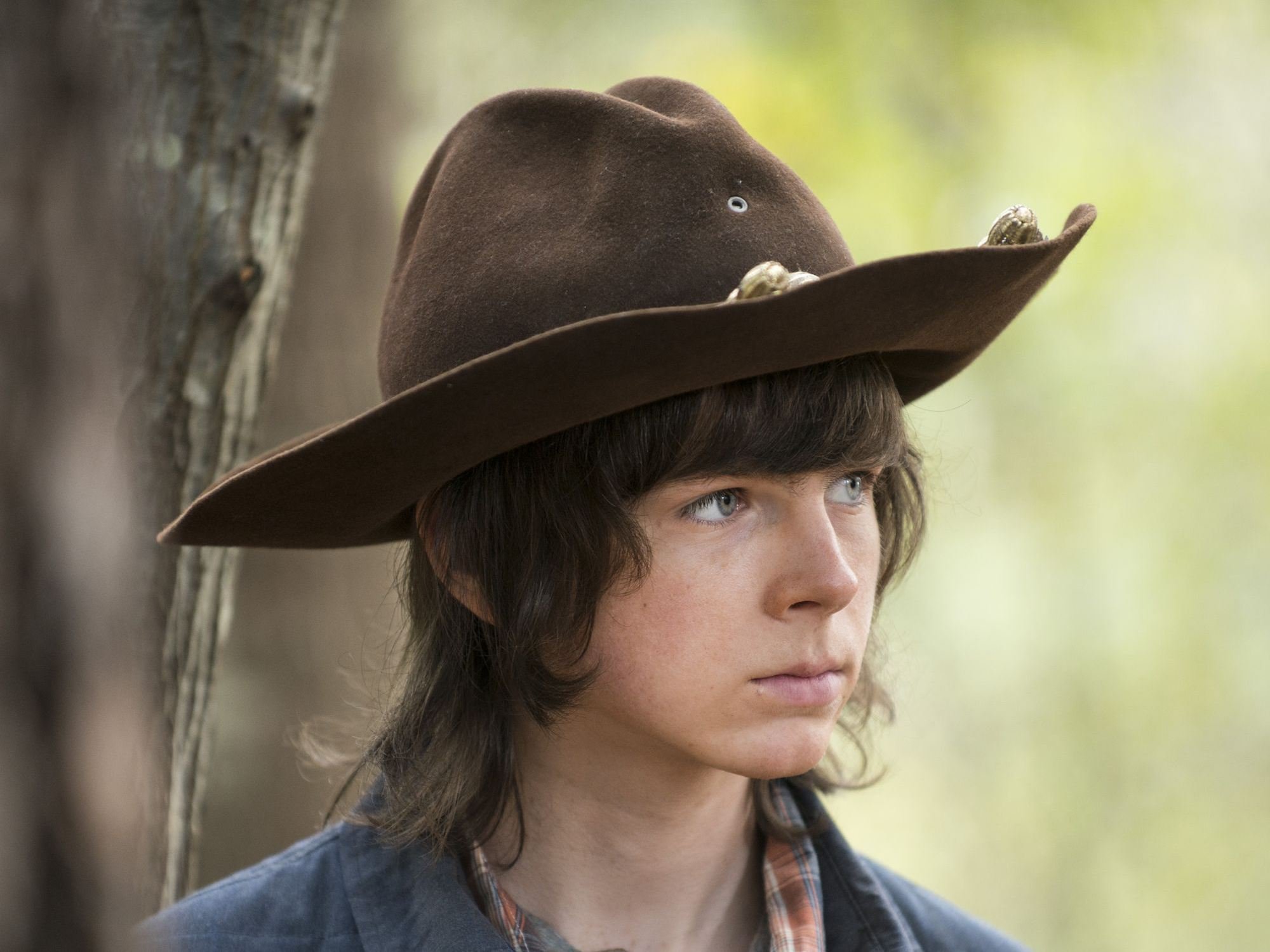
He was just a kid in a too-big sheriff’s hat. When we first met Carl The Walking Dead fans didn’t exactly love him. He was the kid who wouldn’t stay in the house. He was the reason Dale died—sort of. He was a liability. But then, something shifted.
The apocalypse has a way of stripping away the fluff, and for Carl Grimes, that meant growing up in the middle of a literal nightmare.
Watching Chandler Riggs age on screen was a unique experience. We saw him go from a wide-eyed boy in the Atlanta camp to a hardened soldier who could stare down Negan without blinking. It wasn't just about survival. It was about the soul of the show. Rick Grimes fought so Carl could have a future, which is exactly why that Season 8 twist felt like a punch to the gut for millions of viewers.
The Evolution of a Survivor
Carl wasn't ever supposed to be just another casualty. In Robert Kirkman’s original comic book series, Carl is the "Old Man Carl" who outlives almost everyone. He’s the legacy. So, when the TV show decided to deviate from that path, it wasn't just a plot twist. It was a fundamental shift in the DNA of the story.
Think back to the early days. Remember the farm? Carl getting shot by Otis was the first time the show really signaled that kids aren't safe. Usually, in TV, kids have this "plot armor" that protects them from the worst of the world. Not here. That moment forced Carl to harden. By the time they reached the prison, he was taking out walkers with a cold efficiency that honestly scared his father.
He had to kill his own mother. Let that sink in. Lori Grimes died during an emergency C-section, and Carl was the one who had to ensure she didn't turn. No counselor, no therapy, just a handgun and a grim realization of what reality looked like now. That's the moment the "annoying kid" version of Carl died, and the soldier was born.
That Infamous Season 8 Exit
The bite. It happened so fast most people missed it on the first watch. During a chaotic scuffle in the woods while helping Siddiq, a walker got to Carl’s midsection. Because it wasn't a limb, there was no chopping it off. No saving him.
Fans were livid. Actually, "livid" might be an understatement.
The backlash was massive because it felt unnecessary. Scott Gimple, the showrunner at the time, argued that Carl’s death was the only thing that could realistically convince Rick to spare Negan and end the war. But was it? Many felt Rick could have found that mercy through other means without sacrificing the show's future.
- Chandler Riggs had reportedly just bought a house near the filming location.
- He was told he’d be on the show for years to come.
- The departure felt more like a business decision than a creative necessity.
Honestly, it changed the trajectory of the series. Without Carl The Walking Dead lost its primary "bridge" to the next generation. While characters like Judith and RJ tried to fill that void, the weight of the Grimes legacy felt fractured.
The Eye, The Hat, and The Iconography
You can’t talk about Carl without talking about the look. The Stetson. The eye patch.
That sheriff's hat wasn't just a costume piece; it was a baton. When Rick gave it to Carl, he was passing on the responsibility of leadership and the burden of morality. When Carl lost his eye—thanks to Ron Anderson’s stray bullet during the purge of Alexandria—he became a visual representation of the world's brutality.
He looked like a character out of a Western. A young man who had seen too much but still tried to hold onto a shred of humanity. It’s that duality that made him interesting. He could be ruthless, like when he gunned down a fleeing kid at the end of the Governor’s assault on the prison, but he could also be the person who brought Siddiq into the fold because "it’s what we do."
Why We Still Talk About Him
Most characters on long-running shows eventually fade into the background once they’re gone. Not Carl. His absence is felt in every spin-off, every mention of Rick’s journey, and every fan theory about what "should" have happened.
The reality is that Carl The Walking Dead represented hope. If the kid who grew up in the apocalypse could remain a "good man," then maybe the world was worth saving. When he died, that hope became much harder to find. It turned the show into a darker, more cynical exploration of loss.
Some people claim the show "died" with Carl. That’s probably a bit dramatic, considering the success of The Ones Who Live and Daryl Dixon, but there is a grain of truth there. The original mission statement of the show—a father finding his son—was essentially completed and then discarded.
Key Takeaways for Fans and Writers
If you’re analyzing Carl’s arc for your own writing or just deep-diving into the lore, there are a few things that stand out as "must-knows" for the character's legacy.
- The Comic Divergence: In the books, Carl marries Sophia and has a daughter named Andrea. He lives to be an old man in a world that has largely recovered. Knowing this makes the TV death feel even more jarring.
- The Negan Dynamic: Carl was one of the few people Negan actually respected. Negan saw a bit of himself in Carl’s fearlessness, which made their interactions some of the best in the series.
- The Siddiq Factor: Carl died so Siddiq could live. Siddiq went on to be the community’s doctor, making Carl’s sacrifice practical as well as emotional.
What To Do Next
If you’re looking to revisit the best of Carl, don’t just rewatch his final episode. Go back to Season 4, Episode 9, titled "After." It’s a bottle episode where Carl thinks Rick is dead (or turned) and tries to survive on his own. It’s the definitive look at his character—a mix of teenage angst, paralyzing fear, and incredible resilience.
Also, check out the Walking Dead Deluxe comic re-releases. They’re being published in color now, and seeing Carl’s original journey with the benefit of hindsight gives a whole new perspective on how the TV show handled his growth.
Pay attention to the subtle callbacks in the newer spin-offs. Even though he’s gone, the lessons Rick learned from Carl’s letters in Season 8 continue to drive the protagonist's decisions in the newest chapters of the franchise. It proves that while a character can be written out, their impact on the narrative remains permanent.