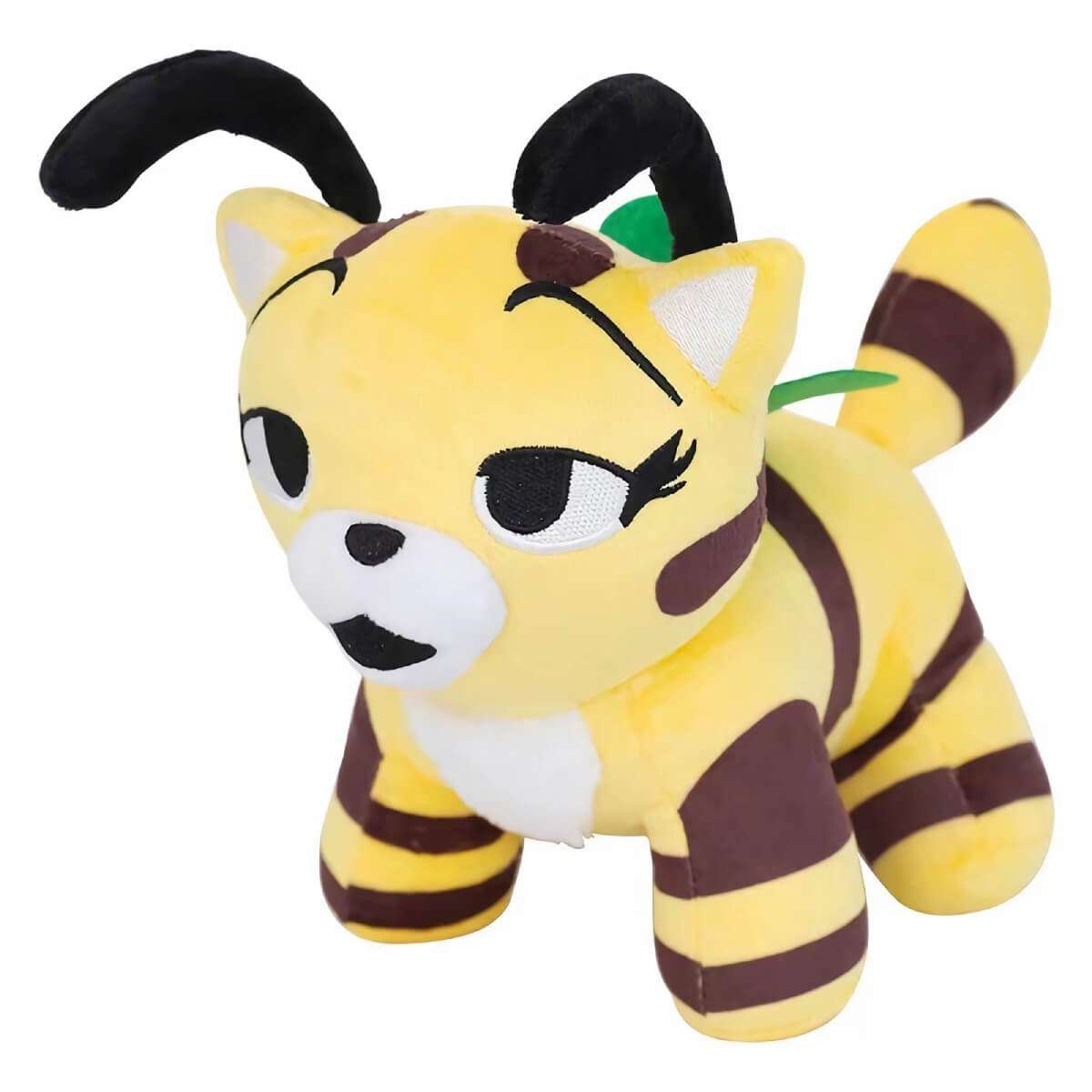
Honestly, the first time you walk into the Make-A-Friend room in Cat Bee Poppy Playtime, you don't expect a yellow, four-legged bee-cat hybrid to be the thing that sticks in your brain. It's just a toy. Or it’s supposed to be. But MOB Games—now Mob Entertainment—knew exactly what they were doing when they designed Cat-Bee. She isn't the main antagonist like Huggy Wuggy or Mommy Long Legs, yet her presence in the lore is heavy, weird, and deeply unsettling if you actually look at the notes scattered around Playtime Co.
The Reality of Cat-Bee’s Origins
She’s a half-cat, half-bee creature. Yellow fur. Black stripes. Tiny wings that definitely shouldn't be able to lift a plastic body that size. In the game's universe, she was part of the "Swap-imal" line, which sounds like a marketing dream for a 1990s toy company but a total nightmare for the kids who eventually realized what was happening behind the scenes.
If you’ve played Chapter 1, you know the drill. You have to power up the machinery to literally "make" a Cat-Bee to unlock the door. You watch the mechanical arms grab the shell, paint it, and assemble it. It’s a cold, industrial process. But the lore tells a much darker story than just plastic and gears. According to internal documents found in the game, these toys weren't just products. They were vessels.
The 1-0-0-6 Connection
While the Prototype (Experiment 1006) gets all the glory for being the big bad, Cat-Bee represents the rank-and-file tragedy of the Playtime Co. staff. Fans often point to the "Maintenance Report" and the "Log 08502" to piece together who these creatures used to be. There is a persistent theory, backed by the timeline of the "Bigger Bodies Initiative," that Cat-Bee was one of the early attempts at soul-transfer. Unlike the massive, aggressive Huggy Wuggy, Cat-Bee feels like a leftover. A discarded experiment.
Why four legs? Why the stinger? It’s purely aesthetic, but in the context of a horror game, it highlights the body horror. You aren't just looking at a toy; you're looking at a biological blueprint twisted into a commercial product.
Where Does She Actually Appear?
She isn't just a Chapter 1 prop. Cat-Bee shows up in several forms throughout the series:
- The Make-A-Friend Machine: This is the big one. You can't progress without her. You see her being built in real-time, which serves as a metaphor for the entire game: humans being rebuilt into something else.
- The Cardboard Cutouts: If you press the buttons on the Cat-Bee cutouts found in the facility, you hear her voice lines. They start cute. "Bzzzz! I'm Cat-Bee! Mew!" But as the game progresses and the power flickers, those lines feel mocking.
- Statues and Posters: She is everywhere in the background of the Game Station in Chapter 2. It’s a reminder that before the massacre, she was a flagship character, right up there with Bron and Candy Cat.
The Science of the "Bigger Bodies"
Let’s talk about the technical side of the lore. Mob Entertainment has been very specific about the "Experiments." We know from the lore reveals in Project: Playtime and Chapter 3 that the Poppy Playtime universe relies on a substance called Poppy Flower Extract. This isn't just magic; it's presented as a biological preservative.
Cat-Bee is a "Swap-imal." In the real world, toy companies in the 80s and 90s loved these gimmicks. Think Popples or My Little Pony. But in Cat Bee Poppy Playtime, the gimmick is a mask for the horror of the experiments. The "Bigger Bodies" version of Cat-Bee hasn't had a massive boss fight yet, but her mangled remains are seen in the Prototype's shrine. It’s a blink-and-you’ll-miss-it moment that confirms she was "alive" in the biological sense before being consumed or harvested by Experiment 1006.
It's actually kind of tragic.
Most players just see a puzzle piece. But if you look at the blood splatters near the assembly line, you realize the Make-A-Friend machine wasn't always making toys out of plastic.
Why Cat-Bee Matters to the Fandom
Why do people care so much about a secondary character? It’s the design. It's the "uncanny valley" effect. Cats are supposed to be soft. Bees are supposed to be industrious. Merging them creates this creature that feels fundamentally "wrong."
Also, the voice acting. The high-pitched, bubbly voice of Cat-Bee stands in sharp contrast to the deep, guttural growls of the monsters chasing you. It’s a classic horror trope—using childhood innocence to amplify the terror.
Common Misconceptions
People often think Cat-Bee is a major villain. She’s not. At least, not yet. She’s a "Set Piece" character. Another common mistake is thinking she was the first experiment. She wasn't. That "honor" belongs to others, but she was likely part of the mid-tier testing phase where the researchers were trying to see how much "humanity" a smaller frame could hold.
How to Find All Cat-Bee Easter Eggs
If you’re a completionist, you need to look closer at the environments. In Chapter 2, specifically in the warehouse areas, you can find rejected versions of her. Some are missing limbs. Some have the wrong colors.
- The Hidden Tape: There is a VHS tape that briefly mentions the "efficiency" of the Swap-imal line. It hints that these toys were easier to "control" because of their smaller size.
- The Shrine: In the later chapters, look at the giant structure the Prototype is building. You can clearly see a Cat-Bee head woven into the metal and bone. It’s a grim fate for a toy meant to be a child's best friend.
Navigating the Lore: What’s Next?
With Chapter 4 on the horizon, the community is looking for any sign of the "Bigger Bodies" Cat-Bee. We’ve seen the giant version of Huggy, the spider-like Mommy Long Legs, and the terrifying DogDay. Cat-Bee is one of the few original characters who hasn't had a "main stage" chase sequence.
Given how Mob Entertainment likes to subvert expectations, she might not ever be a boss. She might just stay as she is: a haunting reminder of what happened to the people who worked at Playtime Co. She is the face of the "discarded."
Actionable Steps for Poppy Playtime Fans
If you want to go deeper into the Cat-Bee lore or just improve your game knowledge, here is what you should actually do:
- Replay Chapter 1 with a focus on the posters. Most people sprint through. Don't. Read the text on the walls near the Make-A-Friend machine. It explains the "Swap-imal" patent in a way that feels very "corporate-evil."
- Check the Project: Playtime skins. The multiplayer game adds a lot of cosmetic lore. There are "vandalized" versions of Cat-Bee that show what the toys looked like after the facility went dark.
- Analyze the Prototype’s Shrine. Use a high-brightness setting. You can identify exactly which parts of Cat-Bee were used to build the Prototype's growing body. This confirms her "death" in the physical sense.
- Listen to the Voice Lines again. There is a specific glitch in the Cat-Bee cutout voice box if you trigger it multiple times in a row. It sounds less like a toy and more like a distorted human scream.
Cat-Bee isn't just a yellow cat with wings. She is a symbol of the factory’s transition from a place of joy to a literal slaughterhouse. Whether she returns as a nightmare version in the next installment or remains a static piece of the environment, her presence is a core part of what makes the world of Playtime Co. so effective. She is cute, she is bright, and she is absolutely terrifying once you know the truth.