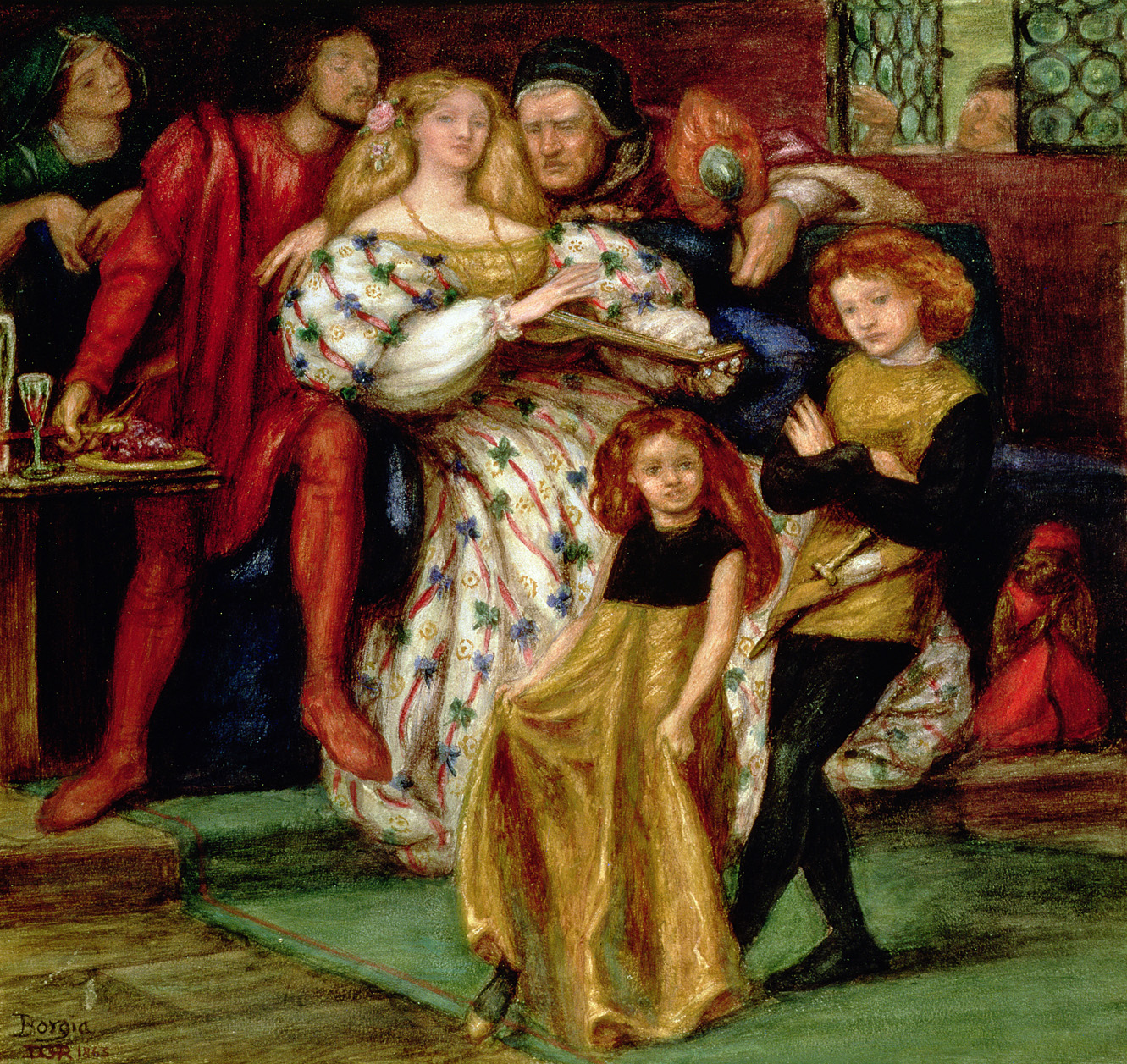
You've probably heard the name. Maybe you saw him in a video game wearing a red cape or caught a glimpse of a brooding actor playing him on a prestige TV drama. Honestly, Cesare Borgia is one of those historical figures who feels more like a comic book villain than a real person.
He was the son of a Pope. He was a teenage cardinal. He was a ruthless general who basically invented the "power move" before it was a thing.
Most people know him as the inspiration for Niccolò Machiavelli’s The Prince. But the truth is way messier, more violent, and—surprisingly—more tragic than the legends suggest. If you've ever wondered who is Cesare Borgia and why we’re still talking about him five hundred years later, the answer isn't just about poison and daggers. It’s about a man who tried to rewrite the rules of the world and lost everything in the process.
The Son of a Pope: A Career Start Like No Other
Cesare wasn't supposed to be a soldier. Born in 1475 to Cardinal Rodrigo Borgia and his long-term mistress Vannozza dei Cattanei, his path was pre-written. In the Renaissance, "illegitimate" didn't mean "hidden." It just meant you had to work the system.
When his father became Pope Alexander VI in 1492, the family hit the jackpot.
Cesare was 18. His dad made him a cardinal almost immediately. Imagine that. One day you’re a law student in Pisa, and the next you’re one of the most powerful princes of the Church. But Cesare hated it. He didn't want the red hat or the quiet life of prayer. He wanted his brother's job.
His younger brother, Juan, was the Captain General of the Papal Army. Juan got the armor, the horses, and the glory. Cesare got the stuffy robes. Then, in 1497, Juan’s body was pulled out of the Tiber River with nine stab wounds. The killer? Never found. But everyone looked at Cesare.
Shortly after, Cesare did something no one had ever done: he resigned from the cardinalate. He traded the church for the sword.
The Duke of Romagna and the Rise of "Valentino"
Once he was out of the Church, Cesare moved fast. He needed a title and an army. He went to France, married Charlotte d’Albret (the sister of the King of Navarre), and became the Duke of Valentinois. This is where his famous nickname "Il Valentino" comes from.
With French troops and Papal gold, he set out to conquer the Romagna—a region in Italy full of petty tyrants who didn't want to listen to Rome.
He was brilliant. He was terrifying.
He hired Leonardo da Vinci as his military engineer. Seriously. Leonardo designed maps and siege engines for him. While Leonardo was sketching, Cesare was taking cities. He didn't just win by force; he won by being the smartest person in the room. He would offer peace, wait for the enemy to lower their guard, and then strike.
The Senigallia Trap
If you want to know who is Cesare Borgia at his most "Machiavellian," look at the night of December 31, 1502.
A group of his own mercenary captains had conspired against him. Instead of fighting them, he invited them to a "friendly" dinner at Senigallia to talk things out. They showed up, thinking they’d reached a deal.
He had them all strangled.
This move blew Machiavelli’s mind. To the diplomat watching from the sidelines, this wasn't just murder. It was efficiency. It was a way to end a rebellion without a long, bloody war. This is the core of why Cesare matters to history: he proved that being feared was often safer than being loved.
The Machiavelli Connection
Niccolò Machiavelli spent a lot of time following Cesare around. He was the Florentine ambassador to the Borgia court, and he was obsessed.
Machiavelli saw in Cesare a "new prince." Someone who wasn't relying on ancient family names but on his own virtù—his skill and drive. In his famous book, Machiavelli basically says: "If you want to build a country from scratch, do what Cesare did."
But there’s a catch.
Cesare’s power was built on a foundation of sand. It all depended on his father being Pope. Machiavelli noted that Cesare’s only real mistake was letting a rival, Giuliano della Rovere (who became Pope Julius II), take the throne after his father died.
The Syphilis Mask and the Final Downfall
History books often leave out the human toll. By his late twenties, Cesare was physically falling apart. He had contracted syphilis, which in the 1500s was a horrific, disfiguring disease.
It pockmarked his face so badly that he started wearing a black leather mask.
Think about that image. A man who was once the most handsome prince in Italy, now ruling from behind a mask, hiding his rot while trying to hold onto a crumbling empire. When his father died in 1503, Cesare was actually too sick with malaria and syphilis to secure the Vatican.
His enemies pounced.
He was arrested, escaped, fled to Spain, and eventually died in a meaningless skirmish in 1507. He was 31. He went from potentially being the King of Italy to dying in a ditch in Navarre.
What Most People Get Wrong About Him
Is the "Black Legend" of the Borgias true? Mostly no.
- Incest: People love to whisper about Cesare and his sister Lucrezia. There’s zero historical evidence for it. It was mostly propaganda spread by the Sforza family to embarrass the Pope.
- The Poisoner: The Borgias supposedly had a special poison called Cantarella. While they definitely got rid of rivals, they weren't the chemistry wizards history makes them out to be. Most "poisonings" were probably just malaria or stomach flu—common killers back then.
- The Monster: Was he cruel? Yes. But no more than the kings of France or England at the time. He was just more honest about it.
Why Cesare Borgia Still Matters Today
So, who is Cesare Borgia to us in 2026?
He is the ultimate Case Study in power. He represents that moment in history where politics stopped being about "God’s will" and started being about results. He showed that you could provide good government—and he did, his subjects in the Romagna actually liked him because he brought order—through absolute ruthlessness.
If you want to dig deeper into the real Cesare, here are a few things you can do next:
- Read the Source Material: Skip the Wikipedia summary and read The Prince by Machiavelli. Pay attention to Chapter 7. It’s essentially a fan-letter to Cesare's tactics.
- Look at the Maps: Search for Leonardo da Vinci's map of Imola. It was commissioned by Cesare and changed how military cartography worked forever.
- Check the Timeline: Compare his rise to the fall of the Medici. It gives you a much better picture of how chaotic the Italian Renaissance actually was.
He wasn't a hero. He wasn't exactly a villain. He was a man who tried to be a titan in a world of giants, and he's the reason we still use the word "Machiavellian" today.