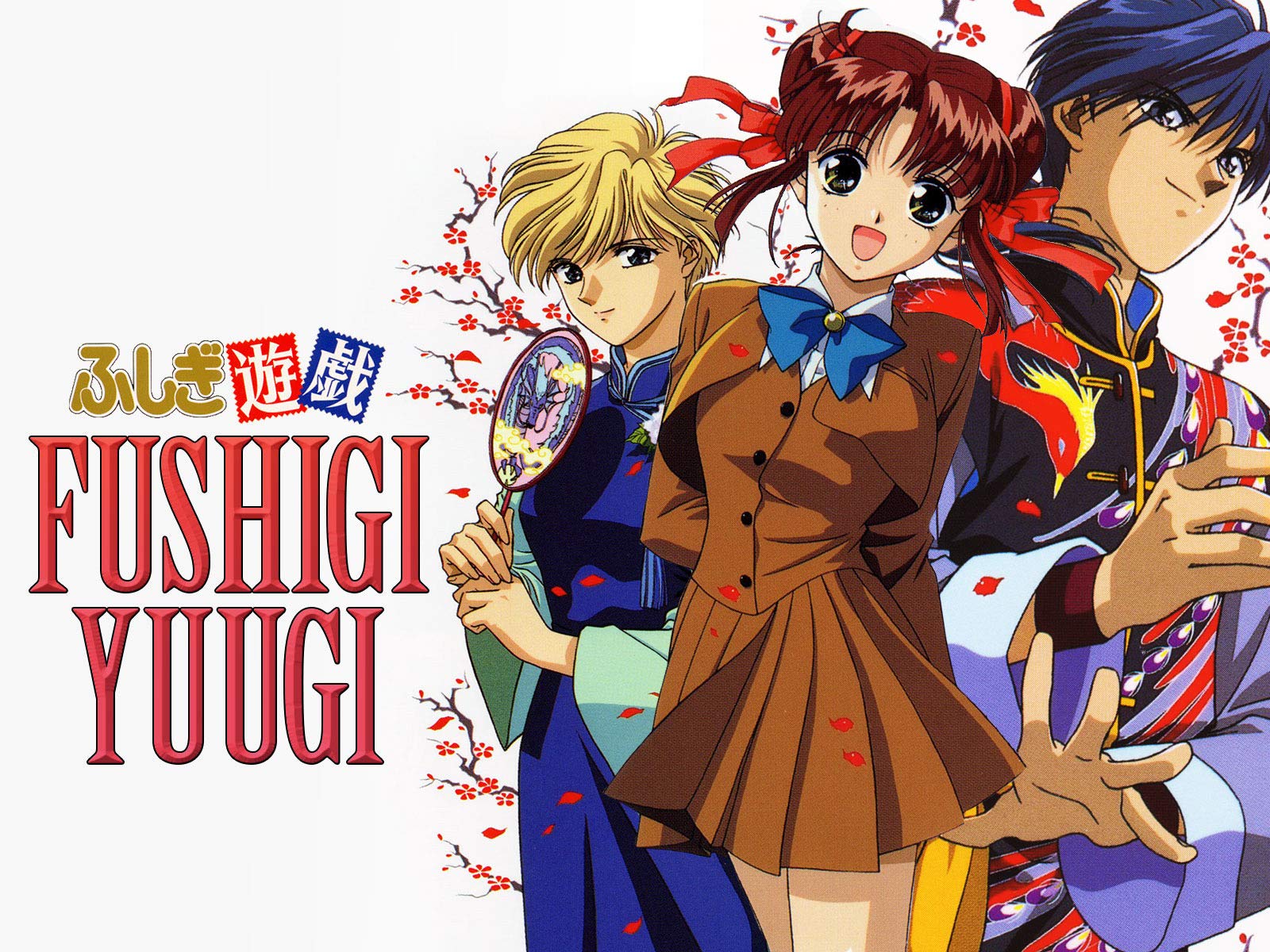
You remember that feeling. The first time you saw a girl get sucked into an ancient library book and realized her life was about to get incredibly complicated. Honestly, Yuu Watase didn’t just create a story; she created a blueprint for every "trapped in another world" trope we see today. But if we’re being real, the main reason people are still talking about the characters of Fushigi Yuugi decades later isn’t just the magic or the priestess duties. It's the messiness.
It’s the way these characters felt like actual teenagers thrust into a war they didn’t understand. Miaka Yuki wasn't some stoic, perfect hero. She was a middle schooler who just wanted to eat snacks and get into a good high school. Then she becomes the Priestess of Suzaku, and suddenly, the lives of seven celestial warriors are literally tied to her survival. It’s heavy. It’s dramatic. And it’s why the fandom refuses to let this series go.
The Problem with Miaka and Yui: Friendship vs. The Universe
Most people focus on the romance, but the core of the characters of Fushigi Yuugi is actually the breakdown of the relationship between Miaka and Yui Hongo. It’s a tragedy. You’ve got two best friends who get pulled into the Universe of the Four Gods, but their experiences couldn't be more different.
Miaka gets the "hero" treatment. She lands in the arms of Tamahome and finds a found family. Yui? She gets the short end of the stick. Her arrival in the book is traumatic, involving attempted assault and a deep sense of abandonment. Nakago, the primary antagonist, plays her like a fiddle. He convinces her that Miaka betrayed her, and honestly, from Yui’s perspective, it looks plausible. This isn't just a "good vs. evil" thing; it's a deep-seated psychological manipulation that turns a lifelong friendship into a war between gods.
People often complain that Miaka is "annoying." Yeah, she cries a lot. She’s impulsive. But consider the context: she’s fourteen. If you were told you had to summon a giant fire bird to save a kingdom while your best friend was trying to kill you, you’d probably have a breakdown too. Watase wrote her with a level of vulnerability that makes her growth feel earned, even if it’s frustrating to watch her skip a meal for the first time in her life.
Tamahome: More Than Just a Pretty Face with a "Money" Obsession
When you think about the male characters of Fushigi Yuugi, Tamahome is the obvious starting point. He’s the first Celestial Warrior of Suzaku we meet, and his introduction is classic: he saves Miaka, then demands money for his services. It’s a great subversion of the "knight in shining armor" trope.
Tamahome’s greed isn’t just a personality quirk; it’s a trauma response. He’s the eldest son of a destitute family with a sick father and multiple younger siblings. Every coin he earns is for them. This creates a fascinating conflict later in the series when his duty as a warrior clashes with his role as a provider. When Nakago eventually uses Tamahome’s family against him, it’s one of the most gut-wrenching moments in 90s anime history.
His rivalry with Nakago is also deeply personal. Nakago isn't just a foil for Tamahome; he represents what happens when you let the world’s cruelty hollow you out. While Tamahome fights to keep his heart soft for his family and Miaka, Nakago has long since burned his bridges.
The Celestial Warriors of Suzaku: A Masterclass in Supporting Cast
The Seven Stars of Suzaku are where the series really shines. These aren't just background characters; they each have specific backstories that justify their presence in the narrative.
- Hotohori: The Emperor of Konan. He’s incredibly beautiful, yes, but he’s also desperately lonely. He’s lived his whole life in a gilded cage, waiting for the Priestess to arrive and give his life meaning. His love for Miaka is tragic because he knows, almost from the start, that he’s the "second lead."
- Nuriko: Probably the most complex character in the entire franchise. Nuriko identifies as a woman and serves in the Emperor’s harem to honor a deceased sister. The gender fluidity and emotional depth Nuriko brings to the group was way ahead of its time. When Nuriko dies—and let's be honest, we all cried—it shifts the tone of the series from an adventure to a high-stakes survival drama.
- Chichiri: The monk with the "no da" verbal tic and the smiling mask. Underneath that mask is a massive scar and a mountain of guilt over a past tragedy involving his best friend. He’s the glue that holds the group together when things get dark.
- Tasuki: The hot-headed bandit. He’s the "bro" of the group, providing much-needed comic relief and a fierce loyalty that doesn't rely on romantic feelings for Miaka.
- Mitsukake and Chiriko: The healer and the genius. Mitsukake’s story about losing the woman he loved because he couldn't heal her adds a layer of maturity to the group, while Chiriko’s youth reminds everyone of exactly what they are risking.
Why Nakago is Still One of Anime’s Greatest Villains
You can't talk about the characters of Fushigi Yuugi without acknowledging Nakago. He is terrifying. Not because he has god-like powers (though he does), but because he is a master manipulator. He’s the leader of the Seiryu Seven, and he treats his own comrades like disposable pawns.
His backstory is legitimately horrific. Born into the Kutou Empire as part of a persecuted tribe, he was forced to watch his mother suffer and was essentially groomed by the Emperor. This doesn't excuse his actions, but it explains his nihilism. He doesn't want to just win; he wants to see the world burn because the world never gave him a reason to care about it. His psychological warfare against Yui and Miaka is what elevates the series from a standard shojo romance to something much more sinister and compelling.
The Enduring Legacy of the Seiryu Seven
While the Suzaku warriors are the "heroes," the Seiryu Seven are equally fascinating. Soi’s unrequited love for Nakago is a masterclass in tragic devotion. Amiboshi and Suboshi, the twins, offer a mirror to the bond between Miaka and Yui. Amiboshi’s attempt to live a quiet life after realizing the horrors of war contrasts sharply with Suboshi’s descent into madness and violence.
These characters weren't just "boss fights." They were obstacles with their own motivations. You felt for them, even when they were doing terrible things. That’s the magic of the writing here—everybody has a reason, even if that reason is broken.
Actionable Insights for Fans and New Readers
If you’re revisiting the series or diving in for the first time, keep these points in mind to get the most out of the experience:
- Watch the OVA series: The original TV run is great, but the OVAs (especially Eikoden) deal with the aftermath of the story and the reality of reincarnation. It adds a lot of closure to the Tamahome/Miaka arc.
- Read the Genbu Kaiden Prequel: If you think the characters of Fushigi Yuugi are deep, the prequel Genbu Kaiden is arguably even better written. It follows the very first Priestess, Takiko Okuda, and is significantly darker and more polished.
- Pay attention to the color symbolism: Yuu Watase uses the colors of the four gods (Red/Suzaku, Blue/Seiryu, Green/Byakko, White/Genbu) throughout the character designs to signal their elemental strengths and weaknesses.
- Don't skip the manga: The anime takes some liberties with the pacing. The manga provides much more internal monologue, especially for Yui, which makes her "villain arc" feel much more sympathetic.
The characters of this world are defined by their flaws. They make mistakes. They get jealous. They fail. But in an era where many protagonists feel like perfect self-inserts, the raw, emotional honesty of Miaka and her guardians is exactly why we're still talking about the Universe of the Four Gods today.
Next Steps for Your Fushigi Yuugi Journey
- Audit the Prequels: Pick up the Genbu Kaiden manga to see how the legend began; it recontextualizes everything you know about the Priestess's sacrifice.
- Track the Symbols: Re-watch the first five episodes and look for the "Ten" (Heaven) characters that appear on the warriors' bodies; notice how their placement often relates to their personal trauma or combat style.
- Compare the Media: Compare the "Eikoden" OVA to the final chapters of the manga to see how the creators handled the transition of the characters into the modern world.