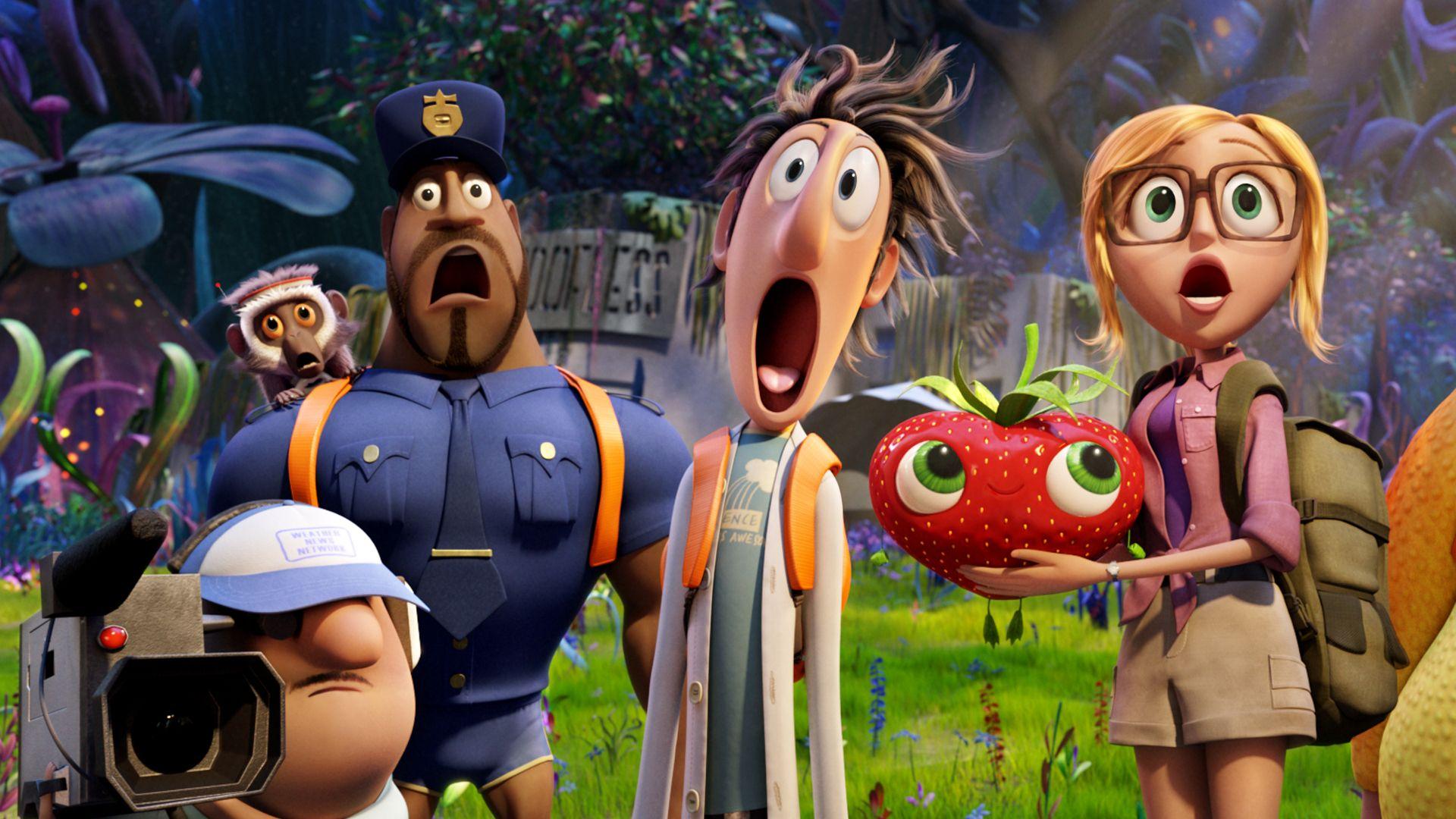
He looks like a human noodle. He moves like he’s made of rubber bands and pure ego. If you watched the sequel to Flint Lockwood’s food-storm adventure, you know exactly who I’m talking about. Chester V, the CEO of Live Corp and the primary Cloudy with a Chance of Meatballs 2 villain, isn’t just some goofy scientist in a vest. He’s actually a pretty biting satire of the "tech guru" culture that dominates our real world. Honestly, when you rewatch it as an adult, the guy is kind of terrifying.
Think about it. We’ve all seen the type. The turtleneck. The pseudo-spiritual hand gestures. The way he talks about "changing the world" while actually just trying to strip-mine it for resources. Chester V is basically a blend of every Silicon Valley archetype we’ve dealt with over the last twenty years. He’s the dark side of innovation.
The Manipulation of Flint Lockwood
Flint Lockwood spent his whole life being the weird kid. He was the guy with the spray-on shoes and the bird-rat problems. So, when his childhood idol shows up and tells him he’s "special," Flint is a goner. It’s predatory. Chester V knows exactly which buttons to push. He doesn't just want Flint’s brain; he wants to destroy Flint’s soul by making him turn on his friends.
The movie spends a lot of time showing Chester’s "holograms." He’s literally never alone because he surrounds himself with digital copies of himself. That’s a massive red flag. It tells you everything you need to know about his psyche. He doesn't value people; he values reflections of his own genius. While Flint is out there trying to save the world from "Tacodiles" and "Shrimpanzees," Chester is back at base camp, plotting how to turn those living creatures into food bars.
Why Chester V is Different from Other Animated Villains
Most villains want to take over the world or steal a bunch of money. Chester V is more insidious because he wants to be loved while he does it. He creates a cult of personality at Live Corp. "Think of the bright side!" is his motto, but it’s really a way to silence anyone who points out that things are actually going wrong.
It's a clever trope.
Sony Pictures Animation did something really interesting here. They made the villain a "hero" to the protagonist. In the first film, the antagonist was mostly the Mayor—a guy driven by greed and gluttony. He was easy to spot. But Chester V? He’s the Cloudy with a Chance of Meatballs 2 villain because he weaponizes Flint’s own dreams against him. He’s the mentor who turns out to be a monster.
You’ve got to appreciate the character design. His limbs are impossibly long. He does these weird, yogic poses that make him look enlightened, but his eyes are always cold. He’s voiced by Bill Hader’s former Saturday Night Live castmate Will Forte, who brings this frantic, high-pitched energy to the role. It’s funny, sure, but there’s an undercurrent of genuine instability.
The Live Corp Facade
Live Corp is the ultimate "cool" workplace. It has caffeine pods, fancy technology, and a massive light-up tower. But look closer. It’s an assembly line. The "Foodimal" island—Swallow Falls—is being treated like a giant laboratory. Chester V doesn't see the beauty in a "Cheespider" or a "Barry the Strawberry." He sees raw materials.
This is where the movie gets surprisingly deep. It’s an environmentalist message wrapped in a taco shell. Chester V represents the corporate entity that sees nature as something to be processed and sold back to people in a shiny wrapper. He’s the ultimate "Food Bar" salesman. He wants to take something vibrant and alive and turn it into a sterile, grey slab of "nutrition."
Breaking Down the "Foodimals" Conflict
- The Goal: Chester needs the BSUSB (the "Big Shiny USB") to reprogram Flint’s invention, the FLDSMDFR.
- The Lie: He tells Flint the Foodimals are dangerous predators attacking the Statue of Liberty.
- The Reality: The Foodimals are a self-sustaining ecosystem. They are peaceful. They are a family.
- The Betrayal: Chester tries to force Flint to kill the very things he created.
It’s heavy stuff for a kids' movie. When Chester V tries to toss Barb (his highly intelligent orangutan assistant with a human brain) under the bus, you see his true colors. He doesn't care about sentience. He doesn't care about loyalty. Barb is just another tool. When she finally realizes she’s "just an ape" to him, it’s one of the most satisfying moments of the film.
The Evolution of the Villain Archetype
If you look at animation trends from the 2010s, there was a huge shift toward "twist" villains. Think Hans from Frozen or Bellwether from Zootopia. Chester V fits into this era perfectly. He starts as the guy you want to be and ends as the guy you’re terrified of becoming.
What’s wild is how much his character has aged. In 2013, the "tech bro" villain was a relatively fresh idea. Today? It’s basically our daily news cycle. We see guys like Chester V in the headlines every single week—people who promise to solve the world's problems while actually just consolidating power.
The Visual Language of a Menace
The animation style in Cloudy 2 is "squash and stretch" on steroids. Chester V moves like a liquid. He’s never still. This reflects his deceptive nature. He’s slippery. You can't catch him in a lie because he just twists his body and his words until you’re confused.
Compare his movement to Flint’s. Flint is clunky. He trips. He’s honest in his physicality. Chester is the opposite. Every move is calculated to look effortless. It’s the ultimate performance. He isn't just the Cloudy with a Chance of Meatballs 2 villain; he’s a professional actor playing the role of a savior.
Technical Details and Voice Acting
Will Forte’s performance shouldn't be overlooked. He manages to make Chester sound both soothing and manic at the same time. It’s a hard balance. He uses these soft, breathy tones when he’s manipulating Flint, then switches to a harsh, demanding bark when his holograms fail him.
The sound design helps too. The hum of the Live Corp tech, the sterile "ding" of his inventions—it all contrasts with the wet, squishy, organic sounds of the Foodimal island. It’s a war between the synthetic and the natural. Chester is the king of the synthetic.
The Final Confrontation
The ending is pure chaos. You have Flint, his dad (Tim), and the rest of the gang realizing that the Foodimals are worth saving. Chester’s downfall is his own arrogance. He thinks he’s smarter than everyone else, including the creatures he’s trying to harvest.
When he’s finally cornered, he doesn't have a backup plan. His "genius" was just a collection of other people's ideas and a lot of marketing. Without his tech and his followers, he’s just a skinny guy in a vest who can’t even handle a Cheespider.
Why We Still Talk About Him
We talk about Chester V because he’s a warning. He’s a reminder that just because someone is "smart" and "successful" doesn't mean they have your best interests at heart. He’s a critique of the way we idolize billionaires.
Also, he gets eaten by a Cheespider. That’s just good storytelling.
If you're looking to dive deeper into the world of Swallow Falls, pay attention to the background art in the Live Corp scenes. The posters on the walls are filled with corporate doublespeak that is hilarious if you’ve ever worked in an office. They really nailed the "forced fun" vibe of a toxic workplace.
Understanding the Impact of the Cloudy with a Chance of Meatballs 2 Villain
To truly appreciate why Chester V works, you have to look at the relationship between creator and creation. Flint created the FLDSMDFR to help people. Chester wanted to steal it to control people. It’s a classic battle of intent.
What to look for in your next rewatch:
- The Shadow Work: Notice how Chester’s shadow often looks like a claw or a predatory animal even when he’s acting friendly.
- The Vest: The color yellow in the film often represents "caution" or "warning," and Chester is draped in it.
- The Hands: He never stops moving his hands. It’s a classic tactic used by public speakers to distract from what they’re actually saying.
If you’re a fan of character design, compare Chester V to the villains of the first movie. You'll see a massive leap in how Sony used character physics to tell a story. He’s not just a bad guy; he’s a masterpiece of "unpleasant" movement.
Moving Forward: Analyzing Animated Antagonists
To get more out of your movie marathons, try these steps:
- Analyze the "Why": Ask yourself what the villain wants. If it’s just "money," they’re boring. If it’s "validation" or "legacy," like Chester V, they’re much more dangerous.
- Look for the Foil: See how the villain is a dark reflection of the hero. Flint and Chester are both inventors, but Flint has empathy. That’s the deciding factor.
- Check the Color Palette: Villains usually have a specific color associated with them. For Chester, it’s that sickly, artificial orange and yellow that mimics food but isn't quite right.
Chester V remains one of the more sophisticated villains in modern animation because he’s so grounded in real-world tropes. He’s not a dragon or a sorcerer. He’s a guy with a brand. And in the 21st century, that’s a lot scarier.