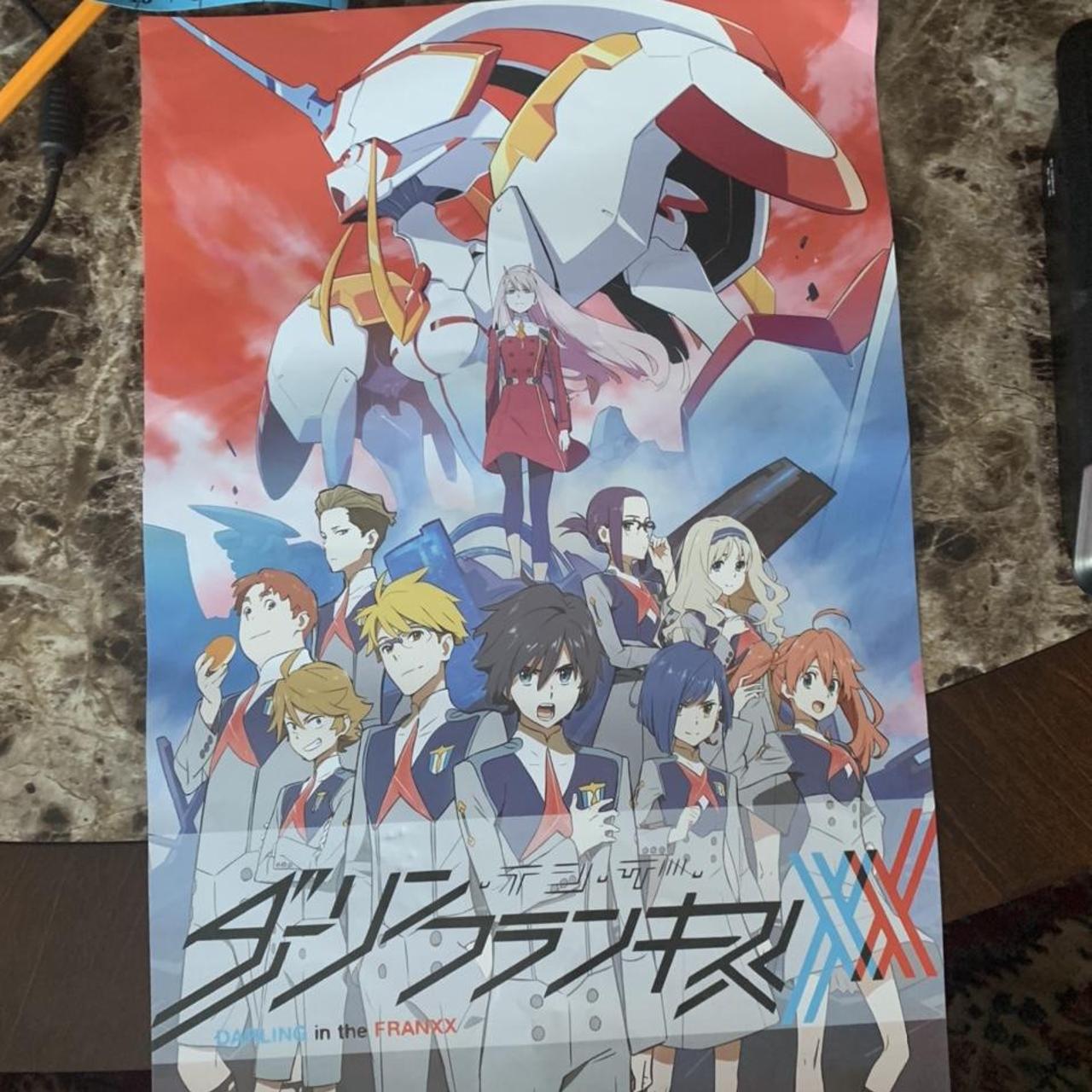
You’ve seen the memes. The "ass handles," the suggestive posing, the weirdly high-heels on a giant robot. When Darling in the Franxx dropped in 2018, the internet basically had a collective meltdown over its mecha designs. It was loud. It was controversial. Honestly, a lot of people dismissed the show as "just horny bait" and moved on.
But they missed the point.
The Darling in the Franxx mech—officially known as a FRANXX—isn't just a generic robot with a provocative cockpit. It’s a deeply weird, bio-mechanical nightmare fueled by the skeletal remains of an ancient species and the hormones of child soldiers. If you look past the initial "what am I watching?" shock, you find one of the most unique mechanical philosophies in modern anime.
It’s Not Actually a Robot
Let’s clear this up first. A FRANXX is not a machine in the way a Gundam is. It’s alive. Sorta.
The lore, which gets progressively more insane as the series goes on, reveals that these units are built from the remains of Klaxosaurs. These were a pro-organic, cybernetic species that inhabited Earth millions of years ago. When Dr. Franxx (the creepy scientist with the mask) "invented" the mechs, he was basically repurposing dinosaur-alien corpses and skinning them in armor.
This explains why they move so fluidly. They aren't clanking metal; they’re muscles and nerves wrapped in a hull.
The connection between the pilot and the machine is literal. The female pilot, known as the Pistil, doesn't just sit in a chair. Her nervous system is physically synchronized with the fuselage. She becomes the mech. When the Strelizia gets its arm ripped off, Zero Two feels that pain. It’s a brutal, high-stakes way to fight, and it’s why most pilots in this world look like they’ve seen a ghost by age fifteen.
Why the Cockpit is So... Like That
Okay, let's address the elephant in the room. The "doggy style" piloting position.
Critics called it unnecessary. Fans called it "Trigger being Trigger." But within the logic of the show, it’s a heavy-handed metaphor for reproductive biology. The show is obsessed with the idea of the "Jian"—a mythical bird that only has one wing and needs a partner to fly.
The FRANXX requires two components:
- The Pistil (Female): The "engine" and the sensory interface.
- The Stamen (Male): The "pilot" who provides the mental stability and directional control.
The Pistil's consciousness is uploaded into the machine, which is why the mechs have faces that mimic the girls' expressions. The Stamen is there to keep her from going "Stampede Mode"—a state where the girl loses her humanity and the mech turns into a feral, four-legged beast.
Essentially, the boy is the horse-whisperer and the girl is the horse. It's weird, yeah. But it’s consistent with the show’s theme of "it takes two to be human." Without the Stamen, the Pistil burns out and dies. Without the Pistil, the Stamen can't even turn the thing on.
The Secret Language of Flowers
Everything in this show is named after plants. If you aren't a botanist, you're missing half the subtext.
- Strelizia (Zero Two/Hiro): Named after the "Bird of Paradise" flower. It represents freedom and immortality. It’s the only unit that can truly change its form because Zero Two isn't fully human.
- Delphinium (Ichigo/Goro): Named after the Larkspur. In flower language, it stands for "big-heartedness" and "protection." Fitting for the team leader who spends the whole show trying to keep everyone from falling apart.
- Genista (Kokoro/Mitsuru): This one is named after the Broom flower. It’s a heavy artillery unit, but the flower itself is often associated with "humility" and "neatness," reflecting Kokoro’s early-series personality.
The mechs are literal "flowers" being piloted by "parasites" (the children) who live in a "birdcage" (the Plantation). The symbolism is about as subtle as a sledgehammer, but it makes the designs feel intentional rather than random.
The "Partner Killer" Problem
Why did Zero Two’s partners always die? It’s a question that drove the first half of the series.
Standard pilots have a "Paracapacity" score—a measure of how well they sync. If the sync is too low, the mech is sluggish. If it’s too high, it strains the body. Zero Two is a hybrid, meaning her "Negative Pulse" is off the charts. She doesn't just sync with her Stamens; she consumes them.
Most Stamens would see their hair turn white and their vitals flatline after three rides because they couldn't handle the feedback from her Klaxosaur DNA. Hiro was the only one who survived because he had ingested her blood as a child, effectively "tuning" his body to her frequency.
Design Insights from Shigeto Koyama
The man behind the curtain is Shigeto Koyama. He’s worked on everything from Evangelion to Big Hero 6.
In interviews, Koyama has mentioned that he wanted the FRANXX to look "feminine" and "fashionable." He moved away from the bulky, industrial look of traditional 90s mecha. He wanted them to look like dolls. This creates a jarring contrast: they look like cute, colorful toys, but they are actually soul-sucking war machines.
The high-heel feet? That was a deliberate choice to make them look like they were "walking on a stage." It emphasizes the performance aspect of their lives—they are children being watched by "Papa" and the adults, performing a role they don't fully understand.
What You Should Do Next
If you’re looking to get deeper into the mechanical lore of Darling in the Franxx, skip the wiki for a second and go back to Episode 19 and 20. These episodes explain the transition from the "Klaxo-Sapiens" to the modern FRANXX units.
If you're a model kit builder, look into the Moderoid Strelizia. It’s one of the few kits that actually captures the lanky, weird proportions of the anime without making it look like a generic robot. Just be prepared—the joints on those things are notoriously finicky because of the slim design.
Check out the manga by Kentaro Yabuki too. The ending is completely different from the anime, and it actually gives a bit more screen time to the secondary mechs like Chlorophytum and Argentea, which felt a bit sidelined in the show's final act.
Stop viewing the FRANXX as just a vehicle. It's a character. Once you see the mechs as extensions of the pilots' messy, teenage emotions, the whole show starts to make a lot more sense.