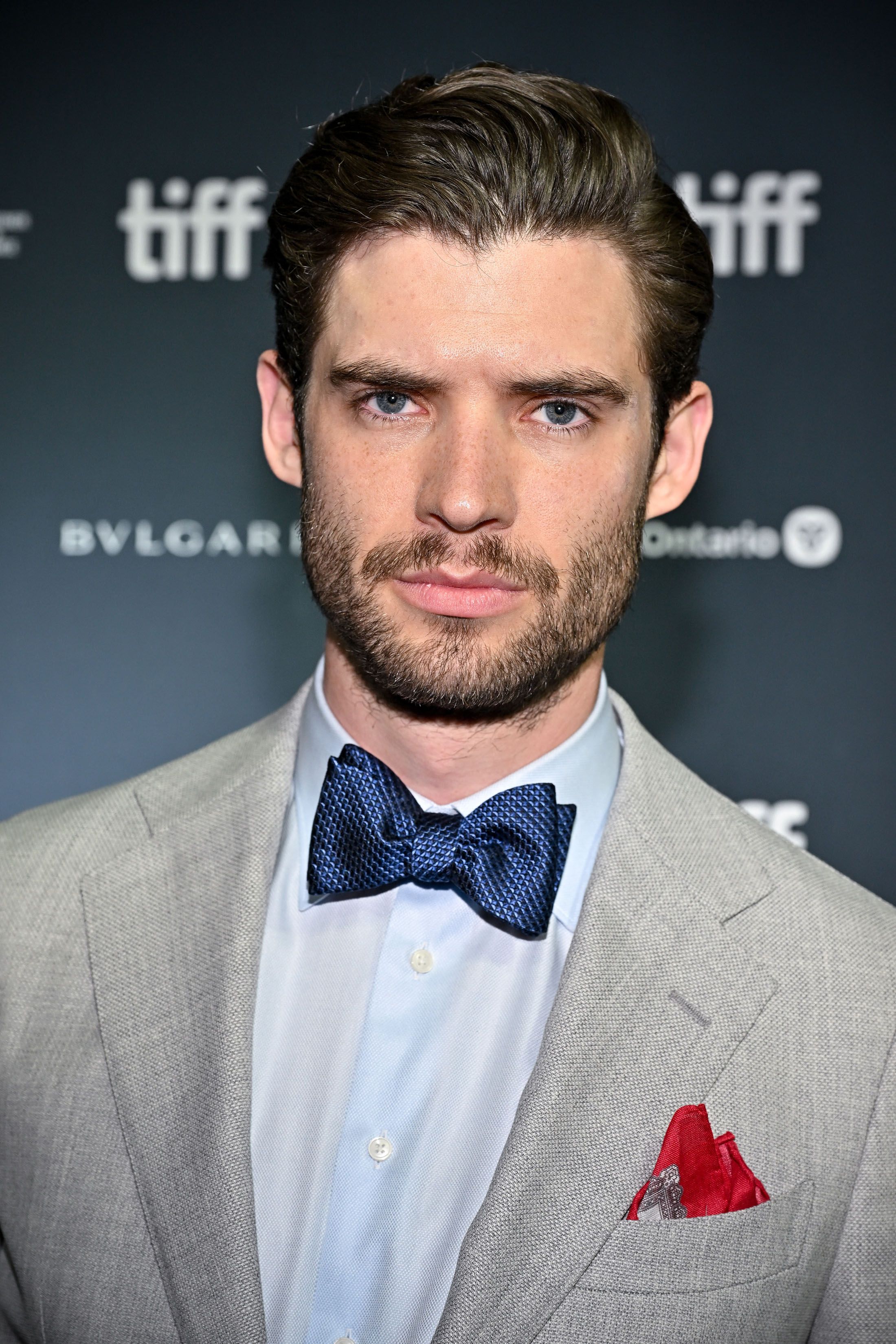
You’ve seen the clip. It was the "shot heard 'round the internet" for DC fans. Superman is flying, the sun is hitting his face, and for a split second, something looks… off. One eye seems to be wandering toward the horizon while the other stays locked forward. Immediately, social media did what it does best: it exploded. People started Googling david corenswet lazy eye faster than a speeding bullet, wondering if the new Man of Steel had a secret physical trait or if the CGI department had just given up for the day.
Honestly? It's kind of funny how a five-second teaser can send everyone into a medical-diagnosis frenzy.
But here’s the thing. David Corenswet doesn't actually have a lazy eye in real life. If you look at his previous work in The Politician, Hollywood, or even his rugged turn in Twisters, his gaze is perfectly symmetrical. So, why did it look like he was having a "glitch in the Matrix" moment in that Superman footage? It turns out the answer is a wild mix of physics, old-school filmmaking, and literal ear crystals.
The Physics of Flying (and Why It Messed With His Face)
James Gunn is known for wanting things to look "real," even when he’s filming a guy who can fly. To get those shots of David Corenswet soaring through the sky, they didn't just stick him in front of a green screen with a fan. They put him in a sophisticated stunt rig that physically spun his body at high speeds.
This is where the science gets weird.
When your body rotates on an axis—especially when you’re horizontal—the fluid and tiny "crystals" (called otoconia) inside your inner ear’s labyrinth start moving. This is your balance system. If you spin fast enough with your eyes open, your brain tries to compensate for the movement. This often results in a physiological response called nystagmus. Basically, your eyeballs start making involuntary, repetitive movements because your brain thinks you’re still spinning.
In that specific Superman shot, Corenswet was being spun counter-clockwise. One eye took a literal second longer to "reset" than the other.
It wasn't a "lazy eye" in the clinical sense (strabismus). It was just a guy whose brain was trying to figure out which way was up after being tossed around like a human rotisserie chicken.
The Lens Factor: Don't Blame the Actor
Lenses change everything.
If you take a selfie with a wide-angle lens held three inches from your nose, you’re going to look like a Cabbage Patch Kid. Your nose gets huge, and your eyes look like they’re migrating to your ears. Filmmakers call this "barrel distortion."
For the Superman flying sequence, the crew used an ultra-wide lens placed incredibly close to Corenswet’s face. They wanted to capture the "feel" of the wind and the speed. The trade-off is that wide lenses exaggerate any slight misalignment. Most of us have slightly asymmetrical faces—one eye might sit a hair higher or a fraction of a millimeter wider. Usually, you never notice. But when you’re the lead in a $200 million blockbuster and you're being filmed with a "fish-eye" style lens that warps edges, those tiny details become massive.
James Gunn actually addressed this directly. He confirmed there was "absolutely zero CG" on David's face in that shot. It was just a raw, practical moment.
Is There a Real Health Concern?
Since the david corenswet lazy eye rumors started, people have been digging through his old Juilliard photos looking for evidence. You won't find much.
In the world of ophthalmology, a true "lazy eye" is usually Amblyopia, which happens when the brain favors one eye over the other, often leading to a permanent "turn." Corenswet doesn’t show any signs of this in high-definition interviews or red-carpet appearances.
Some fans speculated he might have a mild case of Ptosis (a droopy eyelid), which can sometimes mimic the look of a wandering eye. But even that is a stretch. What we're actually seeing is the "Uncanny Valley" effect. When an actor looks too much like a comic book drawing—which Corenswet definitely does—our brains look for flaws to prove he's human.
How Corenswet Handled the Internet's Obsession
David seems pretty chill about the whole thing. He’s been more focused on the fact that he gained nearly 40 pounds of weight for the role. He told People magazine that he actually struggled to fit into his clothes because his neck and shoulders got so big.
"I didn't feel great," he admitted, talking about the peak of his bulk. "My body hadn't adjusted to the extra weight."
When you’re dealing with 4,500 calories a day and two-hour gym sessions, a slightly weird-looking frame in a teaser trailer is probably the least of your worries. He’s also been open about how "non-intuitive" the wire work was. Being suspended by your hips while trying to look like a god is physically exhausting.
The "lazy eye" controversy is basically a badge of honor now. It proves that the production used real stunts instead of just "fixing it in post."
What You Should Know About Eye Misalignment
If you're worried about your own gaze or just curious after seeing the Superman clips, here’s the breakdown on what’s normal and what’s not:
- Physiological Nystagmus: Totally normal. It happens when you spin or look at something moving very fast (like a train passing).
- Strabismus: This is when eyes are actually misaligned. It can be constant or "intermittent" (only showing up when you're tired).
- Camera Distortion: If you look "off" in a photo, check the lens. Standard phone cameras (the 1x lens) have a lot of distortion. Use the 2x or 3x "portrait" lens for a more accurate look.
If you want to see the "real" David Corenswet, skip the blurry teaser screenshots. Go watch his performance in Pearl or Twisters. You'll see a guy with a focused, steady gaze who just happened to get a little dizzy while trying to save the world.
The next time you see a celebrity "glitch" on screen, remember: it’s usually just the physics of filmmaking catching up to the magic of the movies. Corenswet is doing just fine, and his eyes are exactly where they need to be—focused on the future of the DCU.
To get the most accurate look at how lenses affect facial symmetry, try taking a photo of yourself using your phone's front-facing "wide" lens versus a mirror reflection from five feet away; you'll likely notice your own eyes appearing to shift or widen just like Corenswet's did on camera.