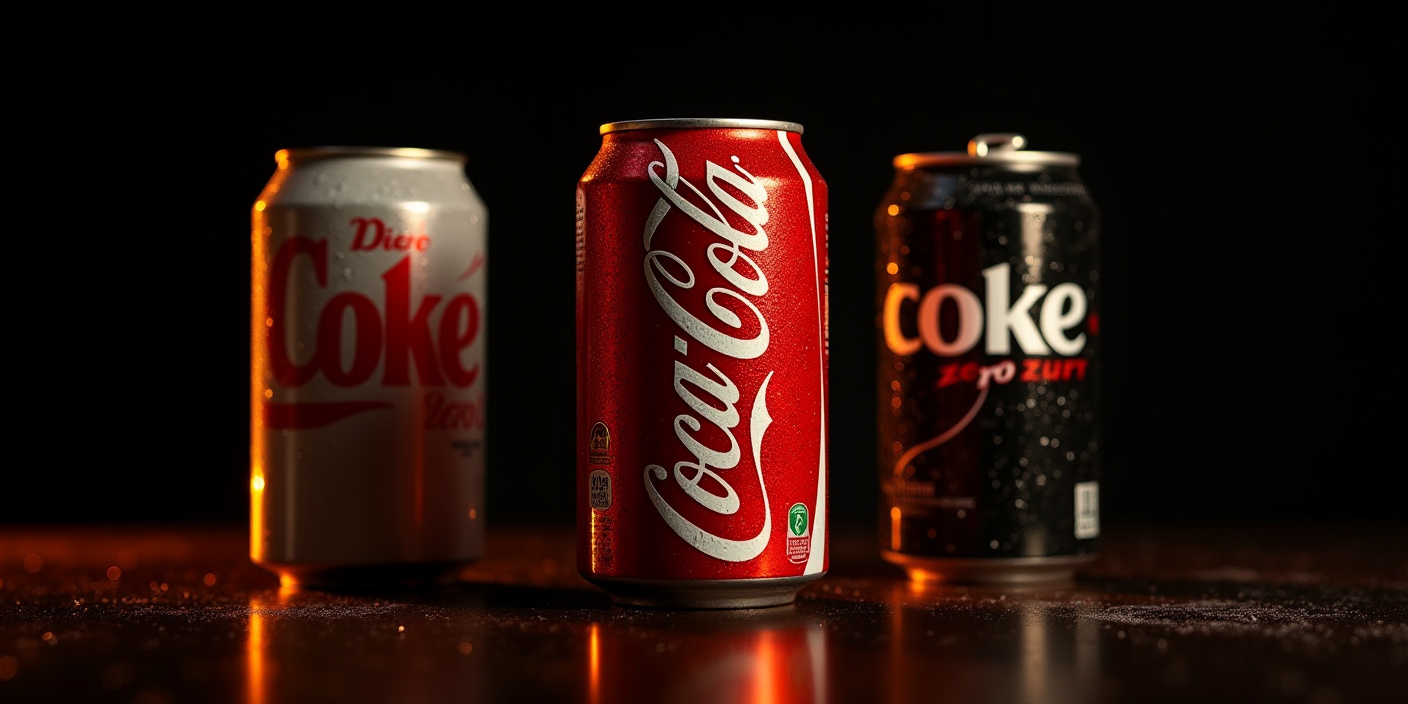
You’re standing in front of the flickering LEDs of a gas station fridge, staring at two silver-and-black cans. One is the classic Diet Coke. The other is Coca-Cola Zero Sugar. Both claim to have zero calories. Both have that familiar red logo. Yet, people will literally start an argument in the checkout line over which one is superior.
It's weird, right?
If they both have zero sugar, why don't they just taste the same? Well, the answer isn't just marketing fluff or a different colored label. It’s actually deep-rooted in the history of food science and a massive corporate gamble that happened back in the 80s. When you’re choosing between diet coke vs coke zero, you’re actually choosing between two entirely different flavor philosophies. One was designed to be a "new" thing entirely, while the other was a desperate attempt to recreate the original sugar-heavy experience without the actual sugar.
The Secret History of the Diet Coke Flavor Profile
Most people assume Diet Coke is just Coca-Cola without the sugar. It isn’t. Not even close.
Back in 1982, when Diet Coke first hit the shelves, the chemists at Atlanta weren't trying to mirror the original recipe. They actually used the flavor base for what would eventually become "New Coke." That’s why it has that distinct, crisp, almost citrusy bite. It’s lighter. It’s thinner on the tongue. It doesn't try to coat your mouth with that syrupy caramel feel we associate with a standard red can.
People got hooked on that specific profile. It became a lifestyle brand. You see it in the hands of fashion editors and office workers who want that sharp caffeine hit without the lingering sweetness.
Then came 2005.
Coca-Cola realized they were missing out on a huge demographic: men. Specifically, men who thought "Diet" sounded too much like a weight-loss product and who actually liked the taste of original Coke. So, they engineered Coca-Cola Zero. The goal was simple but chemically difficult: make a drink that tastes exactly like a classic Coke but use zero-calorie sweeteners.
What’s actually inside the cans?
If you flip the cans over, the ingredient lists look like twins. They both rely on a blend of aspartame and acesulfame potassium (Ace-K). However, the "natural flavors" and the ratios are where the magic—or the chemistry—happens.
Diet Coke uses a higher concentration of phosphoric acid, which gives it that "burn" or "snap" that fans crave. It’s a very clean finish.
Coke Zero Sugar (which got a major recipe "refresh" in 2021 to make it even closer to the original) uses a different acidulant profile and a specific blend of flavors designed to mimic the vanilla and cinnamon notes of classic Coca-Cola. It’s a rounder, fuller flavor. It feels "heavier" in your mouth, despite having no sugar.
The Sweetener Debate: Aspartame and the 2026 Health Landscape
Let's talk about the elephant in the room. Health.
For years, people have been terrified of aspartame. In 2023, the International Agency for Research on Cancer (IARC), which is part of the World Health Organization, labeled aspartame as "possibly carcinogenic to humans." That sounds terrifying. It made huge headlines. But context is everything.
The Joint FAO/WHO Expert Committee on Food Additives (JECFA) looked at the same data and basically said, "Look, it’s fine in moderation." To actually hit a dangerous level of aspartame, an adult weighing 150 pounds would need to drink between 9 and 14 cans of diet soda every single day.
Honestly? If you're drinking 14 cans of soda a day, you’ve probably got bigger problems than the aspartame.
Some people find that diet coke vs coke zero affects them differently in terms of hunger. There’s this theory called the "cephalic phase insulin response." The idea is that your brain tastes something sweet, expects sugar, and triggers an insulin spike. While the science on this is still a bit messy—some studies show a slight spike, others show nothing—many people report feeling hungrier after a Diet Coke.
Dr. Robert Lustig, a prominent neuroendocrinologist, has often argued that these sweeteners might confuse our metabolism. It’s a "your mileage may vary" situation. Some people use these drinks to lose 50 pounds; others find it just makes them crave a donut twenty minutes later.
Why Does Coke Zero Taste "More Real"?
The 2021 reformulation of Coke Zero was a turning point. Coke changed the packaging to be almost entirely red, mirroring the original. They tweaked the "natural flavors" to hide the chemical aftertaste of the Ace-K.
The result?
It’s almost indistinguishable from a regular Coke for the average person. If you pour them into glasses over ice, most people in blind taste tests actually struggle to tell which is which.
Diet Coke fans, however, hate it.
There is a weirdly loyal cult around Diet Coke precisely because it doesn't taste like real Coke. It’s its own thing. It’s a distinct beverage category. It’s like comparing black coffee to a latte; some people just want the sharp, acidic punch of the Diet version.
The Environmental and Cultural Impact
We can't talk about these two without mentioning the cultural footprint.
- The "Diet" Stigma: The word "Diet" is fading. We see it across the entire food industry. Brands are moving toward "Zero Sugar" because it sounds more like a performance choice and less like a restrictive ritual.
- The Caffeine Factor: There’s a tiny difference here. Diet Coke actually has slightly more caffeine (about 46mg per 12oz) compared to Coke Zero Sugar (about 34mg). If you're using soda to stay awake during a 3 PM meeting, Diet Coke is technically the more efficient fuel.
- The Global Variance: If you travel, you'll notice "Coke Light" in Europe or Mexico. That’s generally the same as Diet Coke, but the sweetener blends change based on local regulations. Sometimes they use stevia or sucralose depending on the country’s laws on aspartame.
Which one should you actually drink?
If you’re trying to decide, it really comes down to what you’re eating.
Diet Coke pairs incredibly well with salty snacks. Think popcorn or a bag of chips. The acidity cuts right through the salt. It’s a palate cleanser.
Coke Zero is the better companion for a burger or pizza. Because it mimics the syrupy, caramel-forward profile of original Coke, it complements savory, fatty foods much better. It doesn't fight the food; it joins the party.
There’s also the "aftertaste" factor. Aspartame has a lingering sweetness that some people describe as "metallic." Coke Zero uses more Ace-K to mask this, creating a shorter, punchier flavor profile that disappears faster once you swallow.
Actionable Tips for the Soda Enthusiast
If you’re looking to optimize your zero-sugar soda experience, stop just grabbing a warm can from the pantry.
- Temperature is everything. These sweeteners are chemically unstable at high temperatures. If a Diet Coke sits in a hot car, the aspartame starts to break down into its constituent amino acids, and it will taste bitter. Always drink them as cold as humanly possible.
- The Vessel Matters. Cans are great, but glass bottles preserve the carbonation better and don't have the BPA-liner that can subtly alter the flavor over time.
- Check the "Best By" Date. Unlike regular Coke, which lasts a long time because sugar is a preservative, diet sodas have a shelf life. After about 3-4 months, the sweeteners lose their potency. If your soda tastes "flat" or "off" even though it’s fizzy, it’s probably just old.
- Mix, Don't Just Sip. If you find the chemical taste of both too strong, try a "dirty soda" trend. Add a splash of heavy cream and a squeeze of lime to a Diet Coke. It sounds gross until you try it—it creates a flavor similar to a melted root beer float.
Ultimately, the battle of diet coke vs coke zero isn't about which is "healthier." They are both ultra-processed drinks. The real choice is about the experience. Do you want the sharp, nostalgic, acidic "snap" of a 1980s icon? Or do you want the modern, smooth, "I can't believe this isn't sugar" engineering marvel of the Zero Sugar line?
Whatever you choose, drink a glass of water afterward. Your kidneys will thank you.