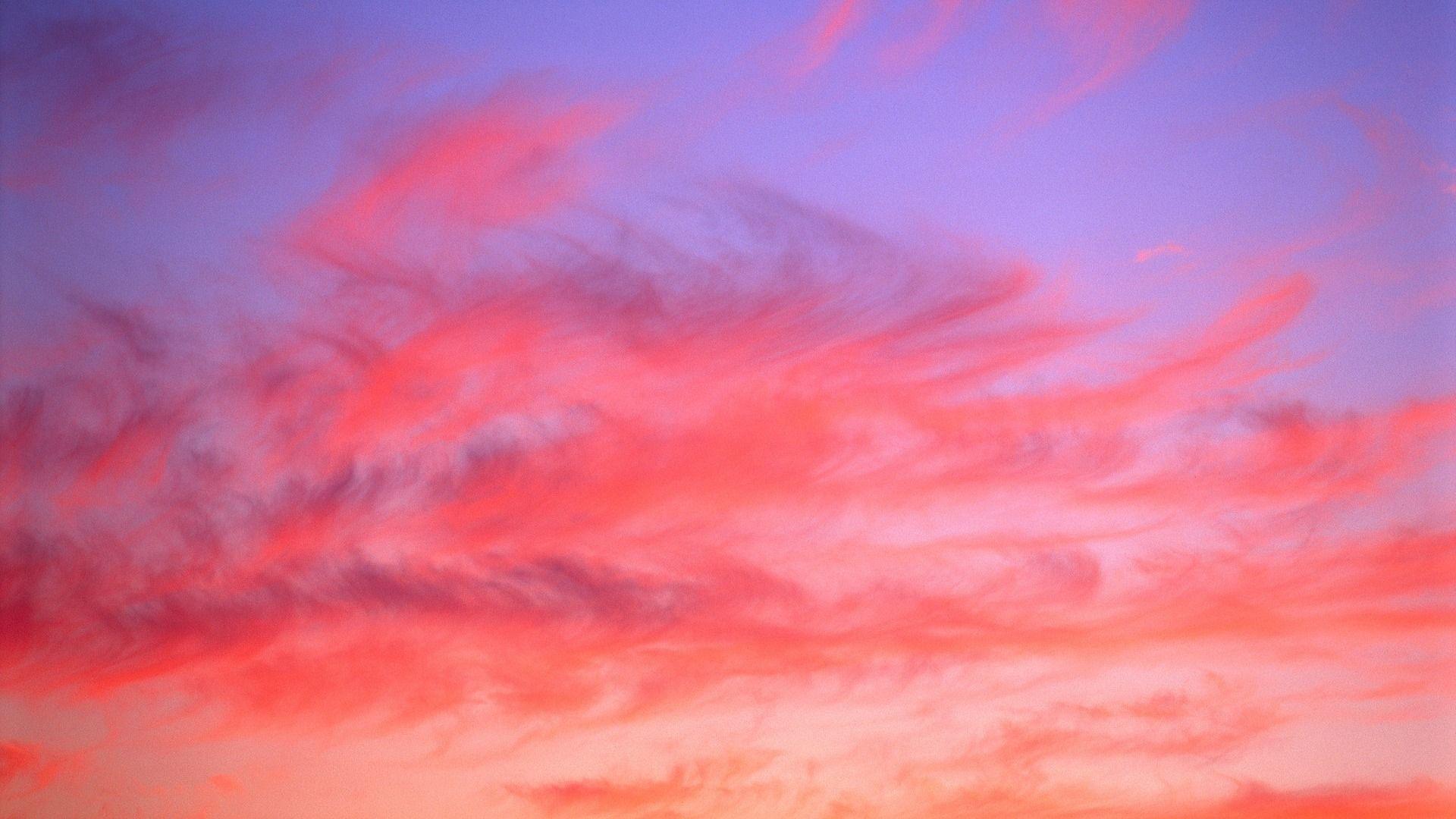
Ask a toddler what color the sky is and they’ll reach for the cyan crayon every single time. It’s a foundational truth. We grow up believing the atmosphere is a big, blue dome, but if you’ve ever sat through a bruised-purple thunderstorm or watched a blood-orange sunset, you know that "blue" is a massive oversimplification. Honestly, the sky isn't actually blue in the way a blueberry is blue. It’s a trick of light, a bit of physics called scattering, and a heavy dose of how our own eyes are wired to see the world.
The Physics of Scattering: Why Blue Wins (Most of the Time)
Most people think the sky reflects the ocean, or maybe the air itself has a blue tint. It doesn't. Air is clear. If you fill a jar with it, you aren't seeing a blue mist. The secret lies in the sun's white light, which is actually a messy mix of all the colors in the rainbow. When that light hits the gas molecules and nitrogen in our atmosphere, it bumps into things.
This is where Rayleigh scattering comes in. Named after Lord Rayleigh, a British physicist who cracked the code in the 19th century, this principle explains that shorter wavelengths of light—the blues and violets—get knocked around and scattered in every direction much more easily than the long, lazy red wavelengths.
Imagine throwing a handful of ping-pong balls (blue light) and a few bowling balls (red light) into a forest of thin trees. The ping-pong balls are going to bounce off every trunk and fly everywhere. The bowling balls will mostly just roll straight through. When you look up, your eyes are catching those scattered "ping-pong balls" of blue light coming from every corner of the sky.
But what about violet?
Here’s a curveball. If you look at the electromagnetic spectrum, violet light has an even shorter wavelength than blue light. Technically, by the laws of physics, the sky should look purple. So, do you know the color of the sky? If we were strictly following the math, the answer would be violet.
We don't see a purple sky because of human biology. Our eyes use cones to detect color, and we are significantly more sensitive to blue than we are to violet. Our brains essentially average out the scattered light, and since there’s more blue light being emitted by the sun than violet—and our eyes are better at catching it—we perceive the sky as a pale, bright blue.
Why the Color Shifts at Sunset
If the sky is "naturally" blue because of scattering, why does it turn into a scene from a sci-fi movie when the sun goes down? It feels like a different planet.
When the sun is low on the horizon, the light has to travel through much more of the Earth's atmosphere to reach your eyes than it does at noon. By the time that light gets to you, the blue light has been scattered away completely. It’s gone. All that’s left are the long wavelengths that didn't get diverted: the reds, the oranges, and the pinks.
A 2023 study published in Nature regarding atmospheric aerosols reminds us that "clean" air actually produces less dramatic sunsets. You need some "gunk" in the air—volcanic ash, dust, or even pollution—to catch those longer wavelengths and make them pop. That’s why some of the most beautiful sunsets occur after a storm or near dusty plains. It’s also why Mars has blue sunsets. Since the Martian atmosphere is thin and filled with fine dust, the scattering works in the opposite direction.
The Sky is Actually Pitch Black
We think of the sky as a ceiling, but it’s actually a window. If we didn't have an atmosphere, the sky would be black even during the day. You can see this in photos taken by Apollo astronauts on the Moon. There’s no air to scatter the light, so the sun looks like a bright spotlight in a dark room.
Basically, the "color" of the sky is just a localized light show.
The Influence of Weather and Perspective
Everything changes when water gets involved. Clouds look white because of Mie scattering. Unlike the tiny gas molecules that scatter blue light, the water droplets in clouds are relatively large. They scatter all wavelengths of visible light equally. When you mix all those colors back together, you get white.
When a cloud gets very thick or tall, like a cumulonimbus, it starts to look grey or black. This isn't because the color of the sky changed, but because the cloud is so dense that it's absorbing or reflecting the light back upward before it can reach the bottom. You’re essentially standing in a giant shadow.
How to Truly "See" the Sky
If you want to test your perception, try these actionable steps to observe the sky like a meteorologist or a landscape painter:
- Look 90 degrees away from the sun: On a clear day, the blue is deepest at a right angle to the sun’s position. This is where the scattering is most intense.
- Observe the "Belt of Venus": Just after sunset, look at the eastern horizon (opposite the sunset). You’ll see a pinkish band sitting right above a dark bluish-grey layer. That dark layer is actually the Earth’s shadow being cast into the atmosphere.
- Check the haze: If the sky looks milky or washed out instead of deep blue, there’s a high concentration of large particles like humidity or dust. Pure, deep blue only happens when the air is exceptionally dry and clean.
- Use polarized sunglasses: Tilt your head while wearing them. You’ll see the blue deepen and shift because the scattered light in the sky is highly polarized.
Knowing the color of the sky is really about understanding that we live inside a giant prism. It's a fluid, changing thing. It's blue because of a lucky coincidence between solar radiation, the size of nitrogen molecules, and the specific evolution of the human retina.
If you want to see the "real" sky, wait for a clear night away from city lights. The blue is just a temporary daytime mask. The actual color of the universe—the background of everything—is a very dark, infinite void. But for as long as we have this thin layer of gas wrapped around our rock, we get to enjoy the blue.
To get a better sense of how this looks in practice, pay attention to the horizon next time you're outside at noon. You'll notice it's a much lighter blue than the sky directly above you. This is because the light from the horizon has to pass through more air, scattering the light even more and letting some of those other colors mix back in, diluting the blue. It’s a constant, shifting gradient that most of us never even stop to look at.