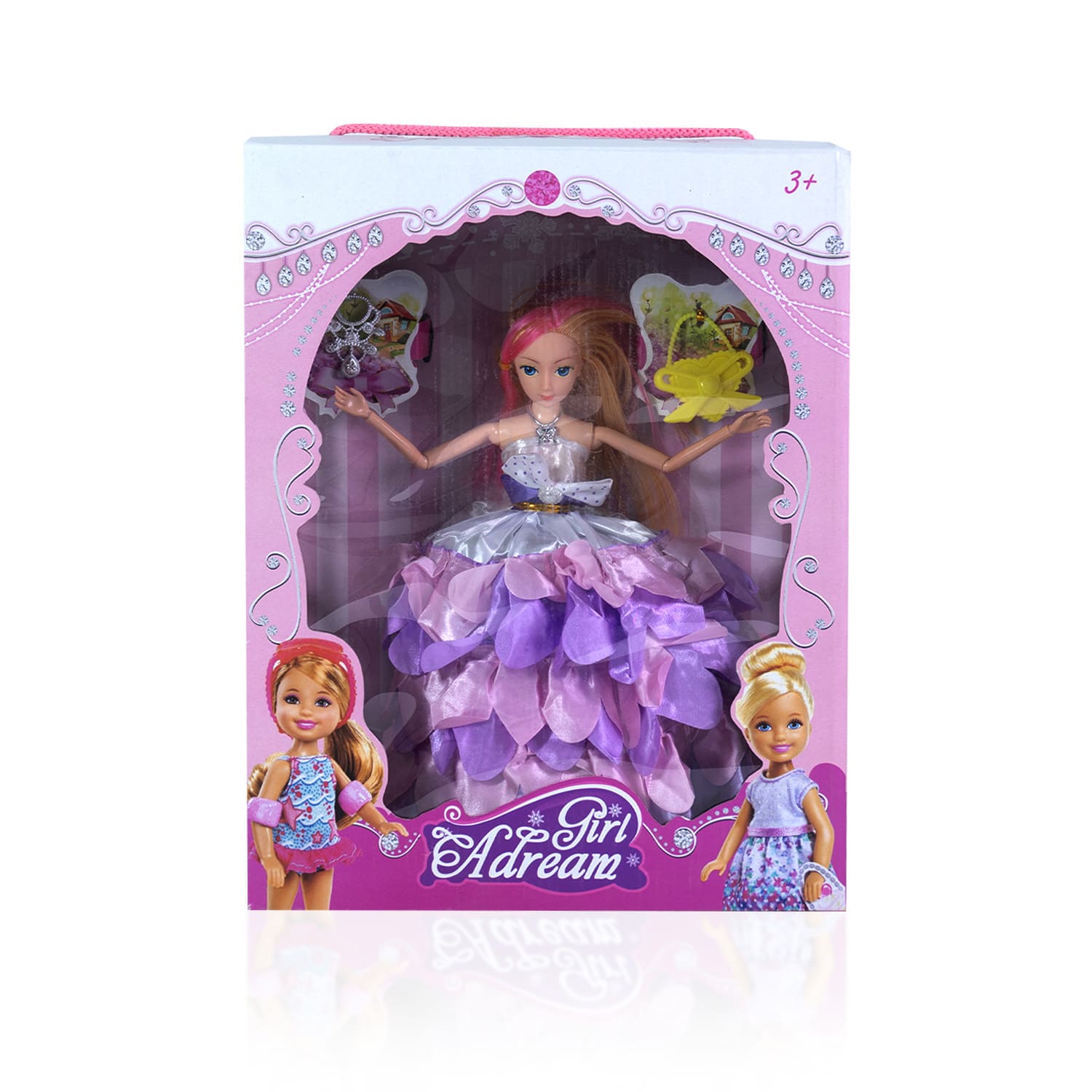
You’ve seen them. Maybe it was at a high-end Halloween gala, a specialized cosplay convention, or just scrolling through a high-fashion editorial. Doll costumes for adults have evolved far beyond the cheap, bagged "Raggedy Ann" kits found in dusty pop-up shops. We’re talking about a massive cultural shift toward the surreal. It’s weird. It's often beautiful. Honestly, it’s a little bit haunting.
Whether it’s the hyper-polished aesthetic of a porcelain figurine or the weathered, "cracked" makeup of a Victorian heirloom, dressing like a doll allows adults to play with the boundary between human and object. It's about control. It’s about art. People spend hundreds—sometimes thousands—of dollars on custom ball-jointed doll (BJD) masks and hand-sewn petticoats just to nail that stiff, lifeless-yet-elegant look.
The Aesthetic Shift: From Toy Box to High Fashion
Why are we so obsessed with looking like plastic? It’s not just nostalgia. In 2023, the Barbie movie obviously kicked the "dollcore" trend into high gear, but the adult version of this hobby has much deeper, darker roots. It taps into the "uncanny valley," a term coined by roboticist Masahiro Mori to describe that unsettling feeling we get when something looks almost human but not quite.
Think about the work of designers like Viktor & Rolf or the late Alexander McQueen. They’ve frequently used doll-like silhouettes to comment on societal expectations. When an adult steps into one of these outfits, they aren't just playing "dress up." They are often making a statement about performance, beauty standards, or even social anxiety.
- Porcelain Precision: This is the most common high-tier look. It involves heavy water-based white face paint, meticulously drawn "cracks" using fine-liner pens, and glass-like contact lenses.
- The Bayside Ball-Jointed Look: Heavily influenced by Asian ball-jointed dolls (BJDs), this style uses makeup to create the illusion of mechanical joints at the elbows, knees, and wrists. It’s technically demanding.
- Voodoo and Gothic: Think burlap textures, oversized mismatched buttons for eyes, and rough "stitching" drawn across the mouth. It’s the Tim Burton influence that refuses to die.
Getting the "Lifeless" Look Right (Without Looking Like a Clown)
If you’re serious about doll costumes for adults, you have to talk about the makeup. This is where most people fail. You can’t just put on a pink dress and call it a day. To actually look like a doll, you have to flatten your face. Dolls don’t have natural skin texture. They don’t have pores.
Real pros use the "blocked-out" eyebrow technique. You take a glue stick, flatten your real eyebrows, cover them with concealer, and then draw new, perfectly arched, impossibly thin brows higher up on the forehead. This instantly changes your facial proportions. It makes your eyes look massive.
Then there’s the "circle lens" phenomenon. Originating in South Korea and Japan, these contact lenses have a wider diameter than your iris. They make your eyes look like saucers. When combined with "doll lashes"—those individual spikes of hair rather than a full strip—the effect is transformative. It’s the difference between a costume and a transformation.
Materials That Matter
Dolls are made of hard materials. Humans are soft. To bridge that gap, your fabric choices need to be intentional. Avoid thin, stretchy polyester. It looks cheap. Instead, look for:
- Stiff Tulle and Organza: You need layers. If your skirt doesn't have the structural integrity to stand up on its own, it’s not "doll."
- Vinyl and PVC: To mimic the look of plastic or "new" doll skin, high-shine materials are essential.
- Heavy Brocade: For that antique, haunted doll vibe, you want fabrics that feel heavy and expensive.
The Subcultures Fueling the Trend
It's a mistake to think this is just for Halloween. The Lolita fashion community, specifically "Gothic Lolita" and "Sweet Lolita," has been refining the doll aesthetic for decades. Based in Harajuku but globally popular, this subculture emphasizes Victorian and Edwardian-inspired clothing that mimics the appearance of a porcelain doll.
There's also the "Living Doll" community. You’ve probably seen some of the more extreme examples on social media—people who have undergone surgeries or use extreme corsetry to maintain a doll-like silhouette 24/7. While that’s the extreme end of the spectrum, it informs the "casual" doll costume market. Designers now create "everyday doll" pieces: think oversized collars, Mary Jane shoes with four-inch platforms, and wigs with permanent, heat-set curls.
Why "Creepy" is a Choice
There is a psychological element here. "Pediophobia" is the fear of dolls, and many adults lean into this intentionally. The "Broken Doll" is a staple of the costume world because it's a visual metaphor for trauma or resilience. You take something perfect—a doll—and you break it. You add a cracked cheekbone, a missing eye, or a dangling limb.
It’s cathartic.
In a world where we are expected to be "on" and perfect all the time, there’s something strangely liberating about leaning into the "broken" aesthetic. It’s a way to reclaim imperfections by making them a deliberate part of a costume.
Sourcing and Customization
Don't buy a pre-packaged costume. Seriously. If you want to stand out, you have to piece it together.
Thrift stores are a goldmine for this. Look for vintage wedding dresses or prom gowns from the 80s with massive puff sleeves. These can be cropped, dyed, or shredded. The "adult" part of doll costumes for adults is the sophistication of the craft.
For the mask-inclined, the "Kigurumi" style from Japan involves wearing a full-head resin mask that looks exactly like an anime doll. It’s a total commitment. You lose all facial expression, which adds to the eeriness. It's not for the claustrophobic.
Actionable Steps for Your Next Look
If you're ready to dive into this aesthetic, start with the eyes and work your way down.
First, invest in a high-quality wig. Cheap "party" wigs have a plastic-y shine that looks bad in photos. Look for "futura fiber" or matte synthetic wigs that can be styled with low heat. You want something with density.
Second, master the "bottom lash" look. Most people focus on the top lashes, but dolls often have very prominent, almost spider-like bottom lashes. Drawing these on with a liquid liner or using "under-eye" falsies is the secret to that wide-eyed, vacant stare.
Third, focus on the joints. If your costume shows skin, use a brown eyeshadow and a fine brush to draw "hinge" lines at your elbows and knees. Use a setting spray (something heavy-duty like Ben Nye Final Seal) so it doesn't rub off on your clothes.
Lastly, practice the movement. A great doll costume is ruined by human movement. Practice "staccato" motions. Move your head in quick, sharp turns. Keep your fingers slightly stiff and curled, as if they were molded from plastic. The performance is 50% of the costume.
The doll aesthetic isn't going anywhere. As digital filters make us all look more "perfect" and plastic online, bringing that look into the physical world is the natural next step. It’s a weird, wonderful way to explore identity—one layer of lace and porcelain paint at least.
To get started on a specific build, focus on your base layer. A high-quality petticoat is the foundation of almost every doll silhouette. From there, you can layer on the personality, whether it's the sugary sweetness of a 1950s toy or the weathered grime of something found in an attic. Avoid the "complete" kits sold at big-box retailers; the magic of this look lies in the customized, hand-assembled details that suggest a story behind the plastic.
---