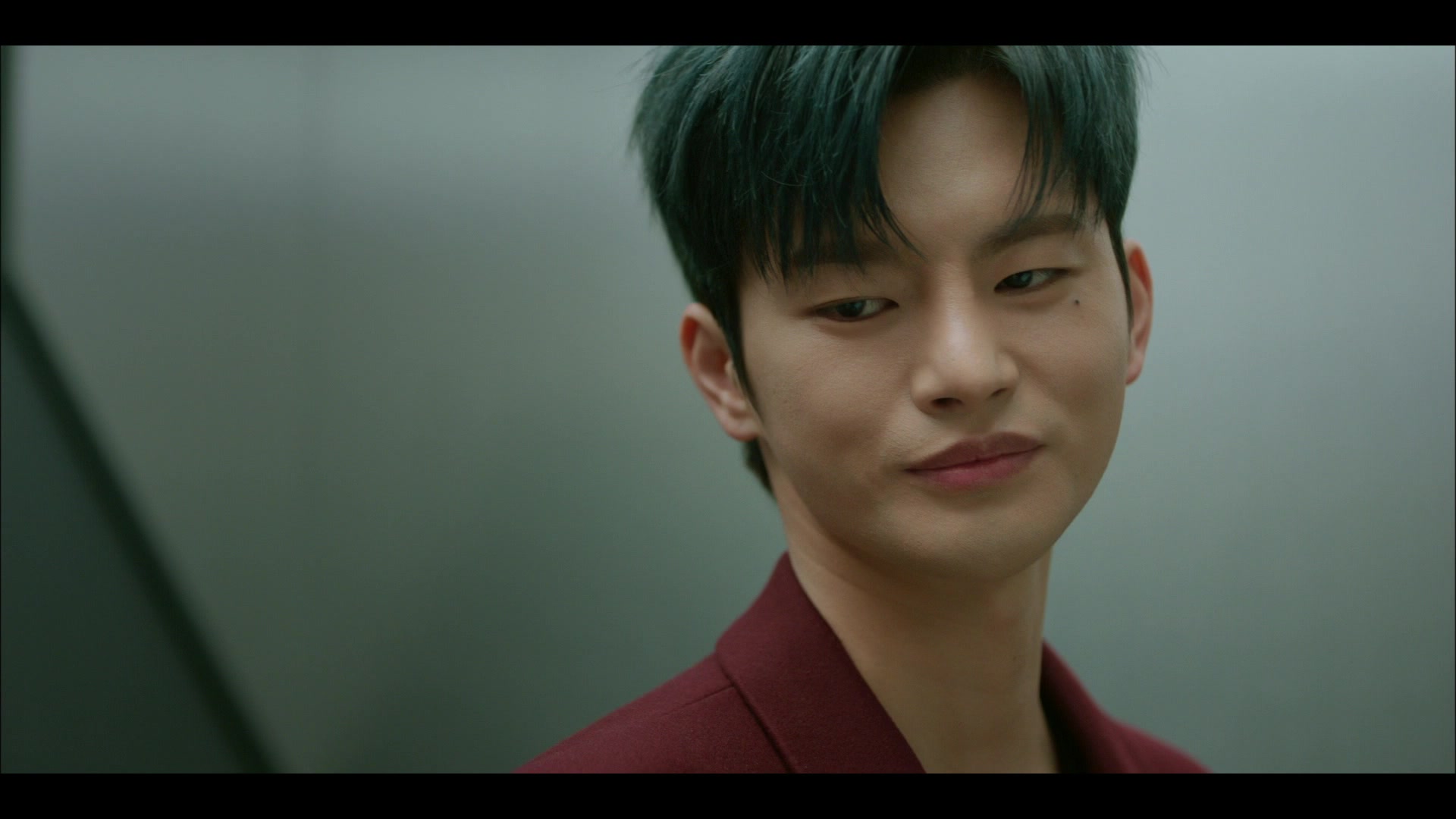
It’s been a while since Myul Mang and Tak Dong-kyung took us on that emotional rollercoaster, but people are still arguing about the Doom at Your Service last episode. Honestly, the finale was a lot to process. You spend sixteen episodes watching a literal deity of destruction face off against a terminally ill woman who only has a hundred days to live, and then, suddenly, everything changes. It was messy. It was poetic. It was, for some fans, a bit of a head-scratcher.
The show dared to ask if fate can be rewritten. Most K-dramas play it safe, but this one leaned hard into the metaphysical stuff. By the time we hit the finale, we weren't just watching a romance; we were watching a debate about the nature of existence itself.
The Transformation of Myul Mang
Let’s talk about the big moment. Myul Mang, played by Seo In-guk, spent the whole series being the "middleman" between gods and humans. He was the butterfly in the garden, the entity that had to exist so that balance remained. But in the Doom at Your Service last episode, he returns not as a harbinger of doom, but as a human.
How? Well, the show suggests that his "death" was a sacrifice that allowed him to be reborn. It’s a classic trope, but the execution here felt different because of the Butterfly/Gardener metaphor used throughout the series. The Sonyeoshin (the young goddess) basically explains that he was a flower that bloomed and died to become a person. It’s heavy on the symbolism. He’s now Kim Sa-ram.
Basically, he earned his humanity. He didn’t just get it for free. He had to experience the void to understand the value of a heartbeat. Seeing him navigate mundane things like having a job or eating regular food was a massive contrast to the guy who used to cause sinkholes just because he was bored.
Tak Dong-kyung and the Power of Choice
Park Bo-young’s character, Dong-kyung, really carried the emotional weight of the finale. Remember, she started the series wishing for the world to end. By the Doom at Your Service last episode, she’s the one fighting for every second of life. Her glioblastoma—the brain tumor that kicked off the whole plot—is in remission.
Critics sometimes point out that her recovery felt a bit "magical," but within the logic of the show, it tracks. If the entity of Destruction disappears and is reborn as Life (Humanity), it stands to reason that the "destruction" within her body would also cease. It’s a thematic payoff more than a medical one. She goes back to her life, but she’s not the same person who was sleepwalking through her days at the beginning. She’s writing again. She’s living.
The scene where they reunite under the cherry blossoms? Pure fan service, but the good kind. It mirrored their earlier meetings but stripped away the supernatural dread. They were just two people standing in the rain.
Why the Love Triangle Finally Mattered
While everyone was obsessed with the main couple, the secondary plot involving Cha Joo-ik, Lee Hyun-kyu, and Na Ji-na finally wrapped up. Honestly, this part of the show felt like a different drama entirely sometimes. But in the finale, it provided a necessary "human" anchor.
Ji-na’s choice was the right one. She didn't go back to her first love, Hyun-kyu. That would have been the easy, cliché route. Instead, she chose Joo-ik, the guy who actually saw her for who she was in the present, not who she was in high school. It reinforced the show’s theme: you can’t live in the past, and you can’t be afraid of the future, even if it’s scary.
Addressing the "Logic" of the Goddess
The Sonyeoshin is a polarizing character. Throughout the series, she’s the one pulling the strings, often in ways that seem cruel. In the Doom at Your Service last episode, we see her finally at peace. She’s "replanted" herself, essentially starting a new cycle.
Some viewers felt this was a cop-out. If she’s all-powerful, why put them through all that pain? The answer lies in the dialogue about "planting seeds." She couldn't just give Myul Mang humanity; he had to grow it himself through his connection with Dong-kyung. It’s a very Eastern philosophical approach to storytelling—suffering leads to enlightenment. Whether you buy into that or not determines how much you liked the ending.
The Visuals and Symbolism You Might Have Missed
The director, Kwon Young-il, used a lot of visual cues to tell the story in the final hour. Pay attention to the lighting. The cold, blue tones that defined Myul Mang’s house for most of the series are replaced by warm, amber hues in the finale.
- The Red String: The literal red string of fate that appeared in earlier episodes is gone because they are no longer bound by a contract. They are bound by choice.
- The Garden: The goddess's garden is finally in full bloom, representing a world where destruction and life are in balance.
- The Bus Stop: A recurring location for their meetings, it shifts from a place of waiting/limbo to a place of arrival.
What Most People Get Wrong About the Ending
There’s a common misconception that the ending was "too happy" for a show with such a dark premise. But is it really? Dong-kyung is still human. She will eventually die. Myul Mang is now Kim Sa-ram, meaning he is also mortal. They didn't get "forever." They got "for now."
The Doom at Your Service last episode isn't about escaping death; it's about accepting it so you can actually live. That’s why the final shot isn't some grand supernatural event, but a simple dinner with family and friends. It’s a celebration of the ordinary.
Actionable Takeaways for Your Next Rewatch
If you’re planning to dive back into the series or just finished it and feel a bit lost, keep these points in mind to get the most out of the experience:
- Watch the Goddess’s Dialogue Closely: Almost every "confusing" plot point in the finale is foreshadowed by the Sonyeoshin in episodes 3 and 4. She tells us exactly what’s going to happen; we just don't believe her yet.
- Compare the First and Last Scenes: The parallels are intentional. Dong-kyung’s internal monologue at the start of the series is a dark mirror of her thoughts at the end.
- Don’t Skip the Secondary Romance: While it feels separate, the Joo-ik/Ji-na storyline acts as a control group. It shows how humans handle "fate" without the literal god of destruction involved. It proves that choice is the ultimate power in both worlds.
- Listen to the OST Lyrics: Songs like "Breaking Down" by Ailee or "Love Sight" by TXT aren't just background noise. The lyrics specifically reference the "on the verge of disappearing" theme that culminates in the finale.
The Doom at Your Service last episode essentially argues that "Doom" isn't an ending, but a prerequisite for beginning. Without the threat of loss, their love wouldn't have mattered. It’s a bittersweet, deeply philosophical conclusion that rewards viewers who pay attention to the subtext rather than just the plot.
To fully appreciate the narrative arc, look at the character growth of Sun-kyung (Dong-kyung’s brother). He starts as a moocher and ends as a responsible adult. His trajectory is the most grounded version of the "transformation" theme that Myul Mang undergoes. It’s these small, human details that make the show’s high-concept ending feel earned rather than forced.
Focus on the transition of Myul Mang’s "office"—the transition from a place where things go to die to a place where he simply exists as a part of the world. That shift is the heart of the finale.