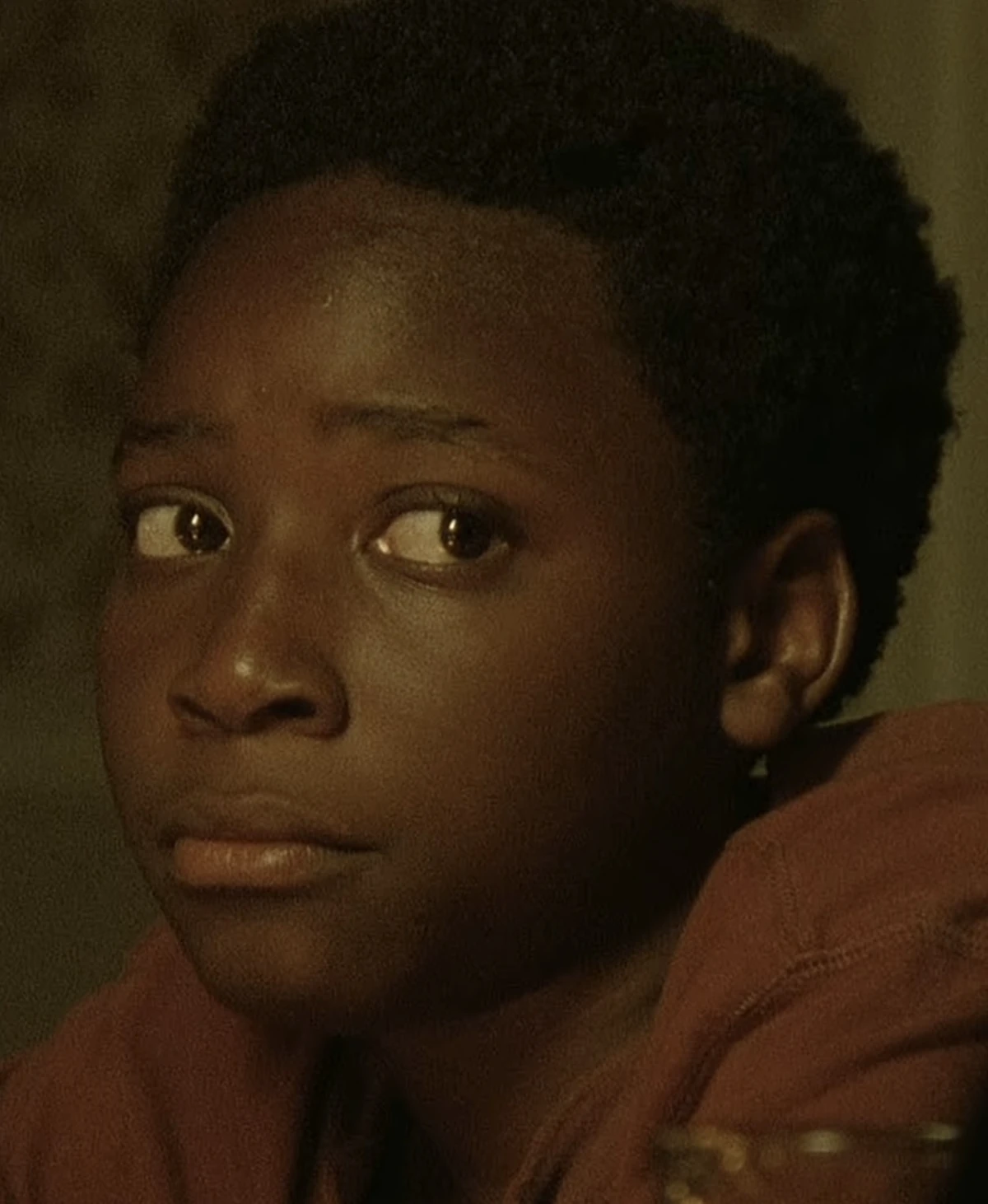
He was the first kid we ever saw in the apocalypse. Long before Carl Grimes was dodging bullets or Judith was wearing a miniature sheriff’s hat, there was Duane Jones. Honestly, most fans today might struggle to place the name immediately, but if you mention "the kid who hit Rick Grimes with a shovel," it all clicks. Duane was the moral anchor for Morgan Jones in those frantic, confusing early days of the outbreak. He wasn't just a side character; he was the primary reason Morgan stayed sane—until he didn't.
What happened to Duane from The Walking Dead is arguably one of the darkest chapters in a show that literally prides itself on being miserable. It’s a story of a father’s failure and a child’s innocence being swallowed by a world that stopped making sense.
The Shovel Heard 'Round the World
Rick Grimes wakes up from a coma. He’s wandering around a quiet neighborhood in his hospital gown, looking like a ghost. Then, out of nowhere, a kid whacks him in the face with a shovel. That’s our introduction to Duane. It’s a violent, panicked reaction that perfectly encapsulates the "new normal" of 2010’s television landscape. Duane, played by Adrian Kali Turner, wasn't some hardened warrior. He was terrified. He was crying. He was just a boy following his dad’s lead.
Morgan and Duane gave Rick—and the audience—the rules of the world. They explained the "walkers." They showed the ritual of checking for fever. Through Duane, we saw the human cost of the transition. He still had his comic books. He still looked at his father for permission to eat. While Rick was busy trying to find his own family, Duane was the living proof that family was the only thing worth holding onto.
What Really Happened with Duane from The Walking Dead?
If you only watched the first season, you might think Duane lived. He and Morgan stayed behind in King County while Rick headed for Atlanta. They were supposed to keep the radio on. They were supposed to meet up. But as the seasons dragged on and the radio stayed silent, the reality set in.
It wasn't until Season 3, in the legendary episode "Clear," that we got the brutal truth. Rick finds Morgan in a booby-trapped town, raving like a lunatic. Morgan is "clearing" everything—living or dead. When Rick asks about Duane, the dam breaks.
Duane is dead.
He didn't die in some heroic stand or a massive explosion. He died because of his father’s hesitation. Morgan couldn't bring himself to put down his zombified wife, Jenny. He let her wander outside their house day after day. One afternoon, Duane was moving some gear, and there she was. He had his gun out. He was ready. But he couldn't pull the trigger on his mother. And Morgan, watching from across the room, couldn't do it either.
Jenny bit Duane.
It’s a horrific image that the show never actually filmed, which almost makes it worse. We only see it through Morgan’s fractured, guilt-ridden retelling. The boy who hit Rick with a shovel died because he loved his parents too much to kill the monster wearing his mother’s face.
The Butterfly Effect of Duane’s Death
You can trace almost every major event in the middle seasons of The Walking Dead back to Duane’s death. It’s the catalyst for Morgan’s entire character arc.
- The "Clear" Phase: Morgan becomes a killing machine, unable to distinguish friend from foe.
- The Pacifist Phase: After meeting Eastman, Morgan swings the other way, refusing to kill because he realizes the cycle of violence started with his own inability to "clear" his wife.
- The War with the Saviors: Morgan’s mental breakdown during the war against Negan is directly tied to the trauma of losing his son.
Without the loss of Duane from The Walking Dead, Morgan likely remains a stable, grounded survivor. Instead, he becomes a wanderer, eventually leaving the main group entirely to join the cast of Fear the Walking Dead. Duane is the ghost that follows Morgan through two different TV shows and over a decade of storytelling.
Why Duane Matters More Than You Think
There’s a lot of debate among the fandom about whether the show should have shown Duane’s death. Some think it was a missed opportunity for a "big" moment. I disagree. By keeping it off-screen, the show forced us to live in Morgan's headspace. We only know what Morgan knows. We feel the vacancy.
Duane also serves as a "What If" for Carl Grimes. Carl and Duane were roughly the same age. While Carl was forced to grow up, learn to shoot, and eventually put down his own mother to save his sister, Duane stayed a child for too long. He represents the segment of the population that simply wasn't built for the end of the world.
He was too good for it.
Honestly, it’s one of the few times the show used restraint effectively. We didn't need to see a child get eaten. The sight of a grown man scrawling "DUANE" in chalk on the walls of a fortified apartment was enough to tell the story.
The Discrepancy Between the Show and the Comics
If you’re a fan of Robert Kirkman’s original comic series, you know things went down a little differently. Not better, just different.
In the comics, Duane’s death is discovered by Rick and Abraham when they return to Cynthiana. They find Morgan, who has been living in his house with a zombified Duane chained up in the attic. Morgan has been feeding Duane "scraps" (including, it's implied, people). It is significantly more macabre than the TV show's version.
The TV show opted for a more psychological tragedy. Instead of a literal monster in the attic, Duane becomes a metaphorical monster in Morgan’s mind. This change allowed Lennie James (the actor who plays Morgan) to deliver some of the best performances in the history of the franchise.
Common Misconceptions About Duane
- Did Duane turn? Yes. In both the comics and the show's lore, Duane became a walker. Morgan eventually had to "clear" him, though the exact details of that moment in the TV show are left to Morgan’s fragmented memory.
- Was he in the pilot? Yes, "Days Gone Bye" is his biggest episode.
- Did he ever meet Carl? No. In the TV show, the two groups never overlapped while Duane was alive. This is one of the great "lost" friendships of the series.
Actionable Takeaways for Fans Revisiting the Series
If you’re doing a rewatch of The Walking Dead or jumping into the later seasons of Fear, keeping Duane’s story in mind changes how you view the characters.
1. Watch "Clear" (Season 3, Episode 12) Again
This is widely considered one of the top five episodes of the entire series. Pay attention to the background details in Morgan’s apartment. The names of the dead are everywhere. It’s a masterclass in visual storytelling.
2. Track Morgan’s Staff
The bō staff Morgan carries later in the series isn't just a weapon. It represents his transition from the man who couldn't protect Duane to a man who protects everyone. Every time he uses the blunt end of that staff, he’s honoring the pacifism he adopted to cope with Duane’s death.
3. Contrast with Carl and Judith
Look at how Rick treats Carl after meeting Morgan in Season 3. Rick realizes how close he came to losing his son in the same way. It’s the reason Rick starts involving Carl more in the "business" of survival. He realized that keeping a child "innocent" was a death sentence.
4. Explore the Extended Universe
While Duane doesn't appear in the spin-offs, his presence is felt heavily in the final seasons of Fear the Walking Dead. Morgan eventually returns to the house where it all started, bringing his journey full circle. It’s a heavy watch, but necessary for closure.
The tragedy of Duane from The Walking Dead is that he was a normal kid in an abnormal world. He didn't have a "hero" moment. He didn't get a slow-motion death scene. He was just a boy who loved his mom and dad, and in the world of the walking dead, that was the most dangerous thing you could be.