You're sitting there, maybe scrolling through your phone or just finishing a second cup of coffee, and suddenly the floor does that weird, rhythmic jiggle. It’s that unmistakable Southern California "hello." Today, a minor earthquake in Orange County California today reminded everyone that we live on a literal puzzle of shifting tectonic plates.
At approximately 4:15 AM PST, a magnitude 1.5 micro-earthquake rattled near Yorba Linda. It wasn't a "Big One." Not even close. But for those awake in the quiet hours, it was enough of a nudge to check the chandelier.
The Nitty-Gritty on Today's Shaking
The USGS reported the epicenter about 8 kilometers east of Yorba Linda. It struck at a depth of roughly 7 kilometers. Seismologists call these "micro-events." Basically, they happen all the time, but we usually sleep through them or mistake them for a heavy trash truck rolling by.
Actually, Orange County is a bit of a hotbed for these small jolts. In the last week alone, the region has seen over a dozen tiny quakes. Just yesterday, a 1.8 magnitude event was logged near San Joaquin Hills. It’s constant.
People often freak out when they see a cluster of small quakes. Honestly, though? Seismologists like Dr. Lucy Jones have often pointed out that small quakes don't necessarily mean a big one is coming. They are just the Earth's way of adjusting.
Why the Earthquake in Orange County California Today Matters
You might think a 1.5 magnitude is pointless to talk about. You’ve probably had a more violent sneeze. But these micro-quakes are the only reason we can map out the complex fault systems under our feet.
Orange County isn't just sitting on one big crack. It's a web. We have the Newport-Inglewood fault, the Whittier fault, and the Elsinore fault all weaving through our suburbs.
- Newport-Inglewood: This is the one that gave us the 1933 Long Beach quake.
- Whittier Fault: Runs right through the northern part of the county.
- San Joaquin Hills Thrust: A "blind" fault that doesn't even show up on the surface.
When we see an earthquake in Orange County California today, even a tiny one, it’s usually happening on one of these smaller "tributary" faults. It’s a reminder that the ground isn't as solid as it looks.
What to Do When the Jolt Happens
Don't run outside. Seriously. Most injuries in California quakes happen because people try to bolt out of buildings and get hit by falling glass or masonry.
- Drop. Get down on your hands and knees.
- Cover. Get under a sturdy desk or table.
- Hold On. Grip the leg of the furniture until the shaking stops.
If you were in bed when today's Yorba Linda quake hit, the best move was actually just to stay there. Turn over and cover your head with a pillow. Unless you have a heavy mirror hanging right over your headboard—which, let’s be real, you should probably move anyway—the bed is a pretty safe spot for a micro-quake.
Looking at the Bigger Picture
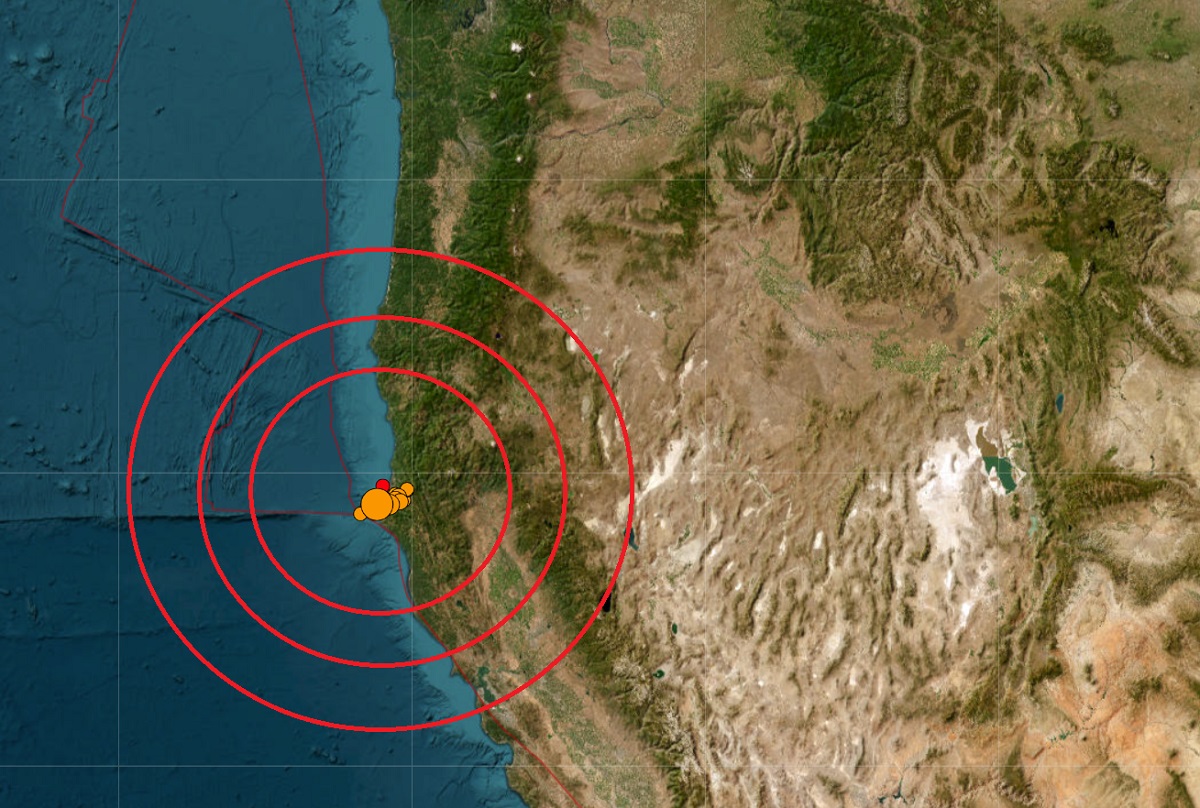
We’ve had a weirdly active January in California. Up north, a 4.4 hit Mendocino County just a few days ago. Down here, we've seen swarms near Moreno Valley and Fontana.
Is it "earthquake weather"? No. That’s a total myth. Quakes happen in rain, sun, heat, and snow. They don't care about the atmosphere. They care about the 15 miles of rock beneath your house that’s under immense pressure.
One thing that is real, though, is the ShakeAlert system. If today’s quake had been larger, your phone would have screamed at you before the waves even reached your house. If you don't have the MyShake app downloaded yet, you're kind of playing with fire. It uses your phone's accelerometer to detect the very first P-waves of a quake.
Actionable Next Steps for OC Residents
Instead of just checking Twitter (or X, whatever) to see if anyone else felt it, take five minutes to do a quick "quake check" of your house.
Check your water heater. Is it strapped? If not, a moderate quake could tip it over, breaking the gas line and starting a fire. That’s how most homes are lost in quakes, not from the shaking itself, but from the fires that follow.
Look at your bookshelves. Those heavy IKEA units can be death traps if they aren't anchored to the wall studs. It takes ten dollars and a drill to save yourself from a literal ton of books falling on you.
Keep a pair of shoes under your bed. If a quake happens at night and breaks a window or a picture frame, the last thing you want is to be walking across a dark room in bare feet on broken glass. It sounds simple, but it’s one of the most common ER visits after a seismic event.
Lastly, make sure you have at least a few gallons of water stored. In a major event, Orange County's water infrastructure could be down for days. Aim for one gallon per person, per day.
The earthquake in Orange County California today was a minor blip, a tiny shiver in the grand scheme of things. But in a place where the earth is constantly moving, these little reminders are the best time to prepare for the day when the jiggle turns into a jolt.
Stay safe out there, OC. Secure your heavy furniture to wall studs using L-brackets and ensure your emergency kit has a three-day supply of any essential medications.