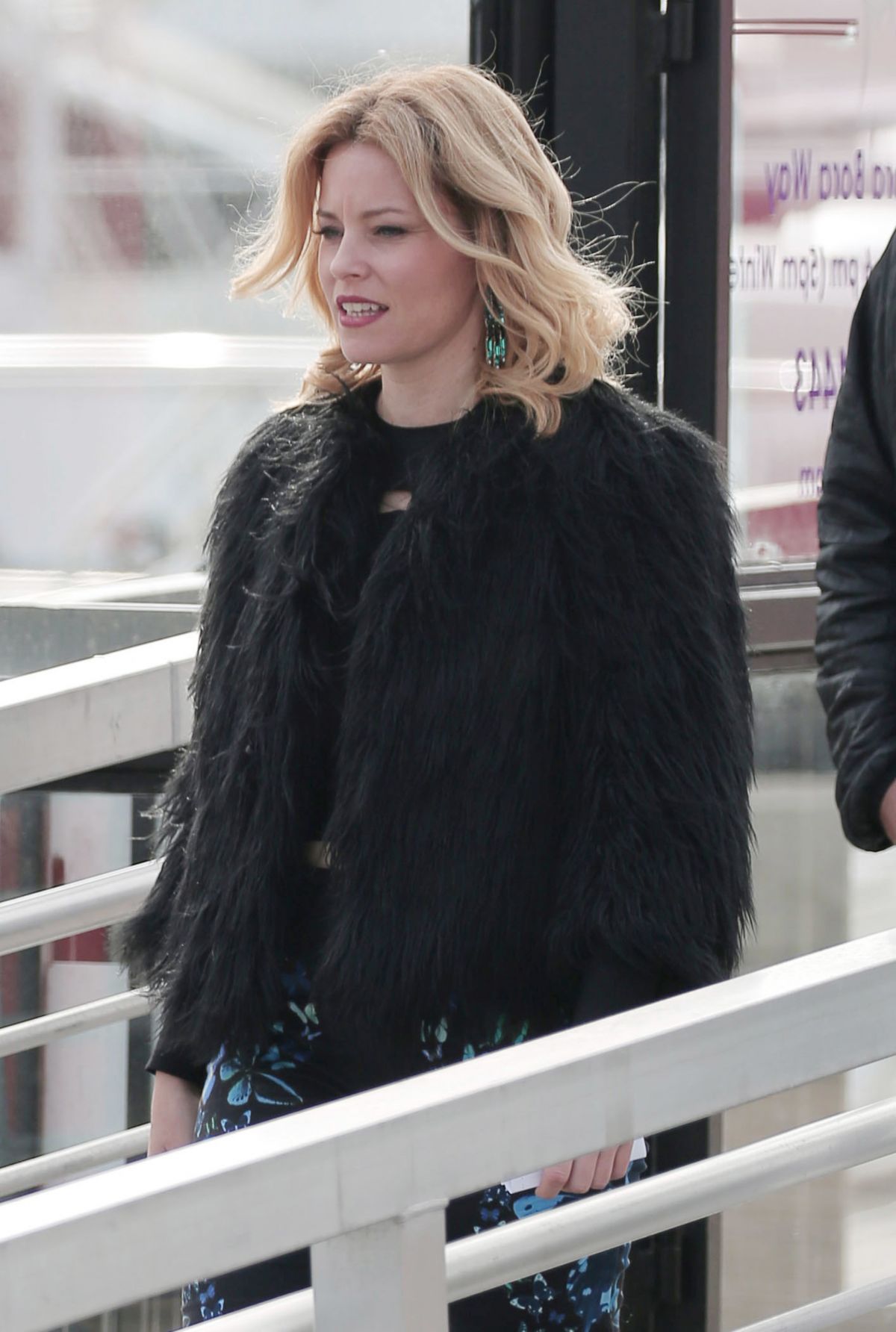
Elizabeth Banks is basically a household name now. Between directing Cocaine Bear and leading the Pitch Perfect franchise, she’s a powerhouse. But if you rewind the clock a bit, back to when ABC’s Modern Family was the undisputed king of network television, Banks occupied a very specific, very loud niche. She played Sal.
Sal wasn't just another guest star. She was a hurricane.
Whenever Elizabeth Banks Modern Family episodes popped up on the schedule, you knew things were about to get messy for Mitchell and Cameron. She played their hard-partying, boundary-less, and deeply insecure best friend from their "wilder" years. Honestly, the character was a masterclass in how to play someone who is both incredibly annoying and strangely sympathetic.
Who Was Sal, Anyway?
Sal (short for Rosalind) first appeared in Season 1, Episode 8, titled "En Garde." Right from the jump, the writers established her as the third wheel who refused to acknowledge that the bike now had two seats and a toddler trailer. She hated Lily. Like, genuinely, hilariously hated a baby.
She saw Lily as a rival for Mitch and Cam's attention. Most sitcoms wouldn't dare have a recurring character suggest dropping a child into the ocean, but Sal wasn't most characters. Banks played her with this frantic, tequila-soaked energy that made the absurdity work. She was the personification of that one friend we all have who simply refused to grow up when everyone else started buying SUVs and talking about sleep training.
It’s interesting to look back at how the show handled her. Modern Family was often criticized for being too "neat" or "safe." Sal was the antidote to that. She brought a jagged edge. When she showed up, you weren't getting a heartwarming lesson about sharing; you were getting a hungover blonde in a cocktail dress trying to compete with a three-year-old for the title of "Best Girl."
The Evolution of a Disaster
As the years went on, the Elizabeth Banks Modern Family appearances became a sort of annual tradition. The show used her sparingly—only seven episodes across eleven seasons—which was smart. A little Sal goes a long way. If she were there every week, she’d be exhausting. In small doses? She’s a firecracker.
The Season 4 Wedding: This was a big one. In "Best Men," Sal announces she's getting married to a guy named Tony. It’s a disaster from the start. This episode showcased Banks’ ability to pivot from "party girl" to "terrified adult" in about three seconds flat.
The Pregnancy Scare: Season 5's "iSpy" gave us a pregnant Sal. Watching her try to navigate the concept of motherhood when she could barely navigate a sidewalk in heels was gold. The irony, of course, was that Sal—the woman who once threatened to "kill" Lily—was now bringing a life into the world.
The Later Years: By the time we got to Season 11's "Paris," Sal had somewhat "matured," or at least as much as Sal could. She was still erratic, but there was a weariness there that felt real.
The chemistry between Elizabeth Banks, Jesse Tyler Ferguson, and Eric Stonestreet was the engine of these episodes. Ferguson and Stonestreet played the "straight men" (ironically) to her chaos. They were the parents, and she was the problem child they couldn't quite give up on.
Why These Cameos Still Rank as Fan Favorites
Why do people keep searching for these specific episodes? It’s because Sal represents a very real social phenomenon. She is the "Party Friend" who gets left behind by the "Domesticated Friends."
There is a genuine tension in those episodes. Mitch and Cam love her, but they also kind of pity her. And Sal knows it. That's where the comedy comes from—that desperate need to prove she's still relevant. Banks never played her as a villain, even when she was saying horrible things. She played her as someone who was lonely.
Behind the Scenes: Banks and the Modern Family Crew
Banks didn't just stumble into the role. She was already a fan of the show. In several interviews, she’s mentioned how much she loved the writing. It’s worth noting that during her tenure on the show, her own career was exploding. She was filming The Hunger Games and directing her first features, yet she kept coming back to play this mess of a human being.
That says something about the environment on that set. The creators, Christopher Lloyd and Steven Levitan, had a knack for casting guest stars who could match the energy of the core ensemble without overshadowing them. Nathan Lane (Pepper) and Elizabeth Banks (Sal) were the gold standards for this.
Technical Brilliance in Sitcom Acting
Acting in a multi-camera-style (even though Modern Family was single-cam) sitcom requires a specific "size." You have to be big enough to be funny but small enough to stay grounded in the mockumentary format.
Banks used her physicality perfectly. Notice how Sal is always slightly off-balance. She’s leaning on a bar, she’s tripping over a toy, or she’s gesturing wildly with a martini glass. She occupies space aggressively. It’s a stark contrast to Mitchell’s rigid, neurotic posture or Cam’s theatrical but controlled movements.
Exploring the "Sal" Episodes: A Quick Reference
If you're looking to binge the Elizabeth Banks Modern Family saga, here is the roadmap. You don't need the whole series; just these hits:
- Season 1, Episode 8 "En Garde": The introduction. The "I'll kill the baby" era.
- Season 4, Episode 17 "Best Men": The wedding that shouldn't have happened.
- Season 5, Episode 14 "iSpy": The pregnancy reveal.
- Season 6, Episode 15 "Fight or Flight": Sal returns after having her baby (Sammy) and realizes she's not a natural mother.
- Season 8, Episode 13 "Do It Yourself": Sal tries to "help" with a home project.
- Season 11, Episode 13 "Paris": A final look at her life in the series finale season.
Each of these episodes adds a layer to her. She isn't just a caricature. By the end, you see a woman who has tried to find her place in a world that moved on without her.
The Cultural Impact of the Character
Sal became a bit of a cult icon in the LGBTQ+ community. The "fag hag" trope is an old one, and Modern Family leaned into it heavily with Sal, but they also subverted it. Usually, that character is just a sidekick. Sal, however, demanded center stage. She wasn't just there to support Mitch and Cam; she was there to demand they support her.
It’s a nuanced take on a specific type of friendship. It’s the friendship built on late nights, bad decisions, and "you had to be there" stories. When the "had to be there" stories start being replaced by "did you see what the toddler did today?" stories, those friendships either evolve or they break. Sal was the struggle of that evolution.
What We Can Learn from Sal’s Arc
Honestly, the takeaway from the Elizabeth Banks Modern Family run is about the endurance of friendship. Despite the insults, the abandoned weddings, and the literal threats to their child, Mitch and Cam never cut Sal out.
They recognized that she was part of their history.
There’s a lesson there about "chosen family." Sometimes your chosen family is a mess. Sometimes they show up to your house at 2:00 AM wearing one shoe. But because they knew you before you were "settled," they hold a piece of your identity that no one else does.
Practical Next Steps for Fans
If you're looking to dive deeper into this specific corner of TV history, don't just stop at the episodes.
- Watch the "Best Men" Commentary: If you can find the DVD extras or behind-the-scenes clips, the cast talks extensively about the "Sal" energy on set.
- Compare Sal to Gail Abernathy-McKadden: Watch Banks in Pitch Perfect. You can see the DNA of Sal in her role as the commentator. The same sharp tongue, the same lack of a filter.
- The "Paris" Episode Re-watch: Watch the Season 11 Paris episode specifically focusing on how the lighting and wardrobe for Sal changed. She went from bright, "look at me" colors to more muted, sophisticated tones. It’s a subtle piece of character growth through costume design.
Elizabeth Banks managed to create one of the most memorable recurring characters in sitcom history with less than an hour of total screen time across a decade. That’s not just luck; it’s a high-level understanding of comedic timing and character pathos. Sal was a disaster, sure. But she was our disaster.