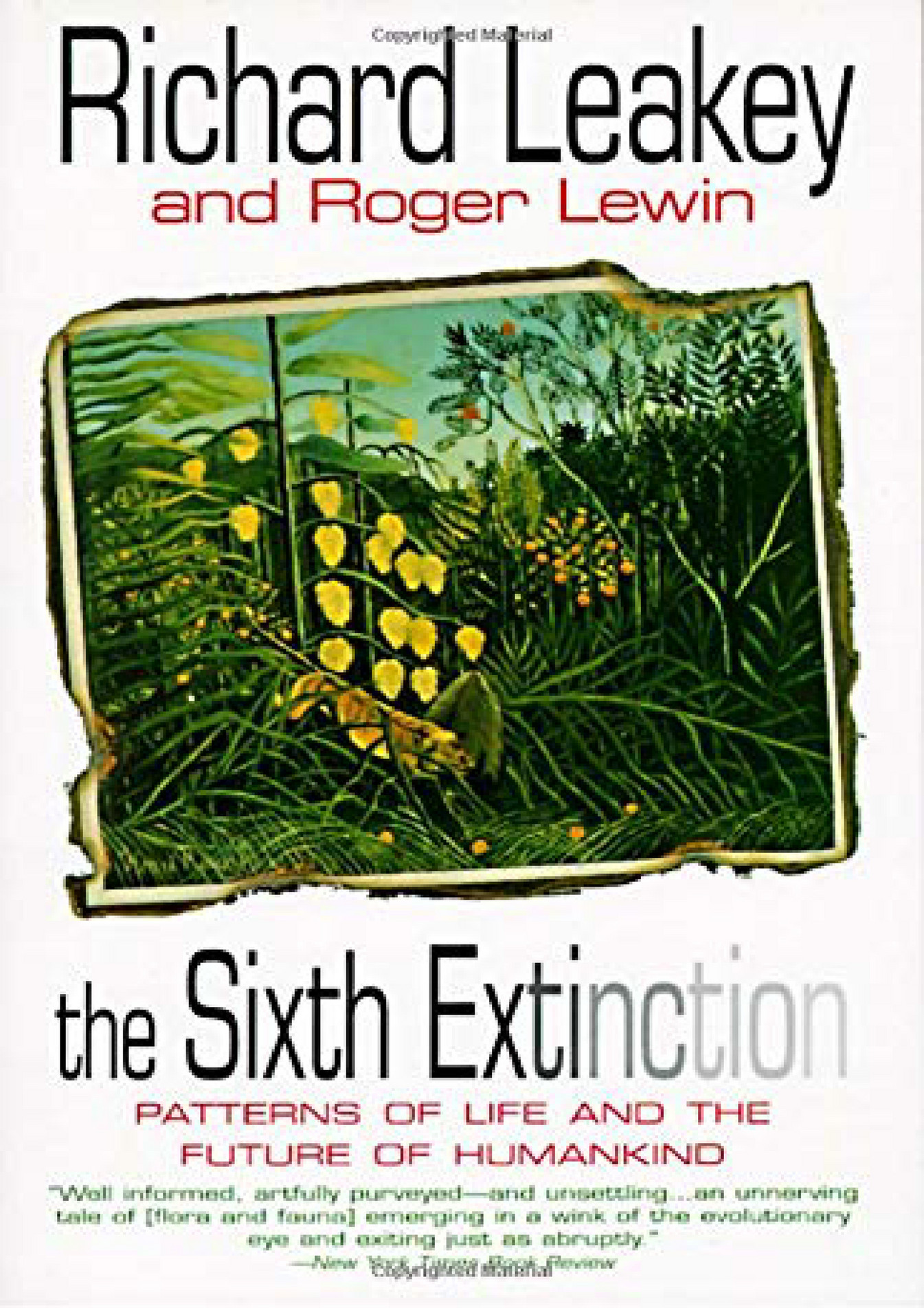
We like to think of the world as a permanent fixture. A solid, unchanging backdrop for our lives. But if you pick up Elizabeth Kolbert’s The Sixth Extinction book, that comforting illusion starts to crumble pretty fast. Honestly, it’s a brutal read. It isn’t just some dry, academic text about birds and bees disappearing. It’s a travelogue through the graveyards of species we’ve already lost and a terrifying look at the ones currently teetering on the edge.
Kolbert didn't just sit in a library to write this. She went to the front lines. She visited the bat caves where white-nose syndrome was turning hibernating colonies into piles of tiny bones. She traveled to the Great Barrier Reef to see how ocean acidification is literally dissolving the foundations of underwater cities. It won a Pulitzer for a reason. It’s visceral.
The core premise is simple, yet heavy: there have been five major mass extinctions in the history of life on Earth. The Ordivician, the Devonian, the Permian (the "Great Dying"), the Triassic, and the Cretaceous—the one that took out the dinosaurs. Now, we are in the middle of the sixth. But this time, the "asteroid" isn't a rock from space. It's us.
Why The Sixth Extinction Book Matters More Now Than at Launch
When the book first hit shelves in 2014, some critics thought it might be a bit too "doomsday." Flash forward to today, and most of Kolbert's reporting feels like a prophecy coming true in real-time. We aren't just talking about abstract numbers anymore. We are seeing the "decline of the entomofauna"—basically, the massive drop in insect populations—affecting everything from bird migrations to how much your groceries cost at the store.
Humans are incredibly good at changing the world. We’ve moved species across oceans, altered the chemistry of the atmosphere, and paved over vast swathes of the planet. Kolbert calls this the "Anthropocene." It's a new geological epoch where human activity is the dominant influence on climate and the environment. Basically, we’ve become a force of nature, but without the checks and balances that usually keep nature in order.
One of the most striking parts of the book is how it handles the concept of "background extinction rates." Usually, species go extinct at a very slow, predictable pace. It’s just part of the game. But right now? Species are vanishing at rates hundreds, maybe thousands of times faster than that background level. It’s like watching a movie on 10x speed. You can’t keep up with the losses.
The Panamanian Golden Frog and the Fungus Among Us
Take the Panamanian golden frog. It’s a stunning creature, bright yellow and culturally iconic in Panama. Kolbert describes how a specific fungus, Batrachochytrium dendrobatidis (Chytrid for short), swept through the region like a silent assassin. It’s an "invasive" pathogen, likely spread by human trade.
The frogs didn't stand a chance.
Biologists tried to race ahead of the fungus, scooping up as many frogs as they could to put them in "frog hotels"—basically high-tech shipping containers where the air is filtered and everything is sterile. They saved the species from total annihilation, but the golden frog is effectively extinct in the wild. It exists only in tanks now. That’s a recurring theme in The Sixth Extinction book: we are creating a world where "nature" only survives if we keep it on life support.
The Great Barrier Reef is Dissolving
I think the chapter on the oceans is where most people really start to panic. We talk a lot about global warming, but "the other CO2 problem" is ocean acidification. About one-third of the carbon dioxide we pump into the air ends up in the sea. When CO2 dissolves in water, it creates carbonic acid.
This isn't just a minor chemistry tweak. It makes it harder for anything with a shell—clams, oysters, and especially coral—to build their skeletons.
Kolbert visits One Tree Island and talks to researchers who are seeing the math play out. If the pH of the ocean drops too far, the shells don't just stop growing. They start to dissolve. Imagine trying to build a house while the rain is made of acid that eats your bricks. That’s the reality for the Great Barrier Reef. Given that reefs support about 25% of all marine life, their collapse would be a catastrophic domino effect. It’s not just about pretty fish; it’s about the entire food chain that billions of people rely on.
The "New" Pangea
Another wild concept Kolbert explores is how we've basically undone millions of years of geographic isolation. For eons, oceans and mountains kept species apart, allowing them to evolve into unique forms. Now, we have cargo ships and planes.
We are constantly shuffling the deck.
We bring Asian long-horned beetles to North America in packing crates. We bring emerald ash borers. We bring the fungus that kills the bats. Kolbert refers to this as "The Anthropocene Ocean" or a "New Pangea." By mixing everything together, we are actually reducing the world's overall biodiversity. The "winners"—tough, adaptable species like rats, crows, and certain weeds—take over, while the specialists disappear. It’s a homogenization of the planet.
Is It All Just Doom and Gloom?
People often ask if there's any hope in The Sixth Extinction book. Honestly? Kolbert doesn't sugarcoat it. She isn't interested in giving you a "five-minute fix" or a "ten-step plan to save the world." She’s a journalist, not a motivational speaker.
But there is a certain power in the honesty of the book. By acknowledging the scale of what we’ve done, we stop pretending that minor tweaks will solve the problem. It forces a deeper conversation about what we value.
Some scientists mentioned in the book, like those working on the "frozen zoo" projects, are trying to save the genetic blueprints of disappearing animals. They’re freezing cells in liquid nitrogen, hoping that future technology might be able to bring them back. It’s a desperate, sci-fi-level move, but it shows the lengths humans will go to when we realize we’re about to lose something forever.
The Problem of "Shifting Baselines"
A really important takeaway from Kolbert's work is the idea of "shifting baselines." This is a psychological trick our brains play on us. We tend to think that the world we saw as children is the "normal" version of nature.
- Your grandfather remembers a forest full of birds and a river teeming with fish.
- You remember a forest with some birds and a river where you can occasionally catch a fish.
- Your kids will see a silent forest and a polluted river and think that is normal.
Because the change happens over decades rather than days, we don't feel the urgency. We just adjust to a poorer, emptier world. Kolbert’s writing strips away that biological amnesia. She reminds us that the "normal" we see today is already a ghost of what used to be here.
Actionable Insights: What You Can Actually Do
Reading a book like this can leave you feeling paralyzed. If the problem is global and geological, what does a recycling bin matter? While one person can't stop a mass extinction, the cumulative effect of shifting our lifestyle and political priorities is the only lever we have.
Stop the "Travelers"
Be hyper-vigilant about invasive species. If you hike, clean your boots. If you boat, drain and dry your gear. Don't move firewood. These seem like tiny "dad rules," but preventing the spread of a single fungus or beetle can save an entire regional ecosystem.
Support "Connective" Conservation
The book makes it clear that isolated pockets of forest aren't enough. Species need to migrate as temperatures change. Support organizations that focus on "wildlife corridors"—land bridges that connect different habitats. This gives animals a fighting chance to move when their current home becomes unlivable.
Think About Your Carbon "Acid"
Reducing your carbon footprint isn't just about the temperature; it's about the chemistry of the ocean. Support policies that move us away from fossil fuels. It’s the single most effective way to slow down the acidification process that is currently melting the reefs.
Vote With Biodiversity in Mind
This is the big one. Individual lifestyle changes are great, but the Sixth Extinction is a systemic issue. Support leaders who treat the loss of biodiversity as a national security and economic threat—because it is.
Educate Without Being a Downer
Share the facts, but share the wonder too. People won't save what they don't love. Use the stories from The Sixth Extinction book to help others see the complexity of the world we’re currently dismantling. Awareness is the first step toward stopping the "asteroid."
The Sixth Extinction isn't something that might happen in the future. It’s the story of right now. It’s the story of the choices we make every time we decide how to power our homes, what to eat, and who to lead us. It's a heavy burden, sure, but it's also a call to action. We are the only species in the history of the world that has ever been aware of its own impact on the planet's history. That awareness has to count for something.
Next Steps for Deepening Your Understanding:
- Read the Book: If you haven't, get the physical copy. The photos and the pacing are better in print.
- Look Locally: Research which species in your specific state or country are currently on the endangered list. Knowing your "neighbors" makes the crisis feel personal rather than abstract.
- Track the "Living Planet Index": Follow the reports from the World Wildlife Fund (WWF) and the Zoological Society of London. They provide the most up-to-date data on population declines that have occurred since Kolbert's book was published.
- Engage with "Citizen Science": Use apps like iNaturalist to record the species you see. This data helps scientists track migrations and population shifts in real-time, providing the raw data needed to fight the Sixth Extinction.