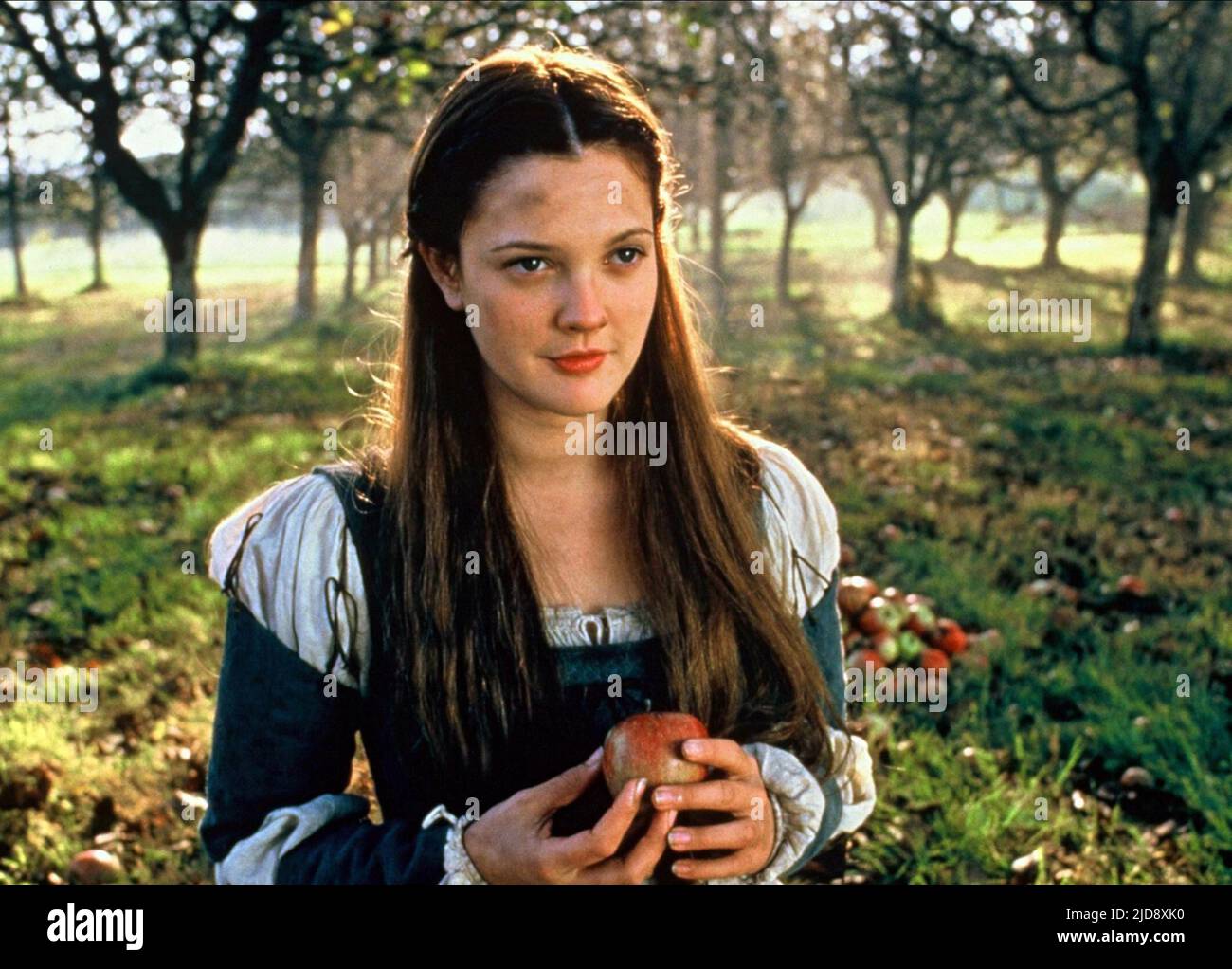
Let's be honest about the late nineties for a second. We were drowning in lace, synth-pop, and movies that tried way too hard to be "edgy." Then, in 1998, Andy Tennant dropped Ever After: A Cinderella Story starring Drew Barrymore, and everything changed. It wasn't just another cartoonish remake. It was gritty. It was muddy. It featured a Leonardo da Vinci cameo that actually worked.
Most people think of the Drew Barrymore Cinderella story as just another rom-com in her massive filmography, but it’s actually a masterclass in how to dismantle a fairy tale.
The Danielle de Barbarac Difference
Forget the glass slippers. Seriously.
In Ever After, the "Cinderella" character is named Danielle de Barbarac. She doesn't wait for a fairy godmother to show up with a pumpkin carriage. She’s busy. She’s reading Thomas More’s Utopia and literally carrying men on her back to save them from being sold into servitude. When we talk about the Drew Barrymore Cinderella story, we’re talking about a woman who uses her brain as much as her heart.
The film strips away the magic to replace it with something way more interesting: historical fiction. Setting the story in 16th-century France wasn't just an aesthetic choice; it allowed the writers to play with real political stakes.
Danielle isn't just a girl who wants to go to a ball. She’s a girl trying to protect her family home from a stepmother who is basically a high-society predator. Anjelica Huston plays Baroness Rodmilla de Ghent with such terrifying, cold precision that you almost forget she isn't a literal witch. It’s a performance that anchors the movie in reality.
Why the "Glass Slipper" trope got a massive upgrade
We all know the beat. The prince finds the shoe, he finds the girl, they live happily ever after. Boring.
In this version, the shoes are actually a gift from Danielle’s father, a gorgeous pair of beaded slippers that felt grounded in the Renaissance period rather than a Disney store. But the real kicker is the confrontation. Prince Henry—played by Dougray Scott with a very relatable amount of "royal angst"—actually rejects Danielle when he finds out she’s a "commoner."
It’s painful to watch.
Most movies would have him sweep her off her feet immediately. Not here. The Drew Barrymore Cinderella story makes them earn it. She has to save herself from a creepy landowner (played by Richard O'Brien of Rocky Horror fame) before the Prince even gets a chance to apologize.
The Da Vinci Factor
It sounds ridiculous on paper. "Let's put Leonardo da Vinci in a Cinderella movie." But Patrick Godfrey plays him with such a grandfatherly, eccentric warmth that it totally works. He’s the "fairy godmother" stand-in, but he uses science and art instead of a wand.
He helps her with her wings. Those iconic breathe-taking wings.
When Danielle walks into that ball, she isn't wearing a generic prom dress. She’s wearing a sheer, ethereal gown with wings that looked like they belonged in a museum. It was a cultural reset for every girl growing up in 1998. It signaled that being "beautiful" could also mean being fierce and intellectual.
Drew Barrymore's Career Pivot
At the time, Drew was coming off a string of roles that leaned into her "wild child" or "horror girl" image—think Scream or Poison Ivy. Ever After proved she could carry a period piece.
She brought this specific kind of breathless, earnest energy to Danielle that nobody else could have replicated. It was the birth of the "Flower Child" Drew that we know today on her talk show. She wasn't just acting; she felt like she genuinely believed in the democratic ideals Danielle was shouting at the Prince.
The chemistry between Barrymore and Huston is what makes the movie legendary. Huston didn't play a caricature. She played a woman who was bitter because she felt the world had cheated her, and she took it out on a girl who reminded her of a husband who never loved her. That's deep. That's not just a kids' story.
Historical Realism vs. Fairy Tale Fluff
The production design was obsessive. They filmed at the Château de Hautefort in the Dordogne region of France. You can feel the cold stone. You can see the dirt under Danielle's fingernails.
Compare this to the 2015 Disney live-action remake or the 2021 Camila Cabello version. Those movies feel like they were shot in a computer. The Drew Barrymore Cinderella story feels like you could reach out and touch the velvet.
- The Costumes: Jenny Beavan (who later did Mad Max: Fury Road) designed outfits that reflected the transition from the Middle Ages to the Renaissance.
- The Language: It was formal but didn't feel like a Shakespeare play. It felt accessible.
- The Themes: It touched on classism, the printing press, and the right to education.
The Ending That Actually Matters
The final confrontation isn't about a wedding. It's about Danielle finally standing up to her stepmother.
When the Baroness is stripped of her titles and forced to work in the laundry, it feels like justice, not just "magic." It’s the ultimate payoff. Danielle doesn't just marry a prince; she changes the way the kingdom thinks.
If you're looking to revisit this classic or share it with someone who hasn't seen it, there are a few things to keep in mind regarding its legacy. It currently holds an 82% on Rotten Tomatoes, which is remarkably high for a 90s romance. It’s often cited by film historians as the movie that paved the way for "feminist" retellings like Enchanted or Frozen.
Without Danielle de Barbarac, we don't get the modern, self-sufficient princess.
Taking Action: How to Experience the Story Today
If you want to dive deeper into the world of the Drew Barrymore Cinderella story, don't just stop at the movie.
- Watch the 4K Restoration: If you can find the high-definition versions on streaming services like Disney+ or Hulu (depending on your region), the colors of the French countryside are vastly superior to the old DVD releases.
- Read the Source Material: While it's based on the Perrault version of Cinderella, the film heavily references Thomas More's Utopia. Reading a summary of More's work actually makes the dialogue between Danielle and Henry much more meaningful.
- Visit the Locations: If you’re ever in France, the Château de Hautefort is open to the public. You can literally walk through the halls where the Baroness plotted her schemes.
- Listen to the Soundtrack: George Fenton’s score is one of the most underrated orchestral works of the 90s. It lacks the pop-song gimmicks of modern soundtracks, focusing instead on lush, period-appropriate themes.
The film remains a testament to the idea that you don't need magic to have a fairy tale. You just need a bit of courage, a lot of books, and maybe a very famous Italian inventor to help you out with your luggage.
Danielle de Barbarac didn't need a glass slipper to change her life; she just needed to be seen for exactly who she was. That's the real power of the Drew Barrymore Cinderella story. It’s a movie that respects its audience’s intelligence while still making them believe that a commoner can, in fact, change the world.
To get the most out of your next viewing, pay close attention to the background characters. Many of the "servants" in the house have subtle arcs that mirror the political shifts happening in France at the time. It turns a simple romance into a rich tapestry of historical change. Use this as a lens to see how much detail went into a film that many dismiss as "just a girl movie." It is anything but.