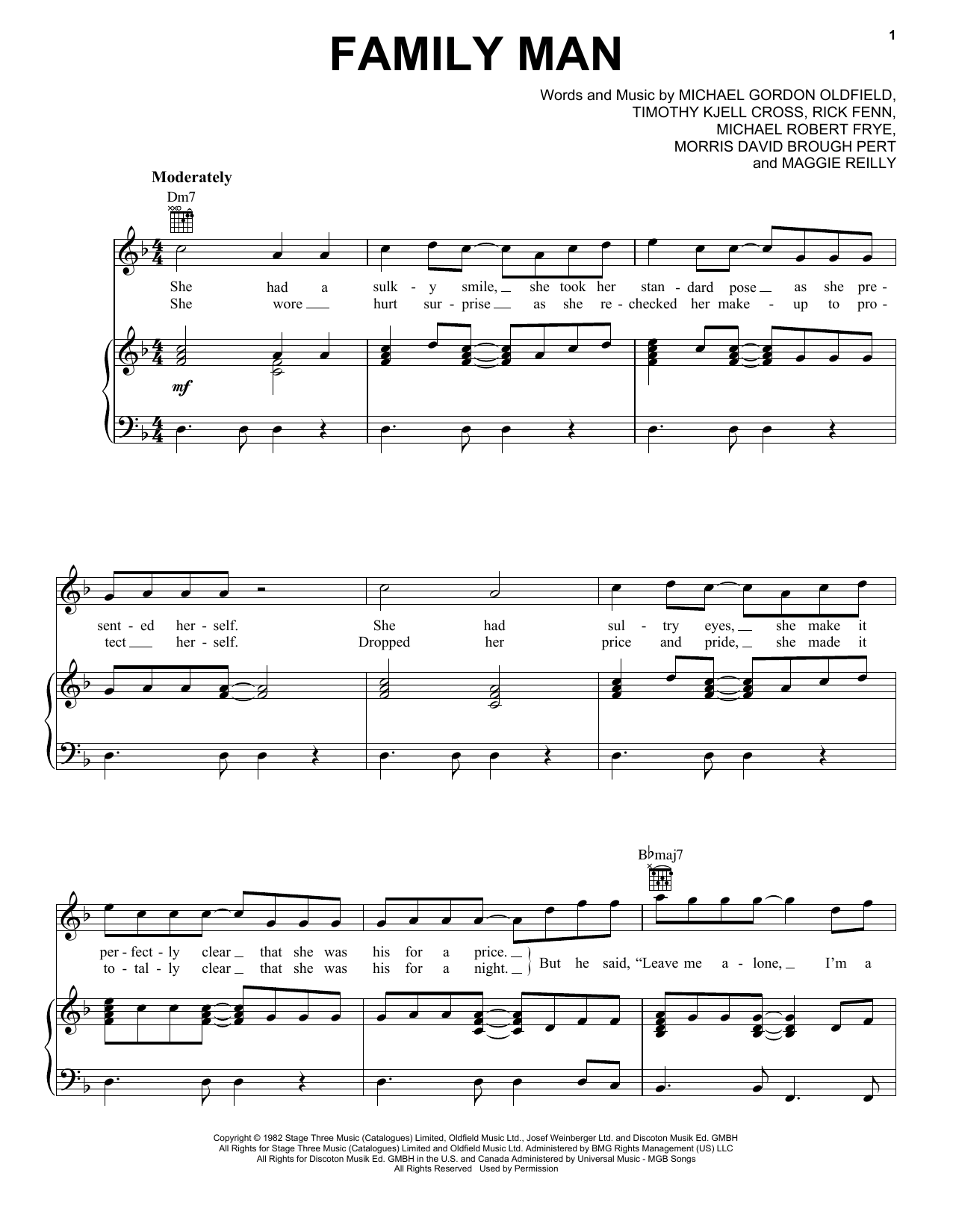
You know that feeling when you hear a song for years and realize you’ve been completely wrong about it? It happens. For a lot of people, the song Family Man Hall Oates made famous in 1983 is exactly that kind of track. It’s twitchy. It’s catchy. It’s got that signature 80s gloss that Daryl Hall and John Oates perfected. But honestly, most fans have no idea that this wasn’t even their song to begin with.
It’s a cover. Yeah, really.
The original was actually by Mike Oldfield—the guy who did the Exorcist theme—and it featured vocals by Maggie Reilly. While Oldfield’s version is a bit more of a slow-burn art-rock piece, Hall & Oates turned it into a high-voltage pop-rock anthem that dominated the radio. It peaked at number 6 on the Billboard Hot 100 in June 1983. But the weirdest part isn't the chart position. It's the lyrics.
Most people hear "Family Man" and think it's a sweet tribute to domestic life. It is not. Not even close.
The Dark Reality Behind the Lyrics
The song tells a story that’s actually pretty tense. A man is being propositioned by a prostitute. He’s standing there, basically panicking, and his defense mechanism is to keep shouting that he’s a "family man." He’s not bragging about his kids; he’s using his family as a shield to stay faithful. It’s a song about temptation and the sheer terror of blowing up your life for a momentary lapse in judgment.
Daryl Hall’s delivery makes it feel even more frantic. He changed the ending of the song from the original version, too. In the Mike Oldfield original, the woman eventually just walks away.
In the Family Man Hall Oates version? The guy finally works up the nerve to actually say yes, but by then, she’s already gone. He’s left screaming the chorus into the empty street. It’s a much darker, more cynical twist that fits the vibe of their H2O album perfectly.
Why the H2O Era Was Different
By 1982 and 1983, Hall & Oates weren't just soul singers anymore. They were innovators. They were mixing synthesizers with G.E. Smith’s biting guitar work. If you listen to "Family Man" today, that guitar solo is absolutely wild. G.E. Smith—who later became the bandleader for Saturday Night Live—gives it this jagged, nervous energy that matches the lyrics.
- The Production: It was co-produced by Neil Kernon.
- The Mix: Hugh Padgham, the guy who invented the "gated reverb" drum sound for Phil Collins, handled the mixing.
- The Vibe: It’s paranoid. It’s sweaty. It’s very New York City in the early 80s.
Honestly, the music video is a whole other level of bizarre. It’s got pixelated avatars, Daryl looking intensely at the camera, and John Oates just... being there. It’s a time capsule of early MTV experimentation. Some people find it cringey now, but back then, that computer-animated lipstick was cutting-edge stuff.
The Mike Oldfield Connection
It’s kind of funny how Hall first heard the song. Apparently, a keyboard tech who was staying in his guest house put Mike Oldfield’s Five Miles Out album on the turntable. Daryl heard it and immediately knew they could "Hall & Oates-ify" it.
They kept the core of the song but injected it with that "Rock 'n Soul" DNA.
The original writers included Mike Oldfield, Tim Cross, Rick Fenn, Mike Frye, Morris Pert, and Maggie Reilly. It’s a massive list of credits for one song. Tim Cross later mentioned that the "family man" in the lyrics was actually inspired by Rick Fenn. While the Oldfield version was a hit in the UK, it was the Hall & Oates cover that really broke the song wide open in the States.
Does it hold up in 2026?
Looking back, the song feels more relevant than ever because it deals with the complexity of being human. It’s not a black-and-white moral story. It’s about the gray area. The guy wants to be good, but he’s struggling.
The duo's recent legal battles and "betrayals" (Daryl’s words, not mine) add a strange layer of irony to a song about staying loyal. With their partnership essentially "at the bottom of the ocean" now, according to recent interviews, these songs are all we have left of that magic.
How to Listen Like a Pro
If you want to really appreciate Family Man Hall Oates style, don't just stream it on a crappy phone speaker. You need to hear the separation in the mix.
- Find the 12-inch "Rock Mix": It’s longer, grittier, and lets the instrumentation breathe.
- Focus on the Bass: Tom "T-Bone" Wolk’s bass lines are the secret sauce of this era.
- Watch the Solo: Seriously, watch G.E. Smith in the video. The guy is possessed.
Next time this track comes on the classic rock station, remember it’s not just a "fun 80s song." It’s a cover of a British prog-rocker’s track about a guy almost ruining his life in a doorway.
To dive deeper into their discography, check out the rest of the H2O album. It's not just "Maneater"—there are tracks like "One on One" and "Open All Night" that show just how much they were pushing the boundaries of pop at the time. You might find that the "Family Man" era was actually the duo at their most creatively daring, even if they were singing someone else's words.