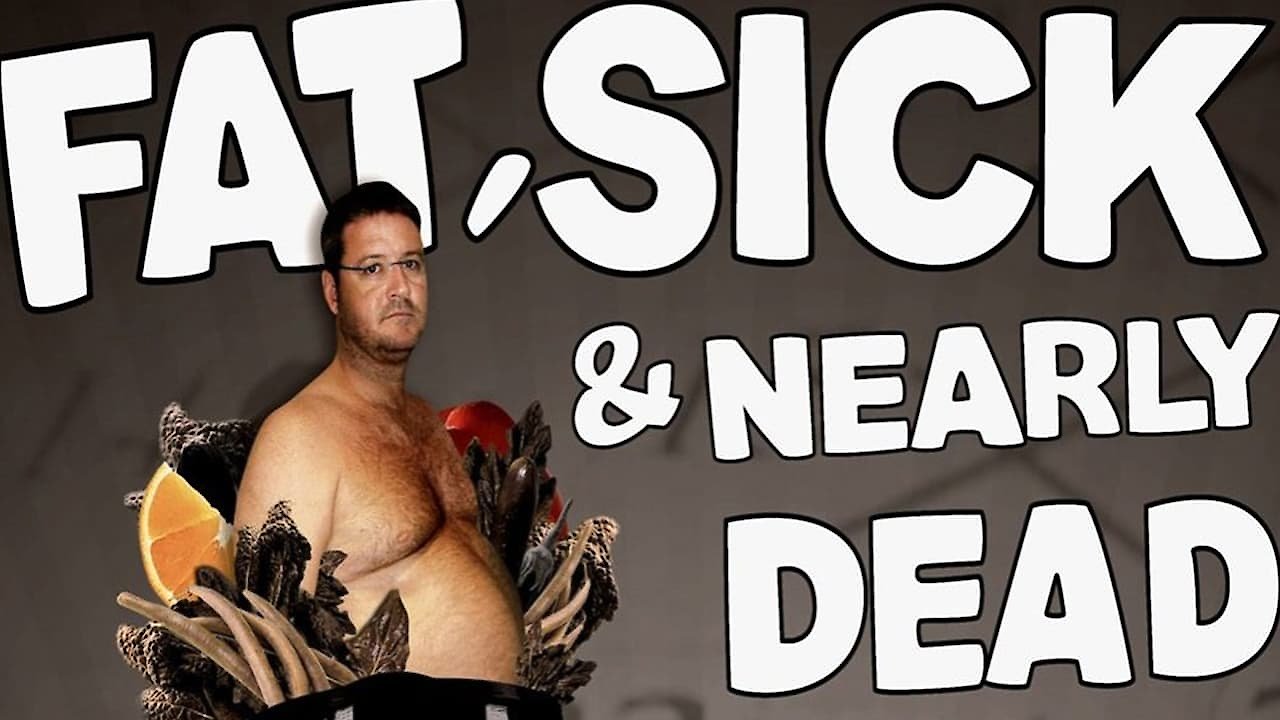
Joe Cross was a mess. There’s really no other way to put it. At 310 pounds, he was loaded up on Prednisone to manage a debilitating autoimmune skin disease called Chronic Urticaria. He felt like garbage. Most people in that position just accept it as the cost of living in the modern world, but Joe decided to do something radical—and he filmed the whole thing. That’s how we got the Fat Sick and Nearly Dead movie, a documentary that basically ignited the modern juicing craze and turned a middle-aged Australian businessman into an unlikely global health icon.
It’s been over a decade since the film dropped. You might think it’s outdated. You’d be wrong.
The premise was simple but terrifyingly intense: Joe would drink nothing but fresh green juice for 60 days. No solid food. No coffee. No booze. Just micronutrients extracted from kale, apples, celery, and lemons. He spent the first half of this journey driving across the United States with a juicer in the back of his car, talking to everyday Americans about their diets. It was a fascinating, often heartbreaking look at the "Standard American Diet" (SAD). But the real magic happened at a truck stop in Arizona where Joe met Phil Staples.
The Meeting That Changed Everything
Phil was a truck driver who weighed 429 pounds. He suffered from the exact same rare autoimmune condition as Joe. Seeing these two men—one who had already lost a significant amount of weight and the other who was literally eating himself to death—connect over their shared misery is the emotional core of the film.
Phil eventually took the plunge. Watching a man of his size transition from a diet of fast food to nothing but green liquid is visceral. It’s not just about the weight. It’s about the mental shift. The Fat Sick and Nearly Dead movie succeeds because it doesn't just preach about vitamins; it documents the raw, painful process of reclaiming a body that has been ignored for decades. Phil's transformation was arguably even more dramatic than Joe's, proving that the body has an incredible capacity to heal if you just stop getting in its way.
Is Juicing Actually Science or Just Hype?
Let’s be real for a second. Doctors aren't always thrilled about "rebooting" or "detoxing." The human body already has a liver and kidneys for that. However, the film makes a compelling case for the massive influx of micronutrients. Most of us are "overfed but undernourished." We eat plenty of calories, but our cells are starving for the stuff found in plants.
By removing the fiber—which is what juicing does—you're basically sending a nutrient IV drip straight to your system. Is it a long-term lifestyle? No. Joe Cross himself says it’s a "reboot." It’s a circuit breaker. It’s meant to reset your taste buds so that when you finally eat an orange or a piece of broccoli, it tastes like candy instead of cardboard.
There are critics, of course. Some nutritionists point out that you lose the beneficial fiber that keeps your gut microbiome happy. Others worry about the high sugar content if you use too many fruits like pineapples or beets. But for someone like Phil Staples, who was on the verge of a heart attack, the "risks" of a juice fast were nothing compared to the risks of his current lifestyle.
Why the Fat Sick and Nearly Dead Movie Still Matters in 2026
We are more obsessed with wellness than ever, yet we’re getting sicker. Type 2 diabetes and obesity rates haven't exactly plummeted since 2010.
The movie serves as a cultural time capsule that remains incredibly relevant because it focuses on the "why" rather than just the "how." Joe wasn't selling a specific brand of juice powder or a subscription app (at least not initially). He was selling the idea of personal responsibility. He showed that you don't need a fancy gym or a celebrity chef. You just need a Breville juicer and a lot of spinach.
It also touched on the social aspect of eating. Joe's conversations with people on the street revealed a deep-seated fear of healthy food. People would laugh at his green drink, calling it "swamp water," while they sat there clutching a liter of soda. It highlighted a weird psychological barrier: we’ve normalized poison and pathologized plants.
The "Mean Green" Recipe That Started It All
If you’ve seen the film, you know the recipe. It’s become a staple in the juicing world. If you haven't tried it, it’s surprisingly drinkable.
- 1 bunch of kale
- 4 stalks of celery
- 1 cucumber
- 2 Granny Smith apples
- 1/2 a lemon
- A thumb-sized piece of ginger
The ginger is the secret. It cuts through the "grass" taste of the kale and adds a spicy kick that makes you feel alive. Joe drank liters of this stuff.
What Happened After the Credits Rolled?
Life isn't a 90-minute movie. Maintenance is the hard part. Joe Cross has been very open about the fact that he has fluctuated in weight since the film. He’s human. He travels, he works hard, and sometimes he falls off the wagon. He even made a sequel, Fat, Sick & Nearly Dead 2, which focuses more on the community aspect and how to stay healthy in an unhealthy world.
Phil Staples had a tougher road. After a massive initial success and becoming a minor celebrity, he struggled with the pressures of his new life. Maintaining a 200-pound weight loss is a Herculean task when your old environment is still screaming at you to eat junk. It’s a sobering reminder that a "reboot" is just the beginning of a lifelong battle.
The Takeaway for Your Own Health
You don't have to go on a 60-day juice fast. Honestly, most people probably shouldn't. But the Fat Sick and Nearly Dead movie offers some universal truths that anyone can apply right now:
- Micronutrients are king. If your diet is 90% processed "stuff," your body is struggling. Try to get more plants in, whether you blend them, juice them, or just chew them.
- The body can heal. Chronic inflammation is often driven by what we put in our mouths. When you stop the influx of inflammatory foods, the results can be shocking.
- Community is the "X factor." Joe succeeded because he had a camera crew and a goal. Phil succeeded (initially) because he had Joe. If you're trying to change your life, don't do it in a vacuum.
- Taste buds are adaptable. Your cravings for sugar and salt aren't permanent. After three days of green juice, a plain almond starts to taste like a gourmet snack.
If you're feeling sluggish, bloated, or just "sick and tired of being sick and tired," watching this film is a great catalyst. It’s not about becoming a fitness model. It’s about getting off the medication, being able to play with your kids, and not feeling like your body is a prison.
Actionable Steps to Start Your Own Version of a Reboot
Stop overcomplicating it. You don't need a $500 juicer today.
- Start with one. Replace one meal a day with a high-nutrient green smoothie or juice. Just one. Do it for a week.
- Watch the documentary. It's usually available on various streaming platforms or YouTube. Watch it when you're feeling unmotivated.
- Audit your pantry. If it has an expiration date in 2029, it’s probably not "food" in the biological sense.
- Focus on "Add" not "Subtract." Instead of saying "I can't have pizza," say "I have to drink 16 ounces of green juice before I have the pizza." Usually, you'll end up eating less of the junk because your body actually feels satisfied.
- Consult a pro. If you are planning a radical fast like Joe's, check with a doctor first, especially if you're on medication. Prednisone and other drugs require careful management when your diet changes drastically.
The legacy of the Fat Sick and Nearly Dead movie isn't a diet plan. It's the realization that we aren't helpless. We have a massive amount of control over our biology, one glass of green juice at a time.