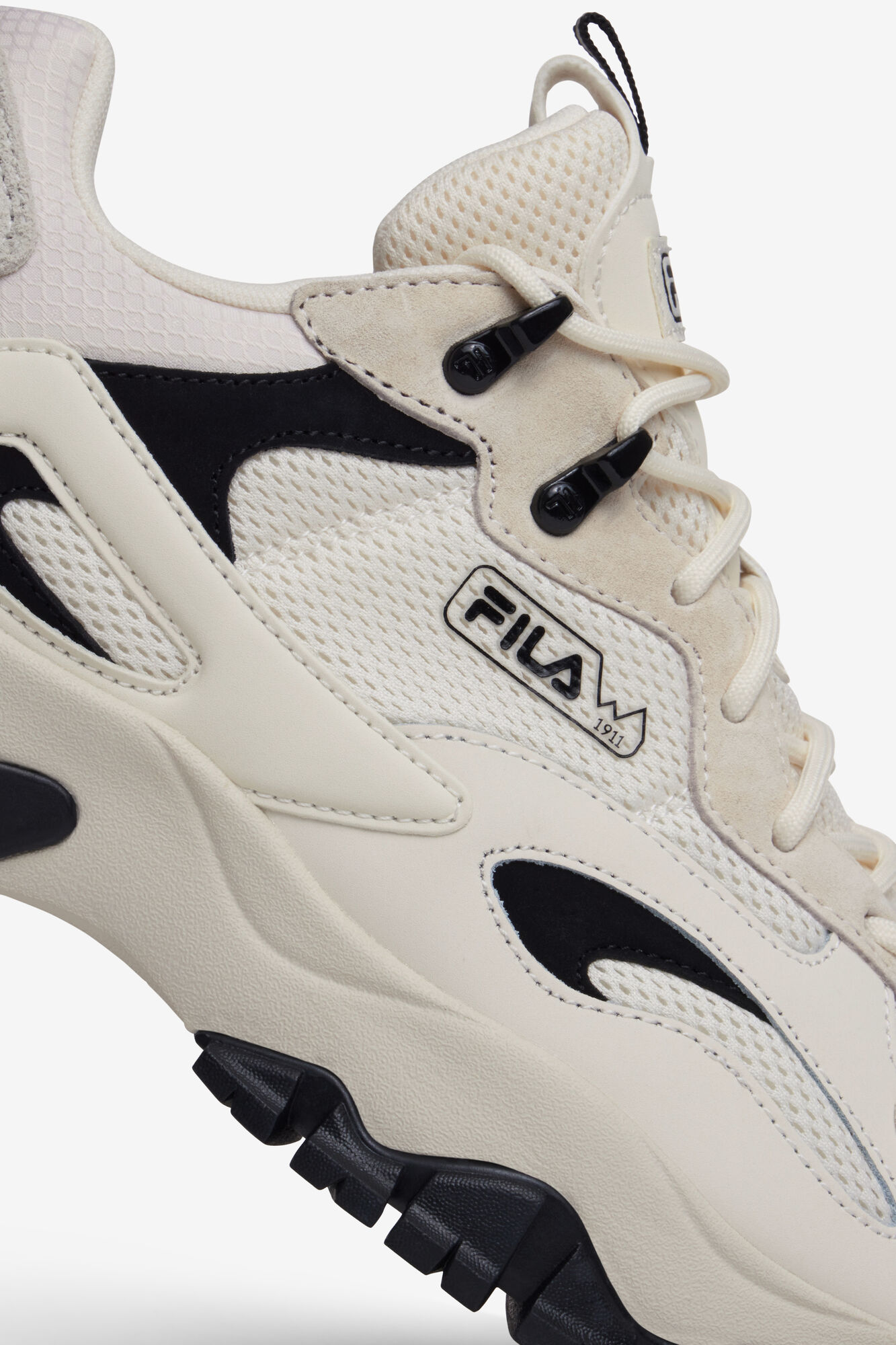
Honestly, the "dad shoe" trend was supposed to be dead by now. We all saw the headlines in 2022 and 2023 claiming that sleek, minimalist runners were taking back the throne. Yet, here we are in 2026, and the chunky aesthetic is still breathing. One specific model that refuses to go away—and for good reason—is the Fila Ray Tracer TR 2. It’s a mouthful of a name, but it represents a weirdly perfect intersection of 90s nostalgia and genuine ruggedness.
If you’ve spent any time looking at the original Ray Tracer, you know it was basically a lifestyle play. It looked cool at a concert or a coffee shop, but you wouldn’t want to step off the sidewalk in it. The TR 2 changes that math. By slapping a "TR" (Trail) designation on the end, Fila actually leaned into the outdoor-utility vibe that’s dominating streetwear right now. It's not a hardcore mountaineering boot, obviously. Don't try to summit Rainier in these. But for the person who wants that "gorpcore" look without spending $400 on technical gear? This is the sweet spot.
The Build: What’s Actually Under the Hood?
Most people assume these are just plastic and cheap foam. That’s a mistake. The Fila Ray Tracer TR 2 uses a pretty complex mix of leather, suede, and mesh. This isn't just for style points; the layering provides significant lateral support. If you’ve ever rolled an ankle in a flimsy knit sneaker, you’ll appreciate the stiffness here.
The midsole is the star. It's an EVA foam blend that feels surprisingly firm. If you’re looking for that "walking on a cloud" feeling of a modern carbon-plate runner, you’ll be disappointed. This is old-school cushioning. It’s dense. It’s stable. It feels like a shoe from 1996, which is exactly what the designers were going for.
Weathering the Elements
Is it waterproof? No. If you step in a deep puddle, your socks are toast. However, the TR 2 features a higher "mudguard" than the standard Ray Tracer. This extra overlay of synthetic material around the base of the upper does a decent job of repelling light splashes and grit. The lugs on the outsole are also much deeper. We’re talking about an aggressive traction pattern that actually bites into gravel and grass.
I’ve seen people complain about the weight. Let’s be real: these are heavy. They are "chunky" in every sense of the word. If you’re used to ultralight mesh shoes, these will feel like bricks for the first three days. But that weight translates to durability. Unlike modern "socks with soles" that fall apart after six months of heavy use, the TR 2 is built like a tank.
Why the Design Still Hits Different
There’s a specific tension in the design of the Fila Ray Tracer TR 2. It manages to look busy without looking messy. You’ve got the oversized Fila branding on the tongue and the side, but it's often rendered in tonal colors that keep it from feeling like a walking billboard.
The colorways are where Fila really wins. They’ve moved away from just "white and navy" and started experimenting with earthy teals, burnt oranges, and sandy beiges. It fits the "utility" vibe. It feels like something you’d wear with cargo pants or heavy denim.
People often compare these to the Balenciaga Triple S or the Yeezy 700. While the silhouette is similar, the Ray Tracer TR 2 is far more accessible. It doesn't feel like a "costume" shoe. It feels like a functional piece of footwear that just happens to be on-trend. It's the Everyman’s chunky sneaker.
Fit and Sizing Realities
Don't buy your normal size without checking first. The Fila Ray Tracer TR 2 tends to run a bit narrow because of all that internal padding. If you have wide feet, you’re going to want to go up at least half a size. The toe box is relatively shallow, too.
- Narrow/Standard feet: Stick to your true size.
- Wide feet: Go up 0.5 size.
- High arches: You might need to swap the insole. The factory one is pretty flat.
Addressing the "Fashion vs. Function" Debate
There is a loud group of hikers who hate shoes like this. They’ll tell you that "trail" shoes made by fashion brands are dangerous. They aren't entirely wrong, but they're missing the point. The Fila Ray Tracer TR 2 isn't trying to compete with Salomon or La Sportiva for technical trail dominance.
It’s a hybrid. It’s for the person who walks the dog on a dirt path, goes to a music festival in a dusty field, and then goes to dinner. It handles "light" off-roading with ease. The traction is genuinely better than your average Nike Air Force 1 or Adidas Superstar. If your "trail" is a well-maintained park path, this shoe is actually overkill.
[Image comparing the outsole of a standard sneaker vs the rugged lugs of the Ray Tracer TR 2]
Longevity and Maintenance
Maintenance is a bit of a pain. Because there are so many layers and different materials (suede, mesh, leather), you can't just throw these in the washing machine. Doing that will ruin the suede and potentially melt the glue holding that chunky midsole together.
Instead, use a soft-bristled brush for the mesh and a suede eraser for the overlays. The mesh bits trap dirt easily, especially in the lighter colorways. If you buy the "Cream/Gum" version, be prepared to clean them once a week if you actually take them outside. The darker, "Outdoor" inspired colorways are much more forgiving.
The Competitive Landscape in 2026
The market is crowded now. You’ve got the New Balance 9060 and the ASICS Gel-NYC fighting for this same space. So why pick the Fila?
Price is the biggest factor. Fila has consistently kept the Ray Tracer TR 2 under the $100 mark at most retailers. When everyone else is charging $150 or $180 for "heritage" sneakers, Fila is providing a similar look and durability for nearly half the price. It’s hard to argue with the value proposition. You're getting a lot of physical "shoe" for your money.
Real-World Performance Observations
I’ve tracked the wear patterns on these over several months of urban commuting and weekend park trips. The outsole holds up surprisingly well. Often, cheaper chunky shoes use a soft "blown rubber" that grinds down on concrete within weeks. The TR 2 uses a harder rubber compound that resists abrasion. The primary failure point is usually the inner heel lining. If you don't tie your laces properly and your heel slips, you'll rub through the fabric in about four months. Tie them tight.
Actionable Steps for Potential Buyers
If you’re on the fence about the Fila Ray Tracer TR 2, follow these steps to make sure you don't regret the purchase:
- Check Your Wardrobe: These shoes are bulky. They look weird with skinny jeans. They work best with "relaxed" or "straight" fit trousers that can sit over the tongue of the shoe.
- Ignore the "Trail" Hype for Real Hiking: If you’re planning a 10-mile hike with 2,000 feet of elevation gain, go buy actual hiking boots. Use these for city walks, light trails, and everyday style.
- Invest in a Protector Spray: Since these have suede elements, spray them with a water-repellent coating immediately out of the box. It will save you hours of cleaning later.
- Wait for the Sale: Fila models frequently go on sale at major department stores and shoe outlets. Unless you need a specific limited colorway, you can often snag these for $60–$70.
- Test the Weight: Go to a physical store and hold one. If the weight bothers you in your hand, it will definitely bother you on your feet after an eight-hour day.
The Fila Ray Tracer TR 2 isn't trying to be the most advanced shoe on the planet. It’s a sturdy, well-priced, aesthetically loud sneaker that handles the "urban trail" better than most of its competitors. It’s a reliable workhorse for anyone who likes their footwear with a bit of 90s muscle.