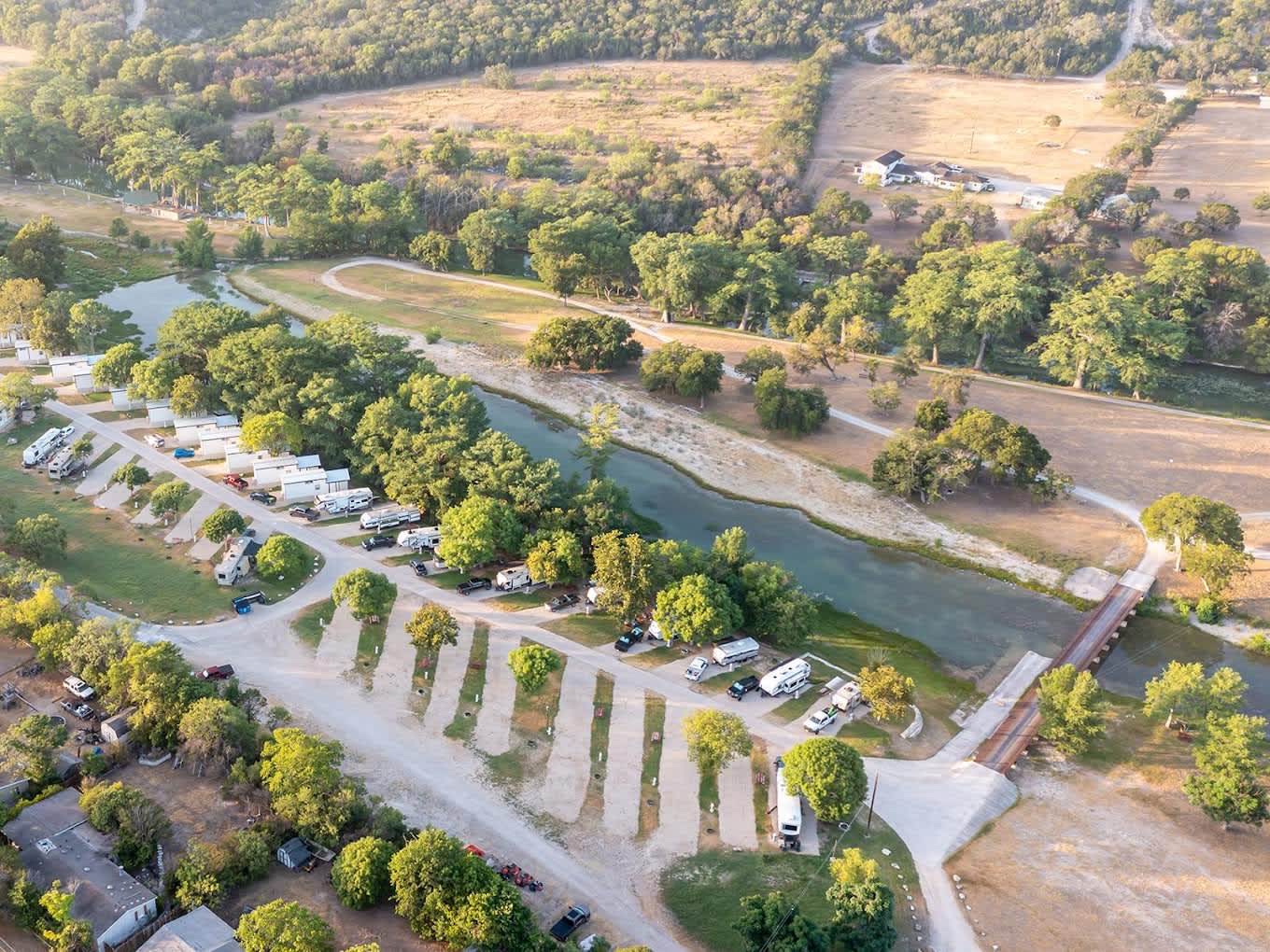
Texas is big. You know that. But the Texas Hill Country? That’s a different beast entirely. It’s where the flat coastal plains finally give up and crumble into limestone cliffs, spring-fed rivers, and those twisted, stubborn live oaks that look like they’ve seen a few centuries of droughts. If you’re looking for a Texas Hill Country campground, you aren’t just looking for a place to pitch a tent. You’re looking for a way to escape the humidity of Houston or the concrete sprawl of Dallas.
People think they can just drive west of Austin and find a spot. Sometimes you can. Most of the time, though, you’re staring at a "No Vacancy" sign at Garner State Park because you didn't book eleven months in advance. It’s frustrating.
The Hill Country stretches across roughly 25 counties. It’s a massive geographic uplift. Because most of the land in Texas is privately owned—about 95% of it—finding high-quality public access for camping is actually harder than you’d think. You have to know where the pockets of state land are, or which private ranches have opened their gates to Hipcampers and RVers.
Why Garner and Enchanted Rock Are Always Full
Let’s be real. Garner State Park is the heavyweight champion of Texas camping. It’s iconic. People go there for the Frio River and the nightly summer dances that have been happening since the 1940s. But honestly? It can feel like a parking lot in July. If you want that crystal clear water, you have to fight for it.
Enchanted Rock State Natural Area is another one. It’s a massive pink granite pluton. It’s beautiful, spiritual, and incredibly fragile. Because the ecosystem on the summit is so delicate—tiny shrimp live in the vernal pools up there—the park rangers are strict about capacity. If you don't have a reservation, don't even bother driving out from Fredericksburg. You'll just be turning around at the gate.
The trick to a good Texas Hill Country campground experience is looking at the "B-sides." Everyone goes to the hits. The deep cuts are where the real magic is.
The Geography of a Great Campsite
What makes this region special is the karst topography. Basically, the ground is like Swiss cheese. Rainwater filters through limestone, hits an impermeable layer, and shoots out as springs. This is why places like Blue Hole in Wimberley or Krause Springs in Spicewood exist.
If you are camping near the Guadalupe River, you’re dealing with a different vibe than the Llano River. The Guadalupe is the party river. It’s heavy on the tubing, heavy on the crowds. The Llano? That’s for the fly fishermen and the people who want to see a Bald Eagle.
Inks Lake: The Constant Level Secret
Most Texas lakes rise and fall based on how much it rains. It's depressing to camp on a "lake" that is actually just a mudflat. Inks Lake State Park is different. It’s part of the Highland Lakes chain, and it stays at a constant level.
- The water is always there.
- The rocks are great for jumping (check the depth first, seriously).
- The Devil’s Waterhole is a short hike from the campsites and it’s legendary.
The campsites at Inks Lake are tucked into the mesquite and cacti. You get a lot of privacy compared to the open-field camping you find in West Texas. Plus, you’re close to Longhorn Cavern State Park. You can camp above ground and then go 130 feet below ground for a tour of a cave that was once used as a speakeasy during Prohibition.
Private Ranches vs. State Parks
State parks are cheap. Usually $20 to $30 a night plus daily entrance fees. But they have rules. Quiet hours. No alcohol in public view (keep it in a koozie, folks).
Private campgrounds in the Hill Country are where things get weird and wonderful. You have places like Dos Rios near Mason. It’s rugged. It’s on the Llano River. You might see a cow wander through your campsite. You can hunt for topaz—the Texas state gem—in the nearby creek beds. You won't find that at a KOA.
Then there’s the luxury side. Glamping has exploded here. You can stay in a safari tent with AC and a king-sized bed near Dripping Springs. Is it "camping"? Purists say no. Your back, after sleeping on a real mattress, says yes.
The Best Time to Go (It’s Not When You Think)
Most people visit in the summer. That is a mistake.
Unless you are literally submerged in a spring-fed river, July and August in the Hill Country are brutal. It’s 100 degrees with high humidity. The mosquitoes are the size of small birds.
October through April is the sweet spot.
- November: The Spanish Oaks and Cypress trees turn a fiery red.
- March: The Bluebonnets and Indian Paintbrushes explode.
- January: It’s cold, sure, but you can actually have a campfire without a burn ban.
Burn bans are a huge deal. Because the Hill Country is prone to extreme drought, counties often ban all outdoor fires. There is nothing sadder than a Texas Hill Country campground trip where you can’t roast a marshmallow. Always check the county fire marshal's website before you pack the firewood. If there's a ban, bring a propane stove.
Hidden Gems You Should Actually Check Out
Pedernales Falls State Park is underrated for camping. The river here isn't for swimming in the traditional sense—it's a series of massive limestone slabs where the water creates wild chutes and pools. It’s dangerous if it rains upstream because of flash floods, but on a clear day, it’s like being on another planet. The hike-in sites are some of the best in the state if you want to get away from RV generators.
Colorado Bend State Park is another one. It’s a bit of a drive, way up near San Saba. It feels remote. The main draw is Gorman Falls, a 70-foot "living" waterfall made of travertine. The camping is primitive. No electricity at the sites. Just you, the stars, and the coyotes howling at 3:00 AM.
Camping with Kids in the Hills
If you have kids, head to Yogi Bear’s Jellystone Park in Kerrville. It’s basically a waterpark that happens to have RV spots. It’s loud. It’s busy. But your kids will be exhausted by 8:00 PM, which is the ultimate goal of any parent on vacation.
If you want a middle ground, Lost Maples State Natural Area is fantastic. It has a small, manageable campground and "Monkey Rock," which kids love. The canyons there protect a rare stand of Uvalde Bigtooth Maples. When the leaves change, it looks like Vermont decided to move to Texas for a week.
Wildlife and Safety: What’s Actually Trying to Kill You?
Texas gets a bad rap for its critters. Yes, there are rattlesnakes. Western Diamonds love the rocky ledges. But they don't want to meet you any more than you want to meet them. Wear boots. Don't stick your hand in a hole you can't see into.
The real danger? Scorpions. Specifically, the Striped Bark Scorpion. They love woodpiles. They love crawling into your shoes if you leave them outside the tent. Shake your boots. Always.
And then there are the feral hogs. They are an invasive species and they are everywhere. They usually avoid people, but they will tear up your campsite if you leave a bag of chips on the picnic table. Keep your food locked in your vehicle.
Planning Your Route
The Hill Country isn't just one vibe.
- The Wine Country: Around Fredericksburg and Hye. Camp here if you want to visit 50+ wineries.
- The Deep Hills: Around Leakey and Concan. This is the rugged, high-relief terrain.
- The Highland Lakes: Near Burnet and Marble Falls. Best for boating and fishing.
If you're coming from Austin, you can hit Hamilton Pool (reservation only!) and then head west toward Pace Bend. Pace Bend is unique because it’s on Lake Travis and features high limestone cliffs you can jump off of—assuming the lake level is high enough. If the lake is low, those cliffs become 40-foot drops onto rocks, so use your brain.
Practical Advice for Your Next Trip
If you want to secure a spot at a premier Texas Hill Country campground, you need to use the Texas Parks and Wildlife Department (TPWD) reservation system. It opens up five months in advance for campsites. Set a calendar alert.
- Check the water levels. The Frio and Guadalupe can dry up to a trickle during a bad drought. Use the USGS streamflow gauges online to see if the river is actually flowing before you bring your kayak.
- Bring a rug. The soil here is often a mix of caliche and red clay. It sticks to everything. A small outdoor rug outside your tent or RV door will save your sanity.
- Hydrate. The dry air in the hills is deceptive. You’re sweating more than you realize.
The Hill Country is changing. It's getting more crowded as Austin and San Antonio expand. But once you get out past the suburbs, past the "Coming Soon" signs for new subdivisions, you hit that limestone. You smell the cedar (Ashe Juniper, technically). You see the Milky Way because the "Dark Sky" initiatives in towns like Dripping Springs and Wimberley actually work.
It’s worth the drive. Just remember to pack out your trash. These ecosystems are tough, but they aren't invincible.
Actionable Next Steps
- Book now: If you want a weekend in March or April, you should have booked yesterday. Check for mid-week cancellations on the TPWD site; they happen more often than you think.
- Get the app: Download "Texas State Parks" official app. it has offline maps which are a lifesaver because cell service in the canyons near Leakey is nonexistent.
- Gear up: Invest in a high-quality water filter if you're doing primitive camping at Colorado Bend or Hill Country State Natural Area (near Bandera). The water is "hard" and full of minerals, but safe if treated correctly.
- Support local: Stop in towns like Llano or Mason for BBQ. The Cooper's in Llano is the original, and it’s better than the ones in the big cities. Period.
The Hill Country is waiting. Go find a spot by the water and listen to the cicadas. It’s the best soundtrack Texas has to offer.