You’ve probably seen the clips. A crowded street, a flick of the wrist, and suddenly a watch is gone. It's the kind of effortless cool we’ve come to expect from Will Smith. But when Focus hit theaters in 2015, it wasn't just another action flick. It was a gamble. Smith was coming off the back of After Earth, a movie most of us would rather forget, and he needed a win. Honestly? He found it in a heist movie that prioritized vibes over logic.
Focus movie Will Smith became a shorthand for a specific kind of "grown man" era in the actor's career. It was sleek. It was sexy. And it introduced the world to a chemistry with Margot Robbie that was so intense it literally fueled tabloid rumors for months. If you’re looking for a deep, philosophical masterpiece, you're in the wrong place. But if you want to see how a master of misdirection actually operates, there is plenty to dig into here.
The Chemistry That Almost Broke the Internet
Let's talk about the elephant in the room. The spark between Will Smith and Margot Robbie.
At the time, Robbie was the "new girl" from The Wolf of Wall Street. Smith was the veteran. When they were cast together, people weren't sure if the age gap—about 22 years—would feel weird. It kinda did, but also didn't? Smith actually admitted in interviews that playing a "steamy" role was uncomfortable for him. He was used to being the "goofy kid." In Focus, he had to be the "grown man."
The directors, Glenn Ficarra and John Requa, knew what they were doing. They filmed in Buenos Aires and New Orleans, locations that feel heavy with humidity and secrets. You can see the heat on screen. This wasn't just acting; it was a physical performance. Their connection was so convincing that Warner Bros. immediately doubled down on it, casting them both in Suicide Squad shortly after.
That Insane 55 Scene Explained
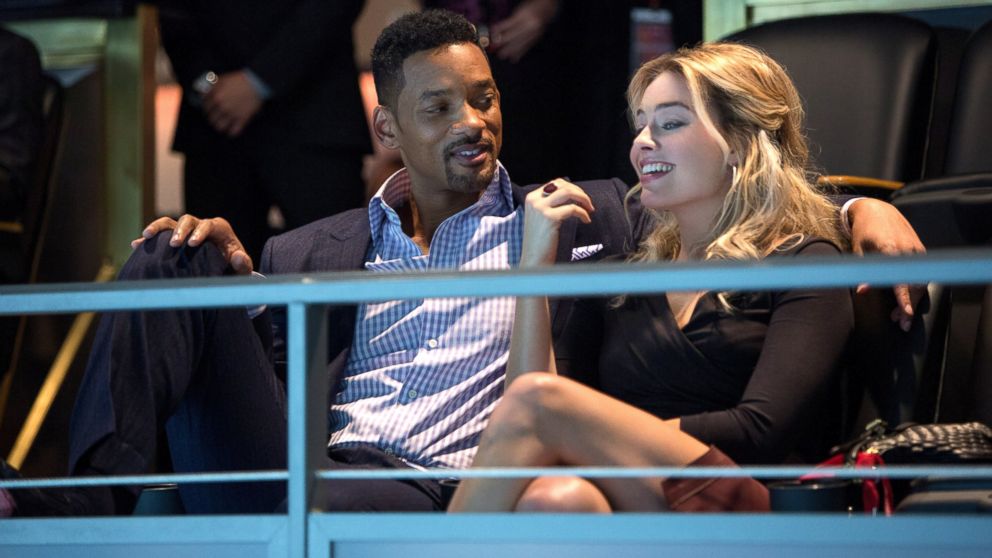
If you’ve watched the movie, you know the one. The skybox. The Super Bowl (or the "Championship Game," because lawyers). Nicky (Smith) starts making increasingly unhinged bets with a billionaire named Liyuan Tse, played by the brilliant B.D. Wong.
Nicky loses everything. Then, he bets it all on Jess (Robbie) guessing a random number on the field.
It feels like a cheap plot device until the movie explains priming. This is a real psychological concept. Throughout the entire day, Nicky’s crew had been bombarding Liyuan with the number 55. It was on the hotel doorman’s lapel. It was in the music. It was everywhere.
- Implicit Memory: Your brain records things you don't "see."
- The Outcome: When asked to pick a "random" number, Liyuan’s brain offered up 55 because it was the most familiar.
This scene is basically the heart of the movie. It’s not about stealing a wallet; it’s about stealing a person's agency. Apollo Robbins, a real-life "gentleman thief" and world-renowned pickpocket, was the consultant on set. He taught Smith and Robbie how to actually lift items. He didn't just teach them the moves; he taught them how to manage "focus." If you control where a person looks, you control what they know.
Why the Second Half Feels... Different
The movie is essentially two different stories stitched together by a three-year time jump. The first half is a gritty, fast-paced pickpocketing instructional in New Orleans. The second half is a high-stakes corporate espionage thriller in Argentina.
A lot of critics hated this. They felt the "con" got too convoluted. Nicky is hired by a racing team owner, Garriga (Rodrigo Santoro), to sell a fake fuel algorithm to a rival. But then Jess shows up as Garriga’s girlfriend, and everything goes sideways.
Is it a bit much? Yeah.
But it’s also where the movie gets honest. Nicky’s father, Bucky, had a rule: never get emotionally involved. "Die with the lie." The ending of the movie, which involves a fake shooting and a very real family betrayal, brings that home. It’s less about the money and more about whether two people who lie for a living can ever actually trust each other.
Real-World Performance
Despite mixed reviews (it sits around a 57% on Rotten Tomatoes), the movie did surprisingly well.
- Budget: Roughly $50 million.
- Global Box Office: Over $158 million.
- The "Netflix Effect": In recent years, Focus has lived a second life on streaming. It consistently hits the Top 10 whenever it's added to a library.
People like watching beautiful people do bad things in beautiful places. It's a simple formula, but it works.
Actionable Takeaways from the Master of Misdirection
You don't have to be a con artist to learn something from the Focus movie Will Smith starred in. The film actually touches on some pretty heavy psychological triggers that work in business and everyday life.
- Manage the "Focus": In any negotiation, the person who controls the narrative controls the outcome. Nicky wasn't just a thief; he was a director of attention.
- The Power of Priming: While you shouldn't use it to rob billionaires at football games, "priming" is a huge part of marketing. Subtle cues in an environment—colors, music, language—shape how customers feel before they ever see a price tag.
- Confidence is the "Con": The word "con" comes from "confidence." If you look like you belong in the room, people will assume you do. Jess’s transformation from a "novice" to a "femme fatale" is purely about her self-projection.
If you haven't seen it in a while, it's worth a rewatch just to look for the "number 55" clues hidden in the background of the first hour. It's a masterclass in detail.
To dive deeper into the world of cinematic heists, you might want to look at the work of Apollo Robbins. He has several demonstrations online that show exactly how the "misdirection" used in the film works in the real world. You'll never look at your own pockets the same way again.