He wasn't the fastest. Honestly, George Harrison would be the first person to tell you he wasn't a technical virtuoso in the vein of Eric Clapton or Jimi Hendrix. But man, the tone. If you close your eyes and listen to the opening chord of "A Hard Day’s Night" or the weeping solo on "While My Guitar Gently Weeps," you aren't just hearing a song. You’re hearing a specific George Harrison guitar choice that changed how everyone else played.
He was a gear nerd before the term existed. While John Lennon mostly stuck to his Rickenbacker 325 and Paul McCartney became synonymous with the Hofner violin bass, George was a restless explorer. He cycled through Gretsch, Rickenbacker, Gibson, and Fender, often shifting the entire sound of The Beatles just by switching his amp settings or picking up a new 12-string. It wasn't just about the notes. It was about the texture.
People forget how much the early British invasion sound relied on George’s obsession with Chet Atkins. That "Country Gent" sound defined 1964. But then, almost overnight, he pivoted. He found the sitar, he found the Les Paul, and eventually, he found the Rosewood Telecaster. Each instrument marked a literal era of music history.
The Gretsch Era and the Birth of Jangle
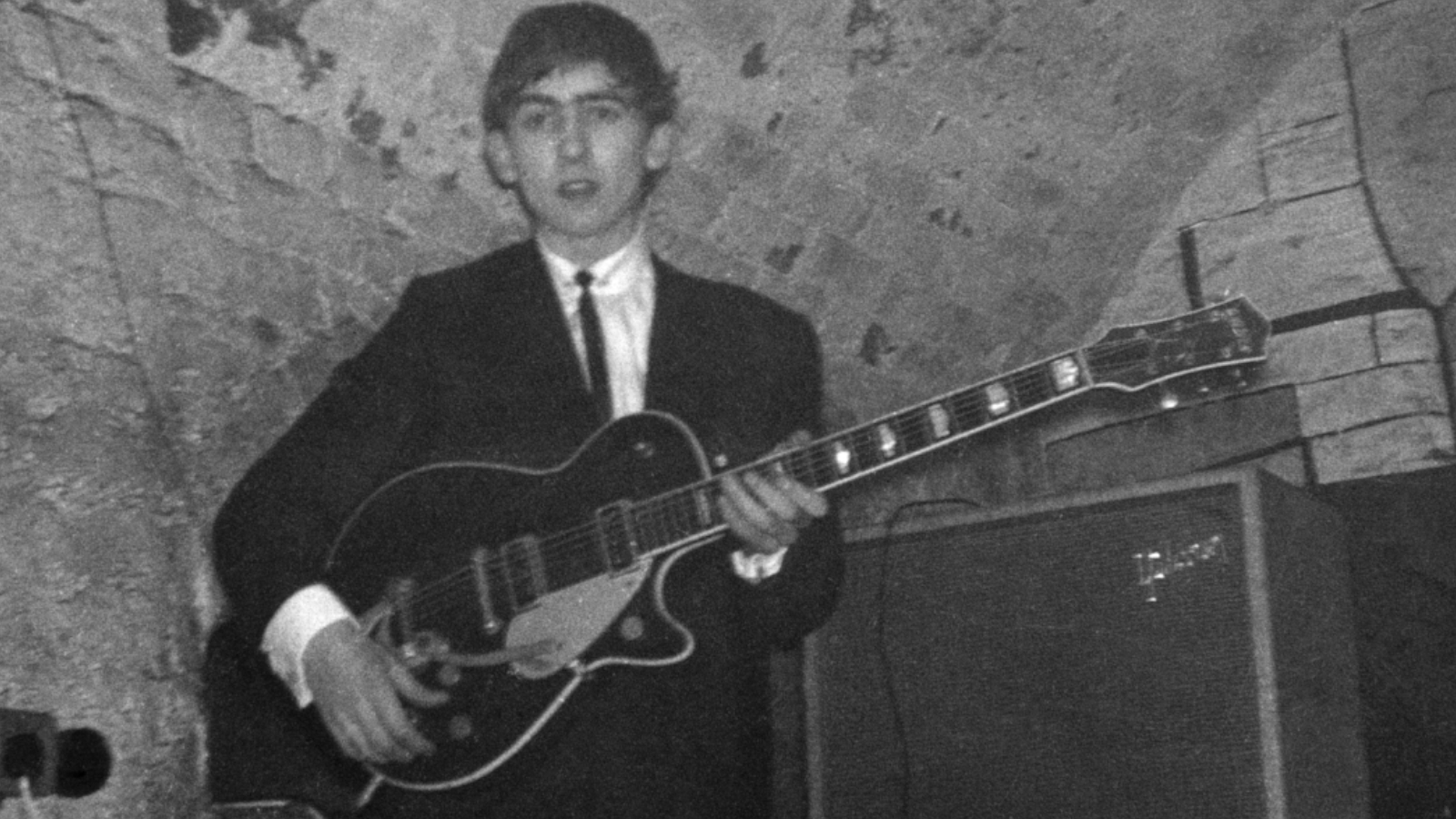
When The Beatles hit Ed Sullivan, the world saw a Gretsch Country Gentleman. It looked like a piece of high-end furniture. Big. Brown. Sophisticated. George bought his first real Gretsch, a Duo Jet, from a sailor in Liverpool for about £75. He called it his first "real" guitar. It was a black, chambered-body beauty that he later painstakingly restored in the 1980s because it meant that much to him.
The Gretsch sound is weird. It’s not quite a hollow body, not quite a solid body. It has this "snap" to it. On those early records, George used a Gretsch Tennessean and the Country Gent to provide the rhythmic backbone that allowed John’s chunky chords to breathe. If you listen to "She Loves You," that bright, punchy lead line is pure Gretsch.
But then came the Rickenbacker 360/12. This is arguably the most influential George Harrison guitar in terms of cultural impact. In 1964, while the band was in New York, Francis C. Hall of Rickenbacker brought over a new 12-string prototype. George took to it immediately. That "chiming" sound became the literal blueprint for The Byrds, Tom Petty, and basically every indie rock band in the 1990s.
It was a nightmare to tune. The headstock design was cramped, and the bridge was a puzzle. George didn't care. He used it to write "If I Needed Someone" and "Ticket to Ride." It gave The Beatles a folk-rock edge before folk-rock was even a commercial category.
When Things Got Heavy: Lucy and the Les Paul
By 1966, the jangle was fading. The Beatles were getting weird. They were in the studio, experimenting with backwards tapes and Indian classical music. George’s interest shifted away from the thin, bright tones of the Rickenbacker toward something thicker. Something with sustain.
Enter "Lucy."
Lucy is a 1957 Gibson Les Paul Goldtop that had been refinished to a deep, "cherry" red. It’s one of the most famous guitars in existence, mostly because of who gave it to him. Eric Clapton handed it over in 1968. It’s the guitar you hear on "While My Guitar Gently Weeps," though famously, Clapton played the solo on the record because George felt the song needed a specific "vailing" sound he couldn't quite get.
Why Lucy Was Different
Most Les Pauls from that era were heavy beasts. Lucy had a soul. George used it throughout the White Album sessions and Let It Be. It represented his transition from a "pop" guitarist into a serious, blues-influenced musician. It was a more mature sound. Darker. A little more dangerous.
The Rosewood Telecaster and the Rooftop Concert
If you ask a die-hard gear head about the ultimate George Harrison guitar, they won't say the Gretsch. They’ll point to the 1968 Fender Rosewood Telecaster.
Fender wanted to break into the "boutique" market, so they built a prototype Telecaster made entirely of solid rosewood. It was incredibly heavy. It looked like a dark chocolate bar with strings. They flew it over to London in its own seat on a plane just to get it to George in time for the Get Back sessions.
You can see it clearly in the Get Back documentary. It’s the guitar he plays on the roof of Apple Corps. It’s the sound of "Don’t Let Me Down" and "Get Back." It has a very specific, compressed "thump" that you can't get from an ash or alder body.
- Weight: It was a literal shoulder-breaker.
- Finish: Satin polyurethane, which gave it that matte, understated look.
- Electronics: Standard Telecaster pickups, but the wood darkened the resonance significantly.
George eventually gave the guitar away to Delaney Bramlett, but it eventually made its way back to the Harrison estate. It remains a symbol of the end of the band—the last great tool of his Beatles tenure.
The Slide Revolution and the Later Years
After The Beatles broke up, George’s playing style changed fundamentally. He stopped trying to be a "lead" guitarist in the traditional sense and became a master of the slide. This is where the Fender Stratocaster comes in.
Specifically, "Rocky."
Rocky was a 1961 Sonic Blue Stratocaster that George and John bought together in 1965. George eventually took some Day-Glo paint and fingernail polish to it, turning it into a psychedelic masterpiece. You can hear it on the "All You Need Is Love" solo. But in his solo years, George used Strats to refine a slide technique that is instantly recognizable. He played with a microtonal precision that most Western guitarists ignore. He wasn't just sliding between frets; he was finding the notes between the notes, a direct influence from his years studying the sitar with Ravi Shankar.
Misconceptions About George’s Gear
A lot of people think George used a Vox AC30 for everything. That's not true. While Vox was the "official" amp of the British Invasion, by the time they were recording Sgt. Pepper, George was leaning heavily on Fender Showman and Twin Reverb amps. He wanted clarity. He wanted to hear the nuances of the strings.
Another myth? That he hated the Fender Stratocaster early on. In reality, he desperately wanted one in the early 60s but couldn't afford it or find one in Liverpool. He ended up with the Gretsch because it was the closest thing to a "professional" American guitar he could get his hands on at the time.
What You Can Learn From George's Setup
If you’re a guitar player trying to capture that George Harrison guitar magic, you have to stop thinking about speed. George played for the song. He viewed the guitar as a compositional tool rather than an ego extension.
- Focus on "Chime": If you're playing a 12-string, don't over-saturate it with distortion. Keep it clean. Let the octaves do the work.
- The "Middle" Position: George often used both pickups on his Gretsch or Gibson to get a hollow, woody tone that sat perfectly in the mix without stepping on the vocals.
- Experiment with Wood: The Rosewood Telecaster proved that the material of the guitar changes the fundamental frequency. If your sound is too "bright," try a guitar with a darker wood profile or a rosewood neck.
- The Slide is Vocal: When playing slide, George thought like a singer. He used wide, slow vibrato and focused on the melody rather than fast blues licks.
How to Modernize the Harrison Sound
You don't need a $20,000 vintage Gretsch to sound like George. Modern reissues, like the Gretsch Electromatic series or the Squier Classic Vibe Telecasters, get surprisingly close. The key is in the phrasing.
George was a master of the "less is more" philosophy. He would wait measures at a time just to hit one perfect, ringing note. In a world of "shredders," that restraint is actually the hardest thing to learn.
If you want to dive deeper, start by listening to the isolated guitar tracks from the Abbey Road sessions. You’ll notice how clean his signal actually was. Even on the "heavy" tracks, there’s a definition and a separation of notes that modern high-gain playing often loses. That clarity is the secret sauce. It’s why those records still sound fresh sixty years later.
Go pick up a slide. Tune your guitar to an open E or G. Try to play the melody of "My Sweet Lord" without looking at your hands. You’ll find that George wasn't just playing a guitar; he was painting with it. That’s the real legacy.
Actionable Next Steps for Enthusiasts:
- Track Down a "Top Boost" Circuit: If you want the early Beatles tone, look for an AC30-style pedal like the Vox Mystic Edge or the Catalinbread Galileo.
- Study the 12-String: Listen to "A Hard Day's Night" (the album) and pay attention to how George uses the 12-string to thicken the rhythm sections, not just the leads.
- Invest in a Glass Slide: George preferred the smoother, warmer tone of glass over metal. It’s essential for that "All Things Must Pass" era sound.
- Experiment with Flatwound Strings: For the authentic 1963-1965 "thump," try heavy-gauge flatwound strings on a hollow-body guitar. It kills the "zing" and replaces it with a percussive, jazzy mid-range.
The gear was just the vehicle. George Harrison was the driver. Whether it was a cheap Resonet or a custom Fender, he made it sound like a Beatle. That's the ultimate lesson: the hands matter more than the brand name on the headstock.
---