You’re standing in the bookstore or scrolling through Libby, and you see a cyborg Cinderella. It sounds a bit weird, honestly. But then you see the fan art and the glowing reviews, and you realize Marissa Meyer’s world is actually a massive, sprawling space opera. You want to dive in, but there’s a problem. Do you start with the prequels? Do you read the graphic novels in the middle? Figuring out the lunar chronicles series order isn’t as straightforward as just counting one to four. If you read Fairest too early, you’ve basically nuked the biggest mystery in the first three books.
Marissa Meyer didn't just write a trilogy. She built a universe. It involves a plague, a colony on the moon, and a bunch of broken people trying to stop a war. Most people think they can just follow the publication dates and call it a day. That's a mistake. Well, it's not a "mistake" that will ruin your life, but it might ruin the emotional payoff of the finale.
Why the Order Actually Matters for Your Brain
If you’re the kind of person who hates spoilers, the lunar chronicles series order is a minefield. The series is technically a quartet—Cinder, Scarlet, Cress, and Winter. But then you have these novellas like The Queen's Army and Glitches. If you read Glitches first because it’s a prequel, you lose the slow reveal of Cinder's tragic backstory. You’re essentially reading the last page of a mystery novel before the first chapter.
Let's talk about Fairest. It’s the origin story of Queen Levana. She’s the villain. She’s awful. Meyer wrote it after Cress, and there is a very specific reason for that. If you see Levana’s trauma before you see her cruelty in the main books, her presence feels different. It softens the stakes. You need to hate her first. Trust me on this.
The "Purist" Way to Read the Series
Most fans will tell you to stick to the release dates. It's the safest bet. You experience the world the way the author revealed it to the public.
Start with Cinder. It’s the foundation. It introduces New Beijing, the Letumosis plague, and the general vibe of a world where your foot might be made of metal. Then move to Scarlet. This is where the world expands to France and introduces Wolf. Honestly, Wolf and Scarlet’s chemistry is probably the highlight of the whole series for a lot of people.
After that, you hit Cress. This is the Rapunzel retelling, but she's a hacker trapped on a satellite. It’s thick. It’s dense. It’s where all the plot threads start to tangle up. This is usually where people get confused about where to slot in the extra stories.
Where do the novellas go?
The collection Stars Above contains almost all the short stories. Some people try to read these chronologically. Don't. If you read "The Little Broomstick" (which is about Carswell Thorne as a kid) before meeting him in Scarlet, you lose the charm of his introduction. He’s supposed to be a mystery.
- Cinder (Book 1)
- Scarlet (Book 2)
- Cress (Book 3)
- Fairest (Levana’s backstory – read this now to understand her motives before the finale)
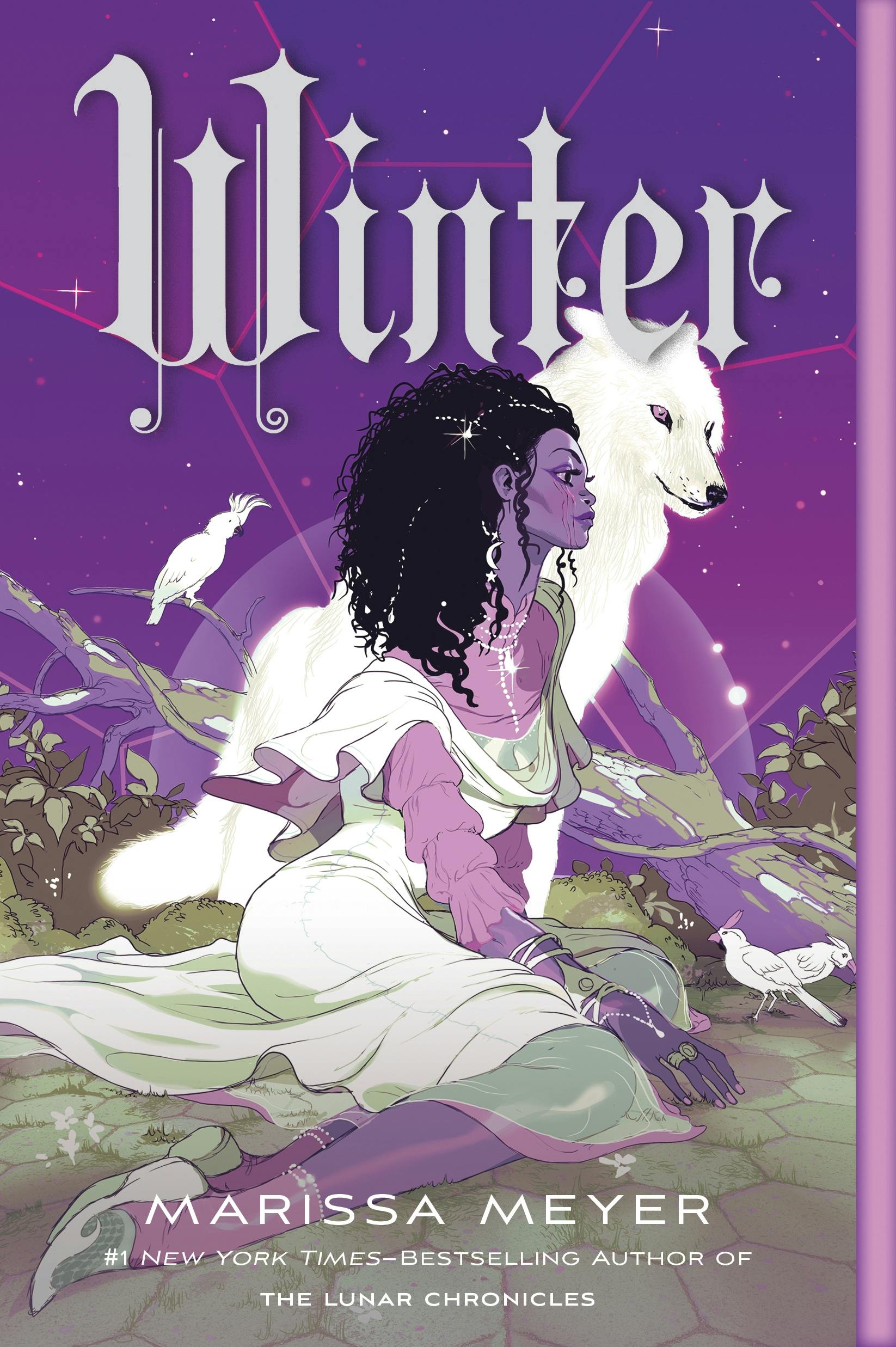
- Winter (The massive 800-page conclusion)
- Stars Above (The anthology – read this last to fill in the gaps)
- Wires and Nerve (The graphic novels – these take place after the main story)
The Problem with Fairest
Some readers argue you should read Fairest after the whole series is over. I disagree. Reading it between Cress and Winter gives you the perfect amount of context for the final battle. You see the tragedy of the Lunar crown. You see why the people of Luna are so terrified. It makes the events in Winter feel heavier. Without it, Levana is just a "mean queen." With it, she's a terrifyingly broken human being.
It's a short read, too. You can knock it out in an afternoon. It functions as a bridge.
What About the Graphic Novels?
This is where the lunar chronicles series order gets a bit "extra." Wires and Nerve Volume 1 and 2 are graphic novels focused on Iko. Iko is the android with a personality that basically carries the humor of the series.
These aren't just "bonus content." They are legitimate sequels. They deal with the fallout of the peace treaty and the rogue Lunar soldiers left on Earth. If you stop at Winter, you’re missing the actual ending for several side characters. Plus, seeing the characters drawn out is a nice change of pace after reading thousands of pages of prose.
The Chronological Trap
You might find a list online that tells you to read the stories in the order they happen in time. This starts with "The Keeper," then "Glitches," then "The Queen's Army."
Stop.
That is for a second-time re-read only. Chronological order ruins the pacing. It ruins the reveals. It makes the world-building feel like a chore instead of a discovery. Meyer wrote Cinder first for a reason. She wanted you to be as confused as Cinder is about her own identity. If you read the prequels first, you know everything. The tension dies.
Missing Pieces in Stars Above
Stars Above isn't just a junk drawer of cut scenes. It contains "Something Old, Something New," which is the actual epilogue to the entire series. It takes place at a wedding. If you’ve spent months living with these characters, you need this story. It provides the closure that Winter—being a high-stakes war book—didn't quite have the space to fully explore.
There’s also a story in there called "The Princess and the Guard" which covers Winter and Jacin's childhood. It’s heartbreaking. Reading it after Winter feels like looking at an old photo album of friends you've grown to love.
Navigating the Spin-offs
Marissa Meyer also wrote Wires and Nerve, as mentioned, but people often get confused about Heartless or the Renegades trilogy. To be clear: those have nothing to do with Cinder. Heartless is a Wonderland prequel. Renegades is about superheroes.
If you are looking for more Lunar content, you are limited to the main six books and the two graphic novels. That's the ecosystem.
The Specific Breakdown of the Main Quartet
- Cinder: A mechanic in New Beijing deals with her horrible stepmother and a deadly virus. She meets Prince Kai. Everything goes wrong.
- Scarlet: A girl in rural France looks for her missing grandmother and finds a street fighter with secrets. They team up with Cinder.
- Cress: A hacker on a satellite has been spying on Earth for the Lunar Queen. She falls in love with a pilot she's never met.
- Winter: A princess on the Moon who refuses to use her "Lunar gift" is losing her mind. She's the key to the revolution.
Why This Series Still Hits in 2026
Sci-fi retellings are everywhere now, but the lunar chronicles series order remains a hot topic because the books haven't aged a day. They feel modern. They tackle themes of disability, identity, and political corruption without feeling like a lecture. Meyer’s ability to weave four different fairy tales into one cohesive rebellion is still the gold standard for YA crossovers.
Most people who bounce off the series do so because they got overwhelmed by the sheer volume of "extra" stories. Don't let the novellas scare you. They are snacks. The novels are the meal.
If you're worried about the commitment, just read Cinder. It works as a standalone-ish story. But I'm betting by the time you hit the cliffhanger ending, you'll be scrambling for Scarlet anyway.
Actionable Steps for New Readers
If you want the best experience, follow these exact steps:
- Buy the Box Set of the four main novels first. Don't worry about the extras yet.
- Read Cinder and Scarlet back-to-back. The transition between these two is the most seamless in the series.
- Pause after Cress. This is your moment. Go find a copy of Fairest. It’s essential for the emotional weight of the finale.
- Prepare for a marathon with Winter. It's the longest book by far. Clear your weekend.
- Finish with Stars Above. Specifically, save the story "Something Old, Something New" for the very last thing you read. It's the "happily ever after" you'll be craving.
- Pick up the Wires and Nerve graphic novels only if you find yourself missing the characters and want to see what happens to the world after the war officially ends.
By sticking to this path, you avoid the spoilers hidden in the prequels and maintain the narrative tension that Meyer spent years crafting. You’ll get the reveals exactly when you’re supposed to, and the character arcs will land with the maximum possible impact.