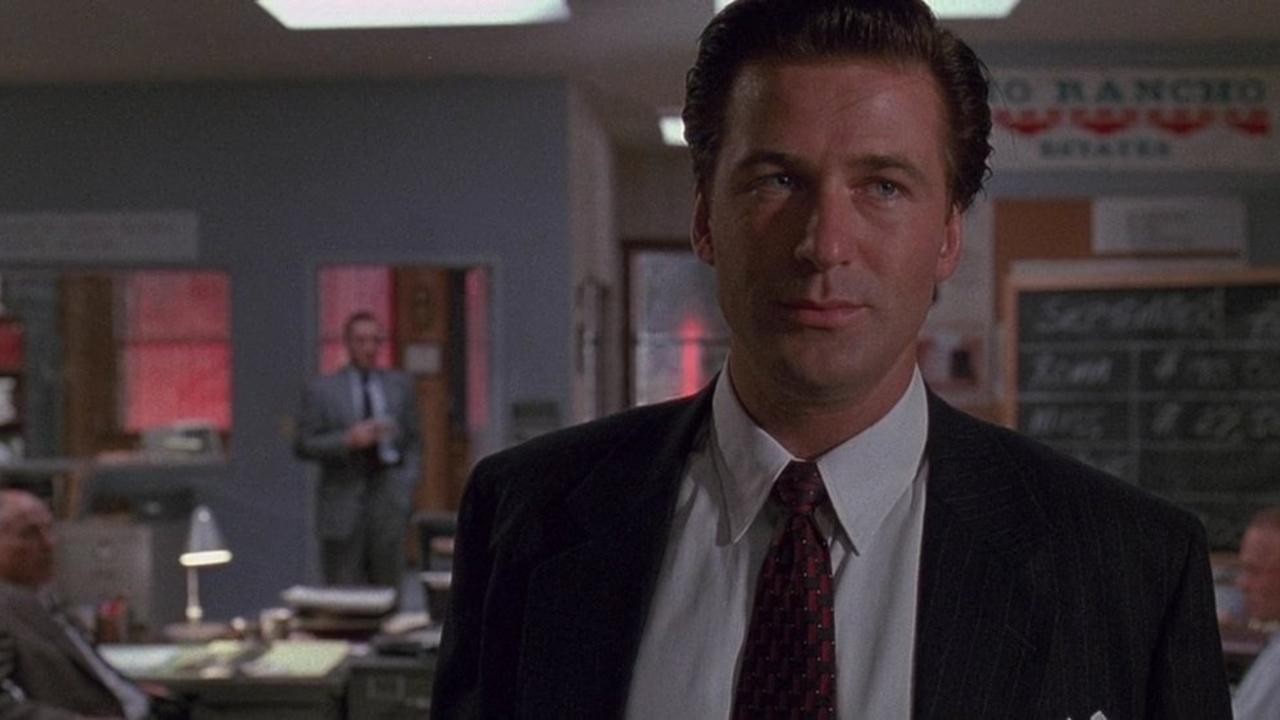
If you’ve ever worked in sales, or honestly, if you've ever just had a boss you wanted to throw a stapler at, you know Glengarry Glen Ross. It’s the ultimate "guy in a room talking" movie. But let's be real—the reason we’re still quoting it decades later isn't just David Mamet’s sharp-as-a-razor dialogue. It’s the Glengarry Glen Ross movie cast. This wasn't just a group of actors. It was a heavyweight title fight where every single person on screen was trying to out-act the guy sitting across the desk.
It’s actually kinda wild when you look at the names involved. You have Al Pacino, Jack Lemmon, Alec Baldwin, Ed Harris, Alan Arkin, and Kevin Spacey. In 1992, getting all these guys in one seedy real estate office was the cinematic equivalent of the 1992 Dream Team. Except instead of playing basketball, they were screaming about Cadillac Eldorados and "premium leads."
The Salesman’s Mount Rushmore: Breaking Down the Big Players
Most people remember the movie for one specific scene, but the actual meat of the story is carried by the "old guard" vs. the "new blood."
Jack Lemmon as Shelley "The Machine" Levene
Lemmon is the heart of this movie. Period. He plays Shelley Levene, a man who used to be a legend but is now basically drowning on dry land. You’ve probably seen that look in someone’s eyes—that desperate, sweaty need to catch a break. Lemmon’s performance is heartbreaking because he makes you feel the humiliation of a man who has to beg a younger, colder office manager for a chance to feed his family. He won the Volpi Cup for Best Actor at Venice for this, and honestly, he deserved an Oscar too.
Al Pacino as Ricky Roma
Then there’s Pacino. He plays Ricky Roma, the office's top dog. This was right around the time Pacino was in his "shouting" phase (Scent of a Woman came out the same year), but here, he’s actually quite subtle until he isn't. His seduction of Jonathan Pryce’s character in the Chinese restaurant is a masterclass in how to lie with absolute sincerity. He’s the only one who isn't scared of the "big bad" from downtown.
Alec Baldwin as Blake (The Character Who Wasn't Even in the Play)
Here is a fun bit of trivia: Alec Baldwin’s character, Blake, doesn't exist in the original Pulitzer Prize-winning play. Mamet wrote the scene specifically for the movie to up the stakes.
Baldwin is only on screen for about ten minutes. That's it. But in those ten minutes, he delivers the most famous "motivational" speech in history. "Coffee is for closers." "Always Be Closing." "A-B-C." He’s a shark in a suit, and he basically walks in, insults everyone's manhood, and walks out. It’s legendary.
Why the Glengarry Glen Ross Movie Cast Worked So Well
Ensemble casts often fail because everyone is trying to be the lead. That didn't happen here.
Kevin Spacey, playing the "company man" John Williamson, is perfectly punchable. He’s the guy who follows the rules because he doesn't have the talent to break them. Then you have Ed Harris as Dave Moss—bitter, loud, and constantly looking for a shortcut—paired with Alan Arkin’s George Aaronow.
Arkin is fascinating here. He’s the quietest guy in the room, but his face says everything. He looks like a man who has been beaten down by life so many times he’s forgotten what it feels like to stand up straight. The dynamic between Harris’s aggression and Arkin’s confusion is where a lot of the movie’s dark humor lives.
- The Power Dynamics: The movie is basically a series of "sits" (pitches).
- The Language: They speak in "Mamet Speak"—fast, overlapping, and full of profanity used like punctuation.
- The Setting: A rainy, dark New York that feels like a prison.
The Production Was Basically a Pressure Cooker
James Foley, the director, did something smart. He had the actors rehearse for weeks like it was a play. This meant by the time the cameras rolled, the rhythm was perfect. They filmed in Queens and Brooklyn, often in cramped sets that made the actors feel as trapped as their characters.
Believe it or not, because the budget was tight (about $12.5 million), most of these A-list stars took massive pay cuts. They weren't there for the paycheck; they were there because every actor in Hollywood wanted to say Mamet’s lines.
Does the cast still hold up?
Absolutely. In fact, if you watch it today, it feels even more relevant. The "hustle culture" Blake preaches is everywhere now. The desperation Shelley feels is a reality for millions. When you look at the Glengarry Glen Ross movie cast, you aren't just seeing famous faces; you’re seeing a specific type of American masculinity that is both terrifying and pathetic.
How to Watch Like a Pro
If you want to really appreciate what these guys did, watch the movie twice.
First time, just follow the plot—who stole the leads? Second time, ignore the plot. Just watch the background. Watch how Kevin Spacey reacts when Al Pacino is screaming at him. Look at Ed Harris’s hands when he’s trying to convince Arkin to commit a crime. The "acting" isn't just in the monologues; it's in the silences.
Practical Takeaways for Movie Buffs:
- Spot the Differences: Compare the movie to the play. The addition of Blake changes the entire pacing.
- Study the "Pitch": Watch Ricky Roma’s opening monologue. It’s a terrifyingly accurate look at how manipulation works.
- Check the 2025 Revival: If you’re a fan of this cast, keep an eye on the latest Broadway revival featuring Bob Odenkirk and Kieran Culkin. It’s a totally different energy, but the DNA is the same.
The Glengarry Glen Ross movie cast set a bar for ensemble acting that hasn't really been cleared since. It’s a movie about failure, but as a piece of art, it’s a total win. If you haven't seen it in a while, it's time to put the coffee down and hit play.
Next Steps for the Glengarry Fan:
To truly dive into the "Mamet-verse," your next move should be watching House of Games (1987). It features several Mamet regulars and explores similar themes of the "long con" and manipulation. Alternatively, tracking down the 1984 Broadway cast recordings provides a fascinating contrast to how Pacino and Lemmon interpreted these iconic roles.