If you stepped into a church anytime between the years 2000 and 2010, you heard it. That atmospheric, spacey guitar intro. The lyrics about galaxies and "Lord of all creation." It was everywhere. Even now, in 2026, God of Wonders Mac Powell remains a search term that won't quit because the song is basically the "Bohemian Rhapsody" of Contemporary Christian Music (CCM).
But here’s the thing. Most people think Mac Powell wrote it.
He didn't.
That’s probably the biggest misconception floating around the internet. Mac is the voice. He’s the soul of the track. But the actual pen-to-paper magic came from a completely different duo. If you want to understand why this song still hits people in the gut twenty-six years after it first dropped, you have to look at the weird, beautiful way it actually came together.
The "City on a Hill" Experiment
Back in 1999, the Christian music industry was trying something a little different. Instead of just releasing standard band albums, they wanted to create "community" projects. Steve Hindalong (from the band The Choir) was tasked with producing a compilation called City on a Hill: Songs of Worship and Praise.
He teamed up with Marc Byrd.
Byrd was a rock guy. Hindalong was more of a folk/alternative lyricist. They were sitting together when Byrd started playing a specific chord progression. Hindalong has gone on record saying the moment he heard those chords, he knew the song had to be "big."
He wasn't wrong.
The lyrics didn't come from a typical songwriting session. Hindalong actually pulled inspiration from the Book of Common Prayer. He wanted something that felt ancient but sounded like it belonged on a rock radio station. When they finished "God of Wonders," they didn't give it to just one person. They brought in Mac Powell from Third Day and Cliff and Danielle Young from Caedmon’s Call.
Why Mac Powell’s Voice Changed Everything
Let’s be honest. Without Mac’s grit, the song might have just been another pretty worship tune.
Mac Powell has that classic Southern rock growl. It’s thick. It feels heavy. When he sings "Lord of all creation," it sounds like he’s actually standing at the edge of a canyon. The contrast between his deep, gravelly tone and the lighter, more folk-oriented vocals of Cliff and Danielle Young is what gave the original recording its legs.
It felt like a conversation.
It wasn't just a performance; it felt like a bunch of friends sitting around a campfire, looking up at the stars, and losing their minds over how big the universe is. That’s the "secret sauce" that made it a staple.
God of Wonders Mac Powell and the Third Day Legacy
Even though the song was originally for a compilation, it became so synonymous with Third Day that they eventually recorded their own version for Offerings II: All I Have to Give in 2003.
For a lot of fans, that is the definitive version.
Third Day was at the absolute peak of their powers in the early 2000s. They were winning Grammys and Dove Awards left and right. Mac Powell was the face of the movement. Because they played the song at every single concert for the next two decades, the world basically "assigned" ownership of the song to Mac.
Honestly, it’s hard to blame them.
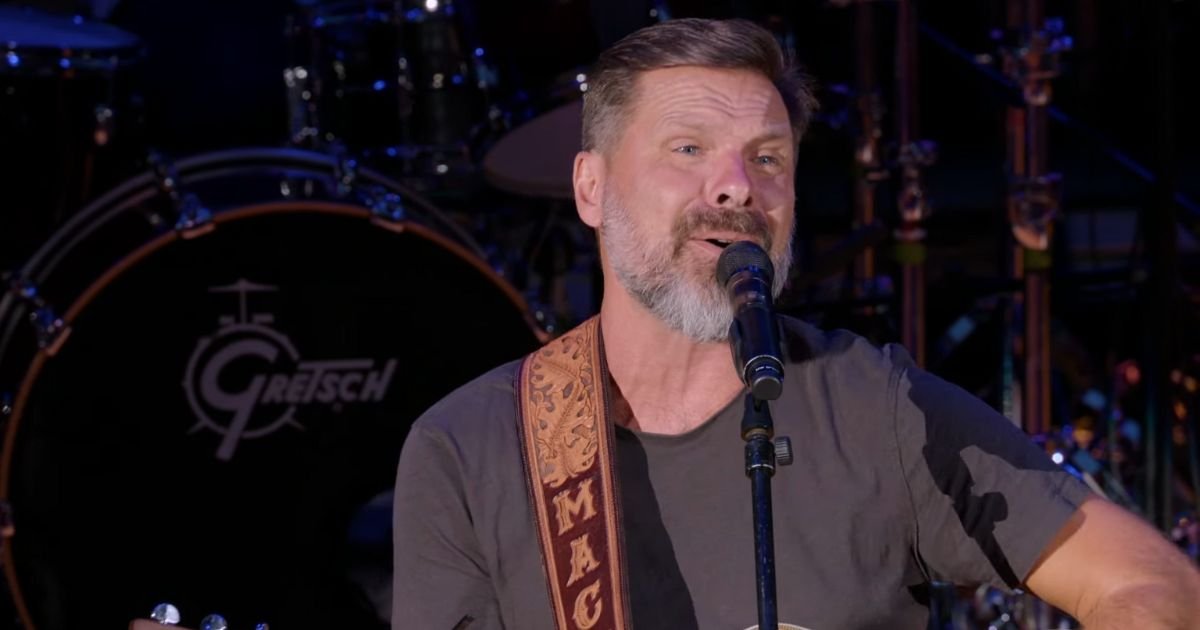
When you see Mac perform it live—like his recent 2023 performance at Red Rocks or his solo shows in 2025—you can see he still feels it. He isn't just "playing the hits." There is a genuine connection there.
The Lyrics: Why They Stuck
Most worship songs of that era were very "me-centric."
- "I feel this."
- "I need that."
- "Help me."
"God of Wonders" flipped the script. It was objective. It was about the "precious Lord of all." The second verse is where it gets people, though. It shifts from the "God of galaxies" to the God who comes close "when I stumble in the darkness."
That transition from the infinite to the intimate?
That’s the hook.
The 2026 Resurgence
Why are we still talking about this?
Well, Mac Powell has been incredibly busy lately. Since Third Day’s "Farewell Tour" back in 2018, Mac has transitioned into a massive solo career. But he knows what the people want. He recently released a 2025 single version of "God of Wonders" with the group Alive City.
It’s a bit more modern.
It has more of that "stadium pop" feel that’s popular now, but that voice is unmistakable. It’s also a frequent highlight of his Live from Red Rocks recordings. In an era where a lot of music feels over-processed and "fake," there’s something grounding about a guy with a guitar singing about the stars.
Common Questions About the Song
Did Third Day write God of Wonders? No. It was written by Marc Byrd and Steve Hindalong. Third Day just made it famous.
What album is it on? The original is on City on a Hill: Songs of Worship and Praise (2000). Third Day’s version is on Offerings II (2003).
Who is the female singer on the original? That’s Danielle Young from the band Caedmon's Call.
How to Experience the Song Today
If you're looking to dive back into this era of music, don't just stick to the studio tracks.
Go find the live videos.
Specifically, the "Farewell Tour" versions or Mac’s solo acoustic sets. There is a raw energy in those performances that the 2000-era production sometimes smoothed over. You can hear the crowd singing along—usually louder than the band.
It’s one of those rare songs that transcends "Christian music" and just becomes a part of the cultural furniture. Whether you're a lifelong fan or you just remember hearing it in the background of a youth group meeting years ago, it’s worth a re-listen.
Actionable Insight: If you want to play this on guitar, it’s surprisingly simple. It’s mostly G, D, and Am7. The "spacey" sound comes from using a lot of reverb and a slight delay. If you’re a singer, try to lean into the lower register during the verses like Mac does—it makes the jump to the high notes in the chorus much more impactful.
Check out Mac Powell's Live from Red Rocks album for the best modern capture of this classic. It’s probably the closest you’ll get to the original magic without a time machine.