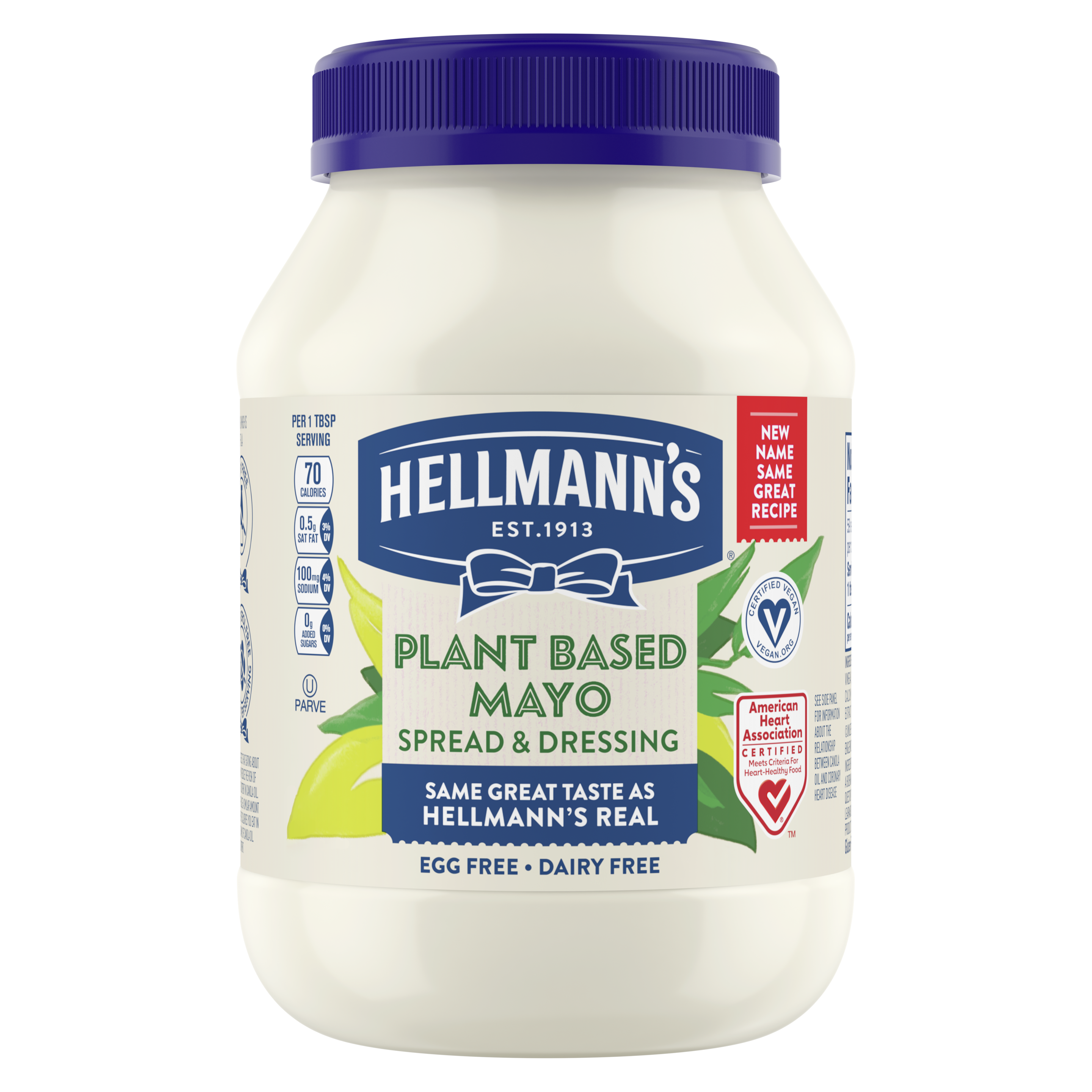
You know that specific, tangy "zip" you get from a jar of Hellmann’s? It’s iconic. For decades, that blue ribbon has basically been the gold standard for what a sandwich should taste like. So, when the brand decided to drop Hellmann's Plant Based Mayo, people were skeptical. I was skeptical. Usually, vegan swaps for creamy staples end up tasting like chalk or weirdly sweet oil. This one didn't.
It’s actually good.
Honestly, the transition to plant-based eating often hits a wall when it comes to condiments. You can find a decent burger substitute, but if the mayo is wrong, the whole vibe is ruined. Hellmann's—known as Best Foods west of the Rockies—spent a significant amount of time trying to crack the code on how to remove the eggs without losing the soul of the product. They didn't just want a "vegan alternative." They wanted a jar that you could swap into a potato salad at a BBQ without your uncle noticing a difference.
The Science of the "Schmear"
Let's get technical for a second because the chemistry here is actually pretty cool. Traditional mayonnaise is an emulsion of oil, vinegar, and lemon juice, held together by egg yolks. The lecithin in the yolk acts as the glue. To make Hellmann's Plant Based Mayo work, they had to find a plant-derived emulsifier that could mimic that specific mouthfeel.
They settled on modified maize starch and potato starch.
It sounds less "farm-fresh" than an egg, sure, but it’s what creates that thick, peaky texture that doesn't melt into a puddle the moment it touches a warm piece of sourdough. Unlike some boutique vegan brands that use pea protein—which can sometimes leave a bitter, earthy aftertaste—the starch-based approach keeps the flavor profile neutral.
The ingredient list is surprisingly short. You’ve got rapeseed oil (canola), water, sugar, spirit vinegar, salt, and natural flavorings. No artificial colors. No gluten. It’s also certified vegan by the European Vegetarian Union. It’s a straightforward formula that relies on the quality of the oil and the balance of the acidity to carry the weight.
Does it actually break?
If you've ever tried to cook with cheap vegan mayo, you know the "split" is the enemy. You put it in a hot sauce or try to bind a warm dip, and suddenly it’s just a layer of clear oil sitting on top of white goop.
Hellmann’s version holds up.
I’ve used it in everything from elote (Mexican street corn) to chocolate cake—yes, mayo in cake is a real thing, don't knock it—and it behaves exactly like the egg-based original. It has a high smoke point for things like "mayo searing" a steak or spreading on the outside of a grilled cheese sandwich. That’s the real test. If it browns and gets crispy without smelling like burnt chemicals, it’s a winner.
Why the "Plant Based" Label Matters More Than "Vegan"
It’s a branding move, but an important one. By labeling it Hellmann's Plant Based Mayo instead of just "Vegan Mayo," Unilever (the parent company) is aiming for the flexitarian crowd. These are the people who still eat bacon but want to cut down on cholesterol or eggs where they can.
According to data from the Plant Based Foods Association, a huge chunk of the growth in this sector isn't coming from strict vegans. It’s coming from people who just want a lighter footprint. Hellmann's is smart. They know that if they can capture the person who is "mostly vegan except for holidays," they win the market.
There’s also the price point factor. Historically, vegan substitutes were tucked away in the "health food" aisle and cost twice as much. Hellmann’s pushed this into the mainstream condiment aisle. It’s priced competitively, which removes the "luxury tax" often associated with ethical eating.
The Nutrition Reality Check
Let's be real: this isn't a "health food" in the sense that it's a salad. It’s still mayo.
- A standard serving (one tablespoon) contains about 70-90 calories depending on the specific regional recipe.
- It is naturally cholesterol-free because there are no animal products.
- The fat content is primarily unsaturated because of the rapeseed oil.
If you’re watching your macros, it’s basically a one-for-one swap with regular mayo. You aren't "saving" calories here, but you are avoiding the dietary cholesterol found in egg yolks. For people with egg allergies, this stuff is a genuine lifesaver. It’s one of the few products that doesn't feel like a compromise.
What Most People Get Wrong About the Taste
The biggest misconception is that it will taste like "nothing."
Actually, Hellmann's Plant Based Mayo is arguably a bit tangier than the original. Without the heavy richness of the egg yolk to coat the tongue, the vinegar and lemon notes pop a little more. Some people actually prefer this. It feels "cleaner" on the palate.
I’ve noticed it works better in coleslaw than the original. The acidity cuts through the cabbage crunch really well. However, if you are a die-hard fan of that deep, custardy richness that comes from a high-egg-count mayo, you might notice a slight lack of "weight" in the finish. It’s subtle. Like, 5% different.
The Environmental Angle (No Fluff)
Unilever has been pretty vocal about their sustainability goals. Moving toward plant-based oils is part of a larger strategy to reduce the carbon footprint of their supply chain. Eggs are resource-intensive. They require land, water, and feed for the hens. By shifting a portion of their massive production to plant-based fats, the sheer scale of Hellmann’s means they are actually moving the needle on carbon emissions.
They also use 100% recycled plastic jars for a lot of their range now. Is it perfect? No. It’s still a massive corporation. But in the world of global food logistics, these incremental shifts in how we produce "the basics" matter.
Better Ways to Use It
Don't just slap it on a turkey sandwich. Since it's an emulsion that doesn't break easily, you can get creative.
- Sriracha Mayo: It takes spice incredibly well. The neutral base allows the fermented funk of the chili to shine.
- Potato Salad Bind: Because it’s slightly more acidic, you don't need as much extra mustard or vinegar in your recipe.
- The "Grilled Cheese" Trick: Use it instead of butter on the outside of your bread. It spreads easier and gives a more even, golden-brown crust.
- Vegan Garlic Aioli: Microplane a clove of garlic into a quarter cup of the mayo with a squeeze of fresh lemon. It’s indistinguishable from a restaurant-made sauce.
The Verdict on the Texture
Texture is usually where vegan products fail. They're either too watery or too "gelatinous." Hellmann's got the "dollop" right. When you spoon it out, it holds its shape. It has that glossy sheen that looks right on a plate.
It’s interesting to see how other brands like Duke’s or Kraft have responded. Duke’s is known for its "no sugar" tang, while Hellmann’s has always been about that balanced, creamy mouthfeel. In the plant-based world, Hellmann's currently holds the crown for the most "normal" experience.
Where to Buy and What to Look For
You’ll find it in almost every major grocery store now. It usually sits right next to the "Real" Hellmann's. Look for the green lid and the "Plant Based" banner.
One thing to watch out for: storage. Like any oil-based product, keep it in a cool, dark place until opened, and then it must be refrigerated. Because it lacks some of the natural preservatives found in eggs (like certain enzymes), you want to make sure you aren't leaving it out on the counter during a long summer picnic.
Actionable Next Steps for Your Kitchen
If you’re looking to incorporate Hellmann's Plant Based Mayo into your routine, start with a 50/50 approach if you’re hesitant.
- Test it in a dip first. Mix it with some caramelized onions and herbs for a French Onion dip. The other flavors will provide a safety net while you get used to the texture.
- Check the labels. If you have a specific soy allergy, always double-check the back of the jar, as manufacturing processes and oil blends can vary slightly by region (some use soybean oil instead of rapeseed).
- Use it as a marinade base. The oil and acid combo makes it a perfect base for marinating tofu or chicken (if you aren't vegan). It keeps the protein moist and helps seasonings stick.
- Don't overthink it. It’s just mayo. The biggest hurdle is usually the mental one of "this isn't real." Once you taste it in a sandwich with all the fixings, that hurdle usually disappears.
The shift toward plant-based alternatives isn't just a trend anymore; it's a permanent fixture of the grocery aisle. Hellmann’s entry into this space proved that you don't have to be a niche "health" brand to make a product that respects the original recipe while ditching the animal products. It’s reliable, it’s affordable, and most importantly, it actually tastes like the blue ribbon jar you grew up with.